How to Read Basel Beyond Art Basel in 2026
A practical guide to the institutions, artist-run spaces, and local rhythms that matter in Basel once the fair’s theater stops dominating the map
Start by Ignoring the Fair’s Self-Importance
The annual Art Basel ritual encourages a bad reading habit. Visitors arrive convinced that the fair explains the city, when in fact the fair often obscures it. Basel becomes legible only when you stop treating Messeplatz as the center of meaning. That is the useful premise in The Art Newspaper’s reported look at the city beyond fair week. The piece describes a dense ecosystem of museums, artist-run spaces, schools, and informal networks that precedes the June crush and outlasts it. If you want to understand Basel rather than merely consume it, begin there.
This matters because fair cities are often misread through hospitality logic: where to stay, what to book, which dinner matters, which VIP list is worth chasing. That tells you how a market event functions, not how a city’s cultural metabolism works. Basel’s value lies in the fact that its institutions, studios, and off-spaces keep producing meaning during the other fifty-one weeks of the year. A serious reading therefore starts with infrastructure, not glamour. The same principle applies if you are decoding Frieze Week in London, fair clusters in New York, or any other city temporarily overcoded by commerce. We made a related point in our guide to reading art-fair announcements: the press event is never the whole story.
Map the Institutional Backbone Before You Chase Side Events
If you want the skeleton of Basel’s art ecosystem, start with the major institutions that do not exist to service the fair, even if the fair benefits from their proximity. Kunstmuseum Basel, Fondation Beyeler, Kunsthalle Basel, and Schaulager provide the city’s institutional gravity. That does not mean each institution matters equally in every season. It means they create the conditions under which Basel can function as more than a trade-show backdrop. Their programming histories, collecting priorities, and public rhythms are what give the city duration.
Read these institutions comparatively. Kunstmuseum Basel tells you about canonical ambition and public custodianship. Fondation Beyeler reveals the power of private institutionalism when it is backed by sustained capital and curatorial confidence. Kunsthalle Basel is often a better indicator of emerging discourse because it has long been willing to give younger or less stabilized positions serious exhibition treatment. Schaulager, meanwhile, can only be understood if you pay attention to storage, research, and collection management as forms of cultural power. A visitor who sees these places as interchangeable museum stops has already missed the point.
The useful question is not “Which one should I prioritize in a weekend?” It is “What kind of art city needs all four?” Basel’s answer is unusual. It is small enough for institutions to feel physically interconnected, yet internationally scaled enough that those institutions shape discourse far beyond the city. That combination helps explain why artists and curators keep taking Basel seriously even when they are cynical about the fair’s theatrics.
Read the Academy and the Artist-Run Layer as the City’s Real Weather System
Every strong art city has a place where careers are not yet fully market-validated but are already being tested. In Basel that layer runs through the academy, younger artist networks, and independent spaces that rarely anchor VIP itineraries. The Basel Academy of Art and Design matters here not simply as an educational institution but as a social engine. Graduates, temporary projects, and overlapping collaborations create the city’s changing texture. If you ignore the school layer, you will understand the polished façade and miss the generative machinery.
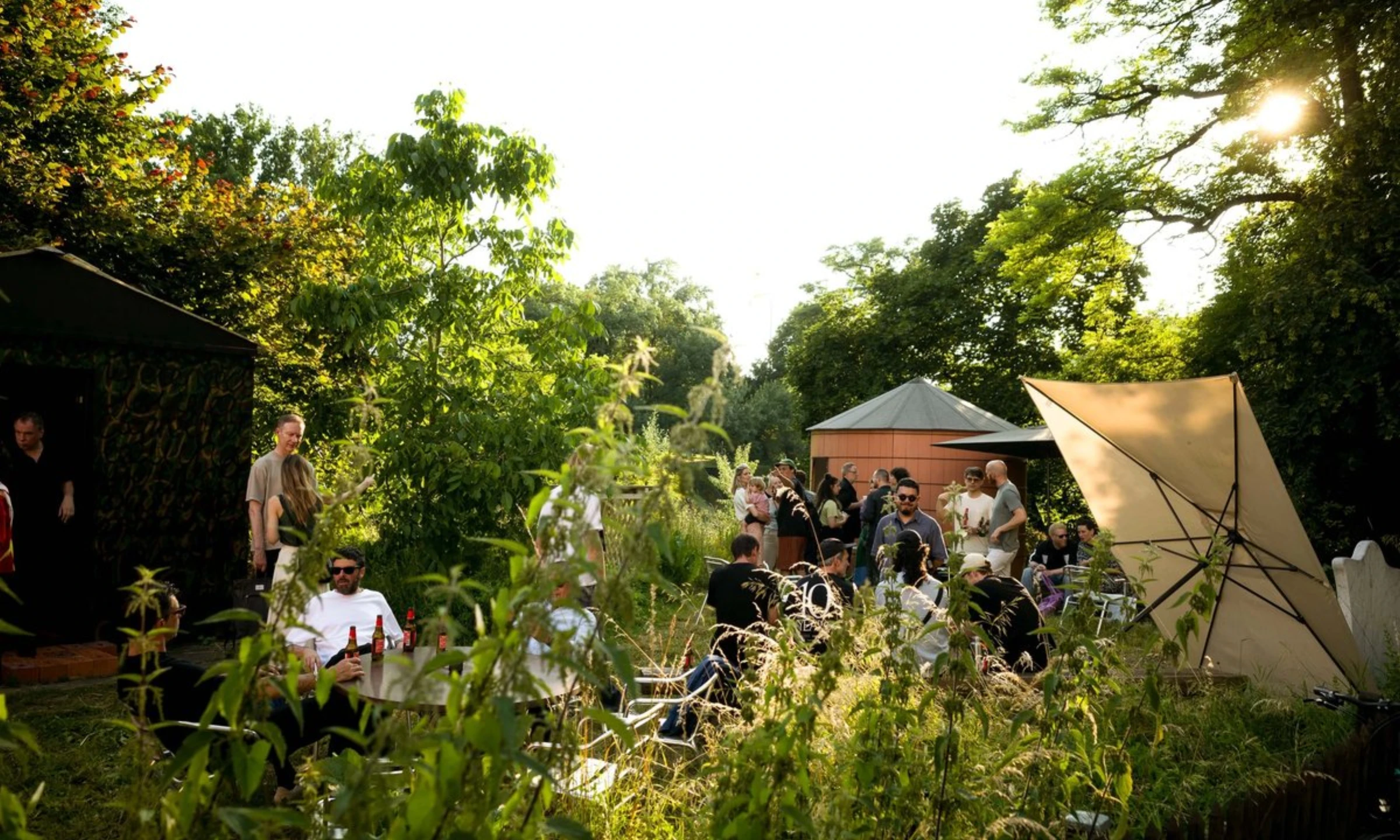
The same goes for spaces such as SALTS, For, and newer artist-run platforms like Amore, all highlighted in the reporting. Their importance is not that they provide charming alternatives to corporate polish. Their importance is that they show where risk is still metabolized at a human scale. Artist-run spaces reveal who is talking to whom before those conversations harden into market consensus. They also tell you what kinds of work a city can absorb without immediate commercial validation.
When visiting, do not approach these spaces like hidden gems to be collected for authenticity points. Ask what kind of labor keeps them alive. Who funds them, who staffs them, what temporalities they can sustain, and whether fair-week visibility actually helps them or merely overloads them. The difference matters. Some off-spaces benefit from the June influx. Others become harder to read precisely because the fair’s density turns every room into a crowded signal field.
Learn to Separate Local Programming From Imported Spectacle
One of the easiest mistakes during Basel week is to treat every side event as proof of local vitality. It is not. Some programming is genuinely of the city. Some is opportunistic cargo attached to the fair’s traffic. Distinguishing between the two takes more than taste. It takes attention to who organizes the event, where it happens, whether the venue is active year-round, and whether the work shown there connects to ongoing local relationships. The article’s discussion of places like Kunsthalle Basel’s public-facing events and alternative gatherings such as OMG, Franck! is useful because it shows that social energy can be local without becoming provincial.
A good rule is to ask whether a space would still matter in October. If the answer is yes, keep paying attention. If the answer is no, you are probably looking at a temporary stage set optimized for collectors with free evenings. That does not make the event worthless. It just means it should not be mistaken for the city itself. Basel can host imported spectacle very well. What you are trying to read is how that spectacle lands on a city with preexisting habits, alliances, and frictions.
This is also where Parcours and outdoor programming deserve a harder look. Public-facing projects can lower barriers and create a more democratic social atmosphere than the booths. But they also risk becoming soft branding for a week still structured by exclusion and appointment culture. Read who gets visibility, which neighborhoods are activated, and whether local residents are treated as participants or scenery.
Pay Attention to Scale, Density, and the Politics of Proximity
Basel’s scale is one of its hidden advantages. In larger capitals, institutions and scenes can remain culturally adjacent while rarely touching in practice. In Basel, proximity creates encounters that are not purely symbolic. Curators, artists, writers, students, installers, and patrons often circulate through overlapping zones. That density can produce real dialogue, but it can also compress hierarchies. The city’s smallness makes it easier to see who is included, who is peripheral, and how quickly discourse travels.
For a visitor, that means logistics are analytical. Walking rather than car-hopping changes what you notice. Spending time in the Dreispitz district tells you something different from moving only between the fair and the most polished museum corridors. Watching how audiences shift between institutional openings, school-related events, and artist-run spaces gives you a clearer picture of the ecosystem’s internal gradations. Basel is not only a place where art is shown. It is a place where relationships become visible because the city is compact enough to reveal them.
The best interpretation therefore refuses two clichés at once: the booster claim that Art Basel makes the city, and the reverse claim that the city’s real scene exists in noble purity against the fair. The truth is messier. Fair week amplifies, distorts, subsidizes, and occasionally suffocates the local ecosystem all at once. Serious readers can hold those contradictions without flattening them into either celebration or resentment.
What to Look for After the Booths Are Gone
The final test of whether you have actually read Basel well comes after the fair exits. Ask which institutions keep programming with conviction, which spaces remain porous to younger artists, and which relationships continue without the fair’s adrenaline. Follow the annual calendars of the major museums. Track how often smaller spaces collaborate, disappear, or re-emerge. Notice whether discourse generated in June converts into exhibitions, acquisitions, writing, or institutional support later in the year. That longer arc is where cities separate themselves from event platforms.
A smart follow-up is to keep one eye on the city’s ordinary tools of access: opening hours, public programs, bilingual materials, school ties, and whether emerging artists can actually afford to remain in the ecosystem once fair-week attention evaporates. Those details seem pedestrian until you realize they determine whether Basel functions as a living art city or only as a premium annual backdrop. Sustainable local culture is built through repeatable access, institutional memory, and year-round contact zones. If a place can only impress you during peak season, it is not a scene. It is staging.
For collectors, curators, and writers, the practical takeaway is simple: spend at least part of Basel week behaving as if the fair were secondary. Visit the institutions with enough time to understand their programming logic. Make room for an artist-run space that is active in November, not just photogenic in June. Read the city through its public infrastructure, not only its hospitality map. If you do that, Basel stops looking like a yearly burst of art-market intensity and starts looking like what it actually is: a small city whose cultural seriousness was there before the tents went up and will remain after they come down.