How Museums Protect Art from Theft
From physical security to provenance databases and international recovery networks, a practical guide to how cultural institutions safeguard their collections
Why Art Theft Protection Matters More Than Ever
The recent recovery of eight prints from Henri Matisse's Jazz series, stolen from the Mario de Andrade Library in Sao Paulo, is a reminder that art theft is not confined to Hollywood heist films. Cultural institutions of every size, from national museums to local libraries, face the challenge of protecting irreplaceable works while maintaining public access. The Matisse theft occurred during public visiting hours, when two armed men entered the library and removed the prints along with five paintings by Brazilian modernist Candido Portinari. Brazilian police recovered the Matisse prints and arrested one suspect, but the case highlights the persistent vulnerability of collections that balance openness with security.
Art theft is estimated to be a global market worth between $6 billion and $8 billion annually, according to various law enforcement and cultural heritage organizations. The range reflects the difficulty of tracking illicit art markets, which often intersect with other forms of organized crime. Understanding how institutions protect their collections, and what happens when those protections fail, is essential for anyone who works in or cares about cultural institutions. The recovery of the Matisse prints, covered by ARTnews, demonstrates that recovery is possible but never guaranteed.
Physical Security: The First Line of Defense
Physical security remains the foundation of art protection, but its implementation varies dramatically by institution type. Major museums like the Getty Research Institute employ layered security systems: climate-controlled storage with restricted access, motion sensors, pressure pads, 24-hour surveillance, and guards trained specifically in art protection. Galleries use specialized display cases, security glazing, and anchored mounts that resist removal without specialized tools.
Smaller institutions and libraries face different challenges. The Mario de Andrade Library, like many public institutions, maintains open reading rooms and public stacks that make comprehensive surveillance difficult. Security investments at this scale often focus on targeted protection of high-value items rather than blanket coverage. This approach has obvious risks, as the Matisse theft demonstrated. Institutions can reduce vulnerability by conducting regular security audits, cataloging high-value items separately, and training staff to recognize suspicious behavior during public hours.
Environmental design also plays a role. Sight lines, lighting, and the placement of staff workstations can significantly reduce opportunities for theft. Institutions that cannot afford sophisticated electronic security can benefit from low-cost interventions: controlled entry points, timed visitor badges, and strategic placement of valuable items away from exits. The Organization for Security and Cooperation in Europe has published guidelines for cultural property protection that emphasize these principles, and institutions like SFMOMA demonstrate how major museums integrate security into exhibition design without compromising visitor experience.
Provenance Research and Documentation
Provenance research, the systematic documentation of an artwork's chain of ownership, is often discussed in the context of restitution and Nazi-looted art, but it serves a critical security function as well. A well-documented artwork is harder to sell on the illicit market because its ownership history creates a paper trail that thieves cannot easily replicate. The Getty Provenance Index and similar databases allow researchers, collectors, and law enforcement to trace the ownership history of works and flag suspicious gaps.
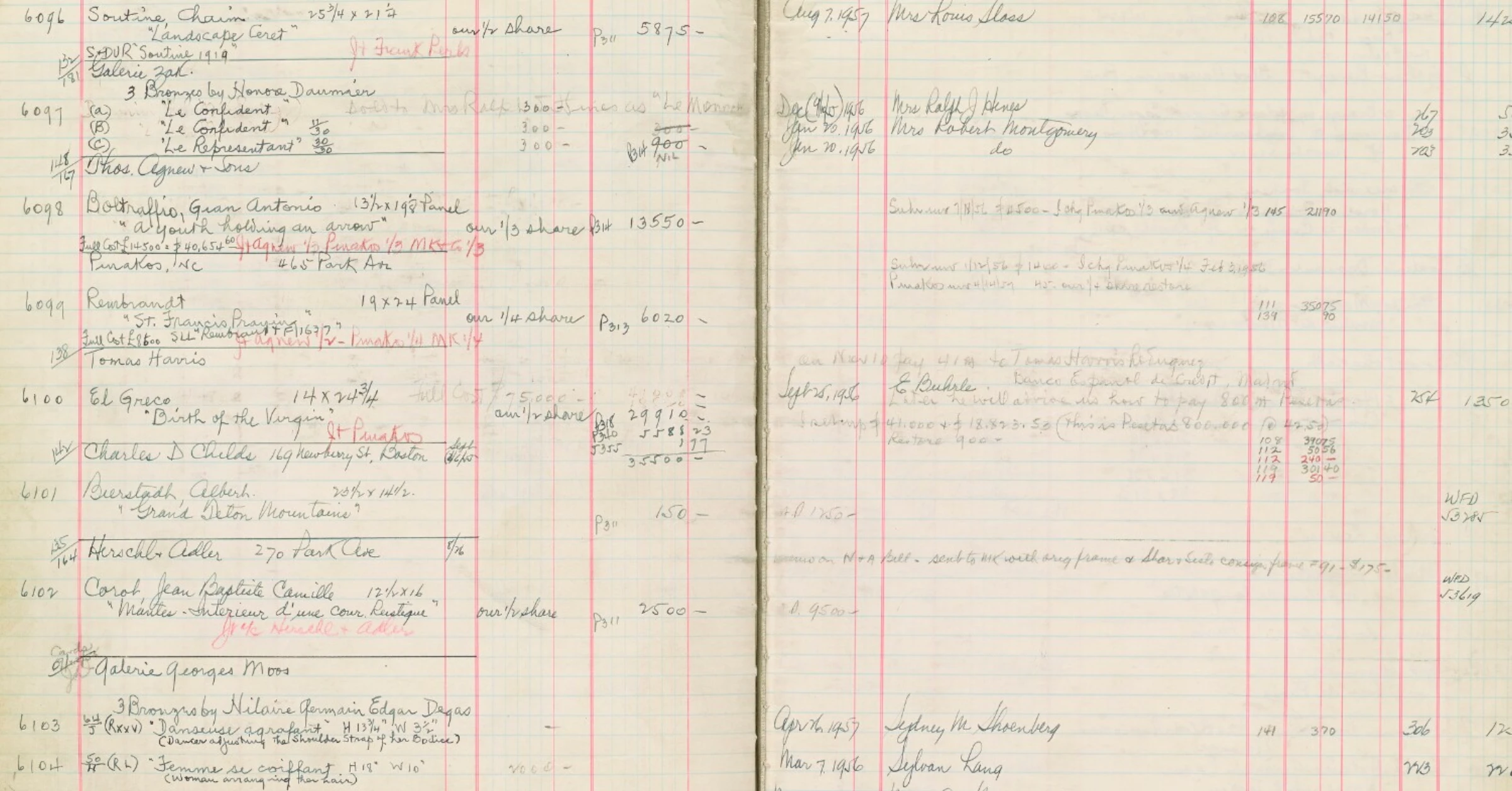
Institutions should maintain detailed records of every work in their collection, including photographs, dimensions, condition reports, and provenance documentation. These records serve multiple purposes: they support scholarly research, they facilitate insurance claims in the event of loss, and they provide law enforcement with the information needed to identify and recover stolen works. The Art Loss Register, a private database of stolen art, and the FBI's National Stolen Art File both rely on detailed institutional records to match recovered works with their rightful owners.
For institutions beginning this process, the first step is a comprehensive inventory. Every item should be photographed, measured, described, and assigned a unique identifier. Provenance information should be documented to the extent possible, with particular attention to any gaps or uncertainties in the ownership history. This documentation should be stored securely, with copies maintained offsite or in digital format to ensure survival even if the institution suffers a catastrophic event.
International Recovery Networks and Databases
When art is stolen, the speed of the response often determines whether works are recovered. International databases play a critical role in this process. INTERPOL's Works of Art database, the Art Loss Register, and the International Foundation for Art Research all maintain records of stolen works that can be searched by potential buyers, dealers, and law enforcement agencies worldwide. Registration of stolen items should occur immediately after a theft, with detailed photographs and descriptions.
The recovery of stolen art is rarely straightforward. Works may pass through multiple hands before surfacing, and the legal frameworks for recovery vary by jurisdiction. The 1970 UNESCO Convention on the Means of Prohibiting and Preventing the Illicit Import, Export, and Transfer of Ownership of Cultural Property provides an international framework, but not all countries are signatories, and enforcement is inconsistent. Recent successful recoveries, including the Matisse Jazz prints in Brazil and paintings by Cezanne, Matisse, and Renoir recovered in Italy, demonstrate that persistence and international cooperation can yield results even months or years after a theft.
Law enforcement agencies increasingly specialize in art crime. The FBI's Art Crime Team, established in 2004, has recovered more than $300 million in stolen cultural property. Italian Carabinieri's TPC (Tutela Patrimonio Culturale) unit, founded in 1969, is the world's oldest dedicated art crime force. Brazilian police have built significant expertise through high-profile cases, including the 2007 Sao Paulo Museum of Art theft and the current Matisse investigation. Institutions that experience theft should engage with these specialized units rather than relying on general police services alone.
Insurance and Risk Management
Insurance is a financial necessity for cultural institutions, but it is not a substitute for security. Most fine art insurance policies require institutions to maintain specific security standards, and failure to meet those standards can void coverage. Policies typically cover theft, damage, and in some cases mysterious disappearance, but the claims process requires thorough documentation of the stolen work and the circumstances of the loss.
Risk management for cultural institutions extends beyond insurance to include business continuity planning, emergency response protocols, and staff training. Institutions should have written plans for responding to theft, including notification procedures for law enforcement, insurance providers, and international databases. Staff should be trained on these protocols, and plans should be reviewed and updated regularly. The Association of Art Museum Directors and similar professional organizations provide resources and best practices for institutional security planning.
For institutions with limited budgets, the most cost-effective security investments are often the simplest: comprehensive documentation, staff training, and registration with international databases. These measures cost little but can make the difference between permanent loss and successful recovery. The Matisse Jazz theft and recovery demonstrates that even institutions with modest security resources can achieve positive outcomes when documentation is thorough and the response is swift.
Building a Culture of Security
Ultimately, art theft protection is not just a technical challenge but an institutional one. Security works best when it is embedded in the culture of the institution, understood and practiced by every staff member rather than delegated to a single security department. This means training front desk staff, volunteer guides, and even regular visitors to be attentive to their surroundings. It means designing exhibitions that balance visual impact with physical security. And it means recognizing that the tension between access and protection is not a problem to be solved but a condition to be managed.
The recovery of the Matisse Jazz prints in Brazil is a case study in what can go wrong and what can go right. A brazen daytime theft exposed institutional vulnerabilities, but a determined police investigation led to the recovery of the stolen works and the arrest of a suspect. For institutions watching from the outside, the lesson is clear: invest in documentation, build relationships with law enforcement, and never assume that your collection is too small or too obscure to be targeted. Art theft is a global phenomenon, and protection requires a global response. Institutions that take this challenge seriously will find that the tools and networks for protection are more accessible than they appear, and that the investment in security is always less costly than the loss of irreplaceable cultural heritage.
The international framework for art theft protection has also been strengthened by organizations like the International Council of Museums (ICOM), which maintains Red Lists of cultural objects at risk and works to raise awareness among customs officials, police, and dealers. These lists have proven effective in helping authorities identify and intercept stolen objects before they enter the legitimate market. Institutions can support this system by reporting thefts promptly and by participating in ICOM professional networks, which facilitate information sharing and cooperation across borders. The combination of national law enforcement, international databases, and professional organizations creates a web of protection that, while imperfect, significantly increases the chances of recovery for stolen works. For institutions just beginning to develop their security protocols, engaging with these networks is an essential first step that costs nothing but can make the difference between losing a work forever and seeing it returned.