At the DIA, Reimagining African American Art Corrects the Museum's Center
Detroit's new installation does more than add visibility, it reorganizes the museum's internal narrative by placing African American art beside its most visited historical core.
The first thing to notice in the Detroit Institute of Arts's reinstallation Reimagine African American Art is where it sits. The galleries are positioned beside Diego Rivera's Detroit Industry Murals, one of the museum's gravitational centers, and that placement does critical work before a single wall text is read.
For the first time since 2007, the DIA has reset these holdings as a historical through-line rather than a supplement. The installation moves across nearly two centuries, from nineteenth-century painters who worked against institutional exclusion to twentieth-century and late modern artists who reshaped the formal language of American art.
Valerie Mercer, curator and head of the Center for African American Art, has long argued that the field remains undertaught and under-framed in mainstream art history curricula. This installation translates that argument into architecture: visitors move through Harlem Renaissance material, Civil Rights era work, and Black Arts movement energies as linked chapters, not isolated episodes.
The strongest curatorial decision is spatial: this history is no longer peripheral, it is structurally adjacent to the museum's most canonical room.
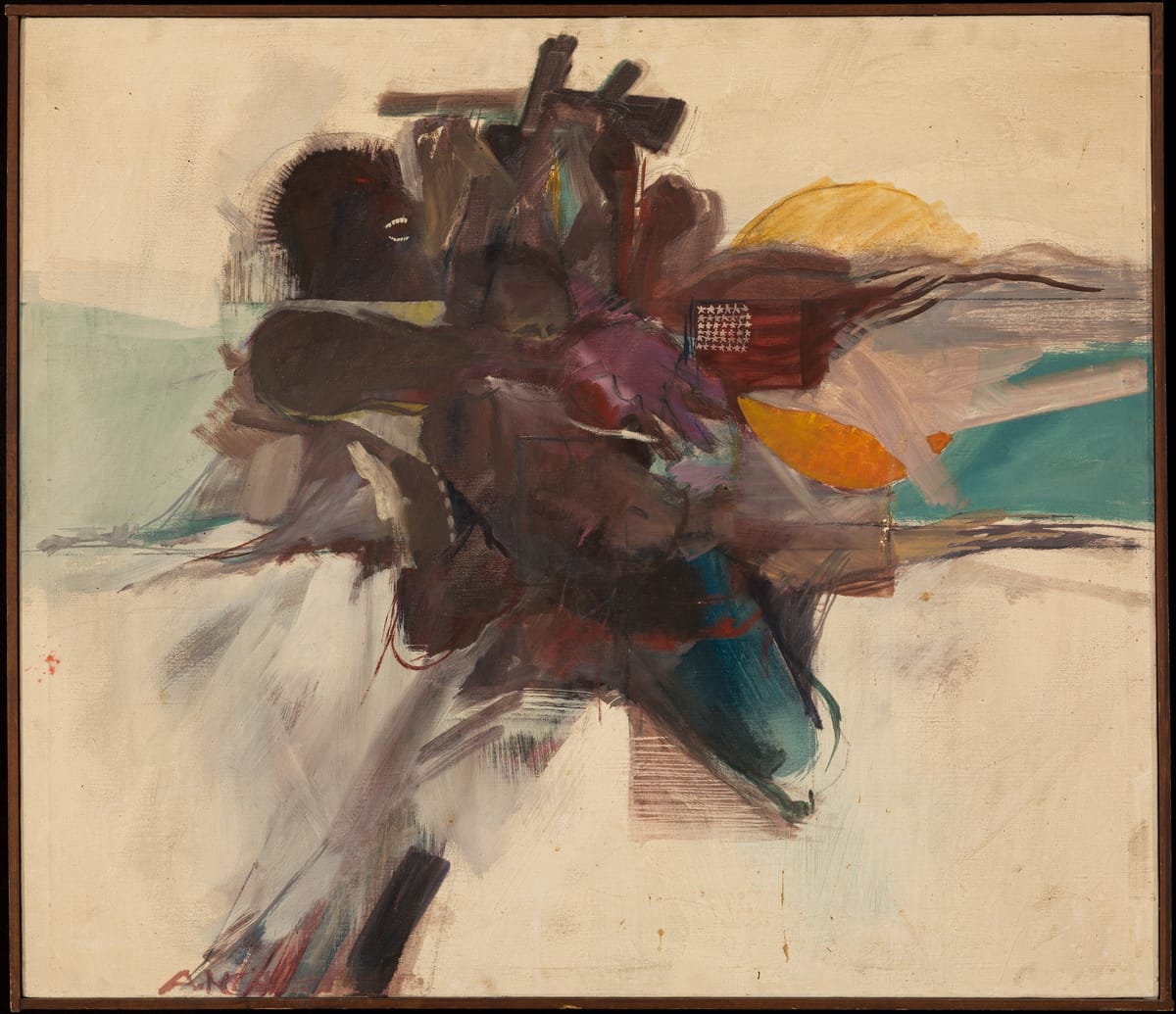
Works by Robert S. Duncanson, Mary Edmonia Lewis, Aaron Douglas, Sam Gilliam, Charles McGee, and Alvin Loving resist any single narrative of progress. What emerges instead is a dense picture of media experimentation across painting, print, photography, and sculpture, with formal invention treated as central rather than incidental to political history.
The exhibition is at its best when it refuses triumphal pacing. It acknowledges delayed recognition while foregrounding aesthetic range, especially in pairings that move between social realism and abstraction without forcing one to justify the other.
As a curatorial proposition, Reimagine African American Art is persuasive because it links collection policy to visitor experience. The galleries establish a stronger baseline for the museum's upcoming contemporary reinstall, where these histories are promised a broader global dialogue.
This is not a temporary correction. It feels like a structural reset that other encyclopedic museums should study closely.