Prisoners of Love at Brown Turns Archive Into a Living Public Form
Basel Abbas and Ruanne Abou-Rahme's installation in Providence builds an argument about incarceration, memory, and solidarity through sound, projected image, and contested attribution.
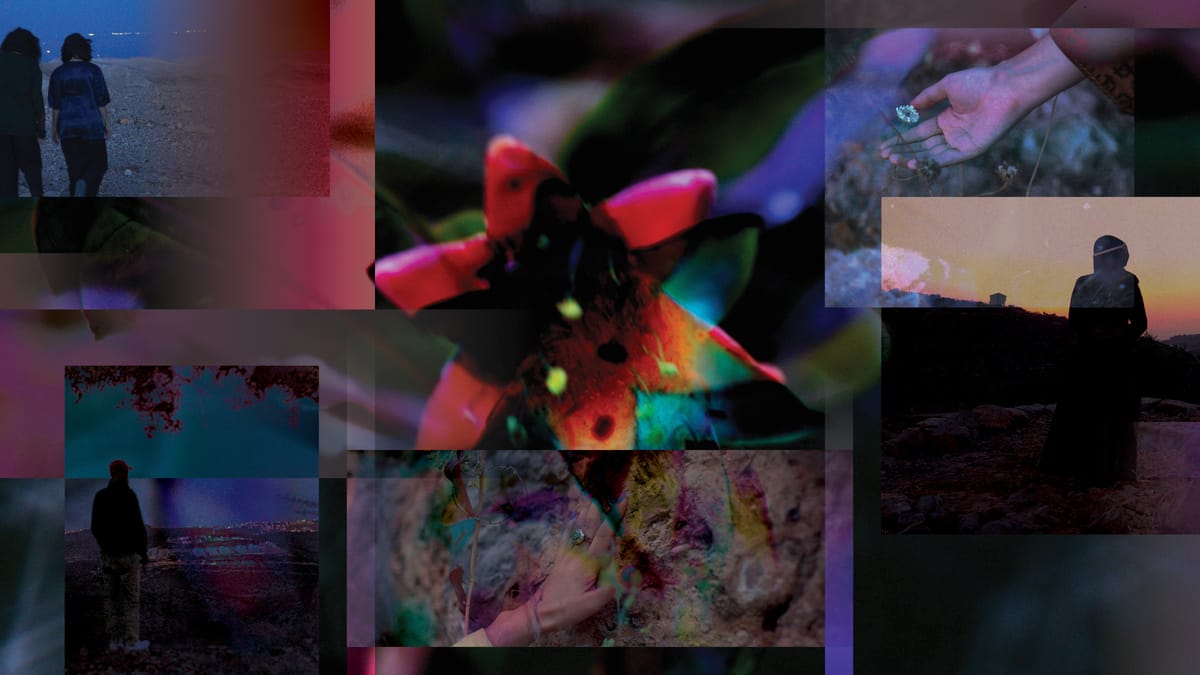
At The Bell Gallery, Basel Abbas and Ruanne Abou-Rahme stage Prisoners of Love: Until the Sun of Freedom as an environment of rough surfaces and unstable memory. Projections land on concrete, fabric, and weathered steel, so the image never appears as a smooth screen object and always as something negotiated by material resistance.
The exhibition draws on interviews with former political prisoners in Palestine and extends the duo's long-term counter-archive practice. Rather than treating testimony as documentary closure, the installation keeps voices in circulation through layered sound and discontinuous image sequences that resist narrative finality.
One of the work's key anchors is Samih Al-Qasim's poem Enemy of the Sun, found in George Jackson's San Quentin cell after his 1971 killing and long misattributed in US activist memory. Abbas and Abou-Rahme do not simply correct the record. They ask what that historical misreading reveals about transnational solidarities and how political language travels.
The work's emotional force comes from refusing clean authorship and treating misattribution as evidence of political transmission.
Curatorially, the project benefits from duration: commissioned in 2020, developed through Brown-based research and teaching, and presented as the project's only US venue, it arrives with unusual intellectual depth for an academic gallery context. The result feels less like a tour stop and more like a site-specific method.
Formally, the installation balances immersion with friction. Sound carries the visitor, but the physical staging keeps attention on structures of confinement rather than spectacle. This prevents the show from drifting into affective abstraction, a common risk in politically charged moving-image installations.
The exhibition's strongest claim is that archives are not neutral repositories but active battlegrounds over relation and legibility. Abbas and Abou-Rahme make that claim with rigor, and with a sense of collective address that extends beyond the room.
On view in Providence through May 31, the show is essential for anyone tracking how contemporary installation can join historical research to formal invention without sacrificing either.