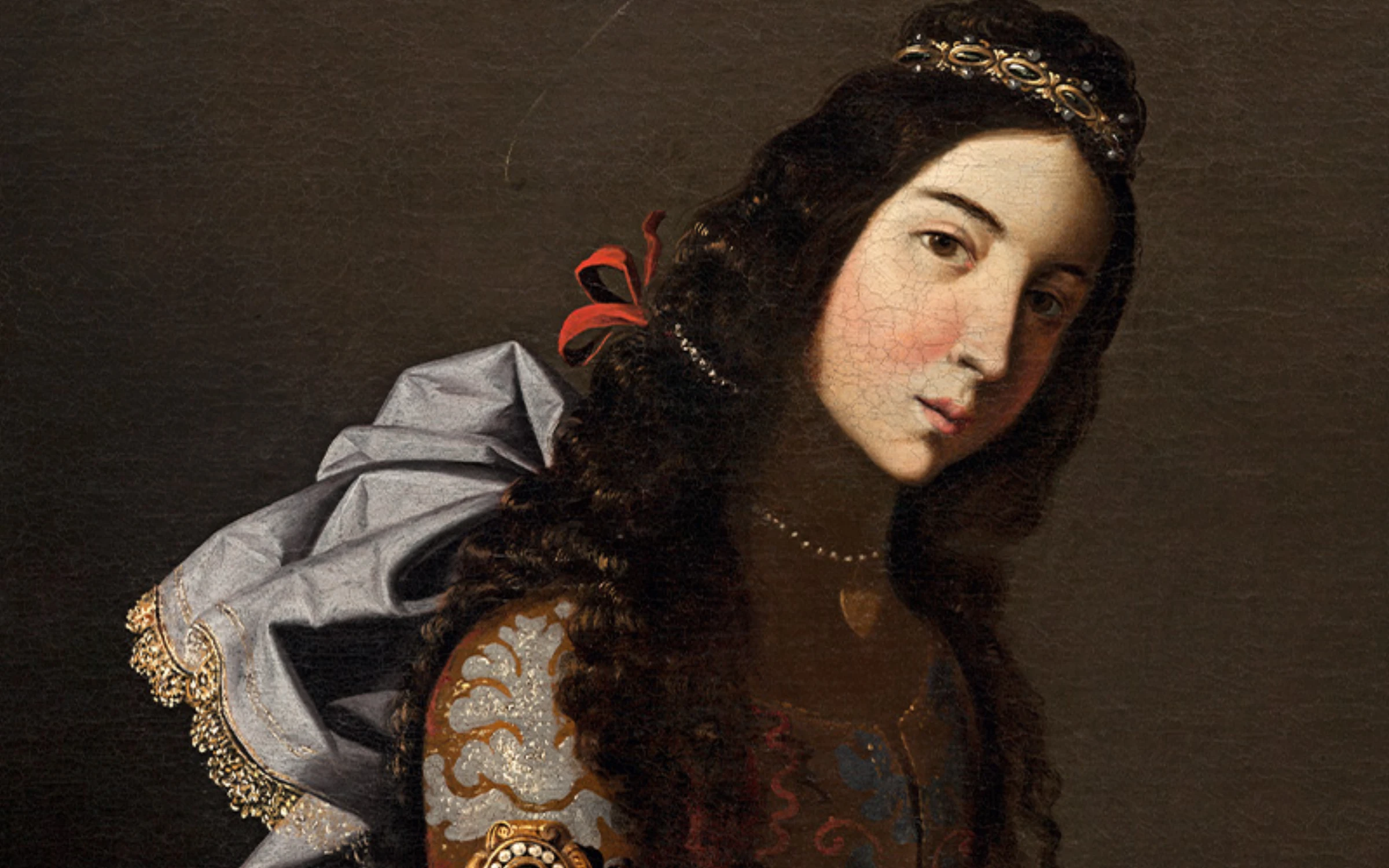
National Gallery Reframes Zurbarán Beyond the Monastic Cliché
A major London survey argues that Francisco de Zurbarán was not only a painter of austere saints but also an inventive still-life maker and a strategic image-maker at scale.
The National Gallery in London is opening a focused argument disguised as an old-master exhibition. Its new Francisco de Zurbarán survey, built around loans and new attributions, pushes against the narrow label that has followed the painter for decades: master of severe saints, and little else. The curatorial wager is that this label is historically convenient but formally incomplete, and that Zurbarán's range, from devotional intimacy to monumental ecclesiastical theater, can only be understood when those bodies of work are shown in one sequence.
The immediate stakes are art-historical, but the institutional stakes are just as important. Old-master programming in major museums often defaults to canonical reassurance, especially in periods of economic pressure. Here, the museum is choosing a tighter proposition: showing how an artist usually treated as spiritually static actually worked as a pragmatic workshop leader, a composer of image systems, and a painter able to move between markets and devotional contexts. The exhibition page at the National Gallery's Zurbarán exhibition frames that ambition clearly, and the object list supports it.
Two newly attributed still-life related paintings are central to that reframing. They are not simply connoisseurship footnotes; they are evidence about method. In the exhibition's logic, these studies suggest a process in which independently rendered ceramic forms could be tested and then scaled into larger pictorial structures. That matters because Zurbarán's still-life practice has often been discussed as a side channel to his religious commissions. If the studies and larger compositions are read together, still life becomes a structural engine in the work, not a peripheral genre exercise.
The show's reconstruction of a tier from the Charterhouse altarpiece from Jerez de la Frontera is equally consequential. This is not reconstruction for spectacle's sake. Reassembling works now separated across collections gives viewers a spatial sense of how seventeenth-century audiences encountered these images: as an orchestrated field rather than isolated masterpieces. Loans from institutions including the Musée de Grenoble, the National Museum in Poznań, and the Museu Nacional d'Art de Catalunya make that reconstruction possible, and also signal how dependent old-master scholarship now is on high-trust institutional exchange.
Another productive move is the treatment of Zurbarán's late period. The decline narrative, common in handbook writing, is replaced with a market and function reading: smaller works for private devotion, softer handling as a mode shift rather than an exhaustion of skill. For curators and collectors, this distinction is not academic hair-splitting. It changes valuation frameworks, exhibition narratives, and future acquisition priorities. A period read as decline is curated defensively; a period read as strategic adaptation becomes newly collectible and newly legible.
The exhibition also foregrounds Zurbarán's self-positioning, including painted cartellini that assert authorship. In the current museum climate, where attribution politics, workshop practice, and authorship branding are regularly debated, this is the right pressure point. It lets a seventeenth-century painter enter contemporary conversations without flattening him into a contemporary avatar. The question is not whether Zurbarán was modern before modernity, but whether his working intelligence can be made visible without myth.
For London's spring calendar, this is one of the more rigorous examples of scholarship translated into public display. It offers strong traffic potential for a broad audience while preserving enough specificity to matter to professionals. The likely result is a show that reads on two tracks at once: a public rediscovery of a major painter, and a field-level adjustment in how his oeuvre is divided, ranked, and interpreted.
In practical terms, this is exactly the kind of old-master project museums need right now, neither blockbuster nostalgia nor specialist enclave. It is a case study in how to update a canon figure by changing the terms of visibility, object adjacency, and historical argument. If the exhibition lands as intended, the aftereffect will not just be fuller rooms. It will be a revised default sentence about Zurbarán, and those revisions tend to last.