Yale Unrolls a 37-Foot Lucknow Scroll, Turning Conservation Into Public Scholarship
The Yale Center for British Art has put a monumental early 19th-century Lucknow scroll on public view for the first time after two years of conservation work.
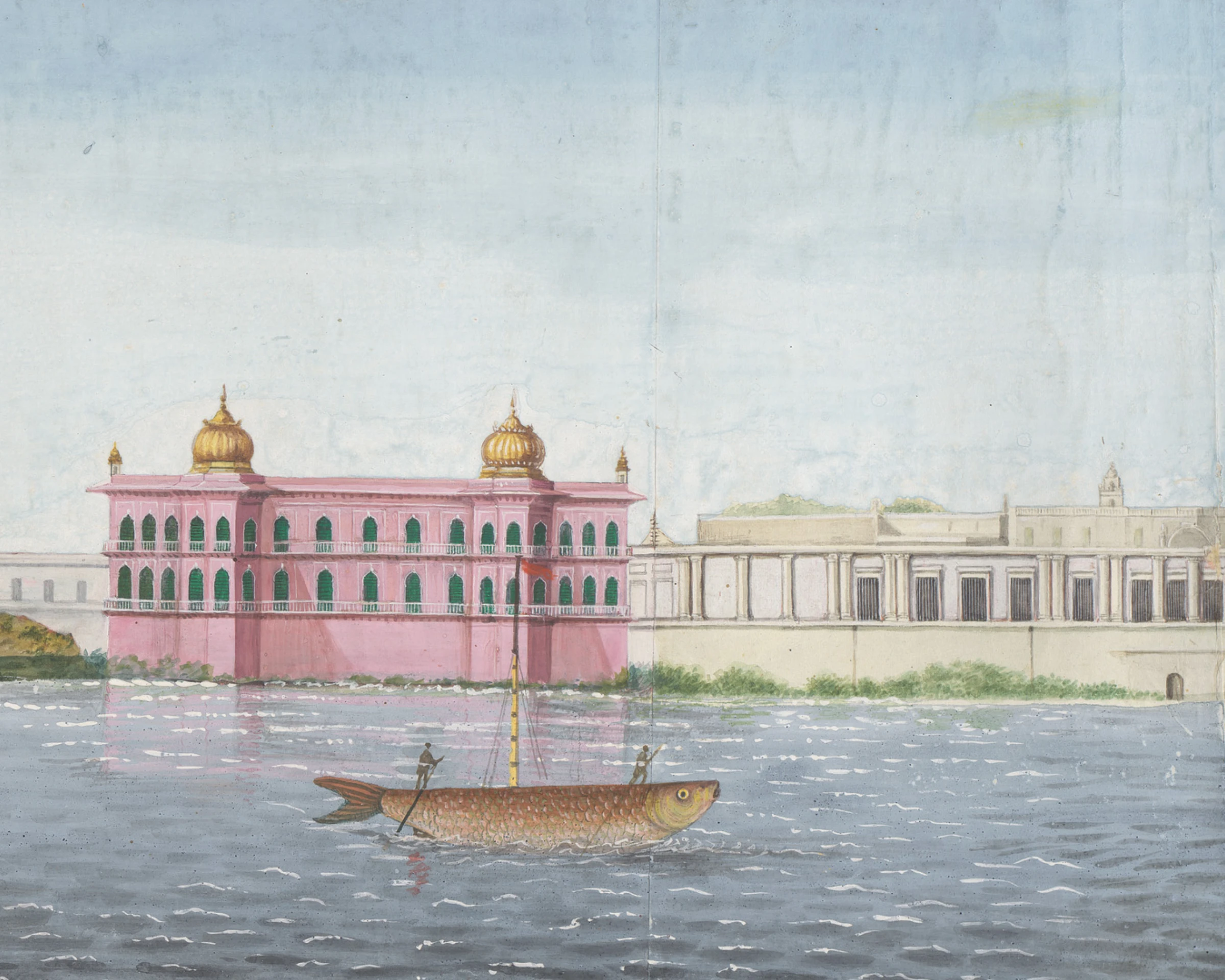
The Yale Center for British Art has placed a 37-foot Lucknow scroll on public view for the first time, after a two-year conservation process that stabilized one of the most materially complex works in its collection. The object anchors the exhibition Painters, Ports and Profits: Artists and the East India Company, 1750-1850, and the museum is displaying the scroll in phases to limit light exposure while allowing visitors to follow changing segments across the run.
That phased display decision is curatorial and conservation logic in one move. Instead of treating fragility as a reason to obscure access, Yale has made preservation constraints legible to the public. Visitors do not receive a static masterpiece moment. They receive an unfolding object whose serial display mirrors the narrative structure of scroll culture itself.
The work, often referred to as Lucknow from the Gomti, was produced between 1821 and 1826 and is built from 33 joined sheets with watercolor, gouache and gold. It represents a city shaped by courtly ambition, commercial circulation and colonial pressure. Seen today, it also maps visual governance: architecture, labor and riverside movement are rendered as a continuum, not as isolated monuments.
The curatorial frame is precise. By placing the scroll within East India Company networks, the exhibition asks viewers to read aesthetic production alongside logistics, patronage and extraction. That framing avoids a common institutional failure in colonial-era displays, where spectacular craft is detached from the administrative systems that enabled and profited from it.
Conservation findings reportedly included structural distortions caused by layered backing materials and significant pigment vulnerabilities. Work by paper conservators across Yale units appears to have restored enough planar stability for controlled display while preserving evidentiary traces of the object’s life history. For museum professionals, this is the key point: conservation is not merely repair, it is knowledge production.
The scroll’s authorship and commissioning context remain unresolved, and that uncertainty is being handled responsibly rather than smoothed away. Curators have pointed to inscriptions and historical context that suggest elite patronage around the court of Ghazi-ud-Din Haidar Shah, while acknowledging that the object’s exact commissioning chain is still open to research. In a field that often rewards definitive claims, this evidentiary discipline matters.
Institutionally, the exhibition reinforces Yale’s broader push to connect collection history with present-day methodological transparency. It aligns with a growing expectation that museums disclose not only what they show but how they know what they know. For collectors and trustees, that shift has governance implications, including funding priorities for conservation labs, cataloguing and long-term technical scholarship.
The Lucknow presentation also expands the conversation on scale in paper-based works. Monumentality here is not sculptural mass but temporal and narrative extension. Viewers are asked to move with the object, to understand that interpretation changes with each exposed section. That is a sophisticated public pedagogy, and it is rare to see it executed without didactic overload.
At a time when institutions face pressure to prove social relevance through language alone, this show offers a stronger model. It delivers relevance through method, evidence and access design. If repeated, that model could reset how museums stage fragile colonial-era material: less triumphal display, more accountable scholarship in public view.