Whitney Biennial’s Doomscroll Debate Exposes a New Museum Platform Economy
Joshua Citarella’s live podcast tapings at the Whitney Biennial have become a flashpoint over what museums are now optimizing for, discourse, attendance, or art-specific risk.
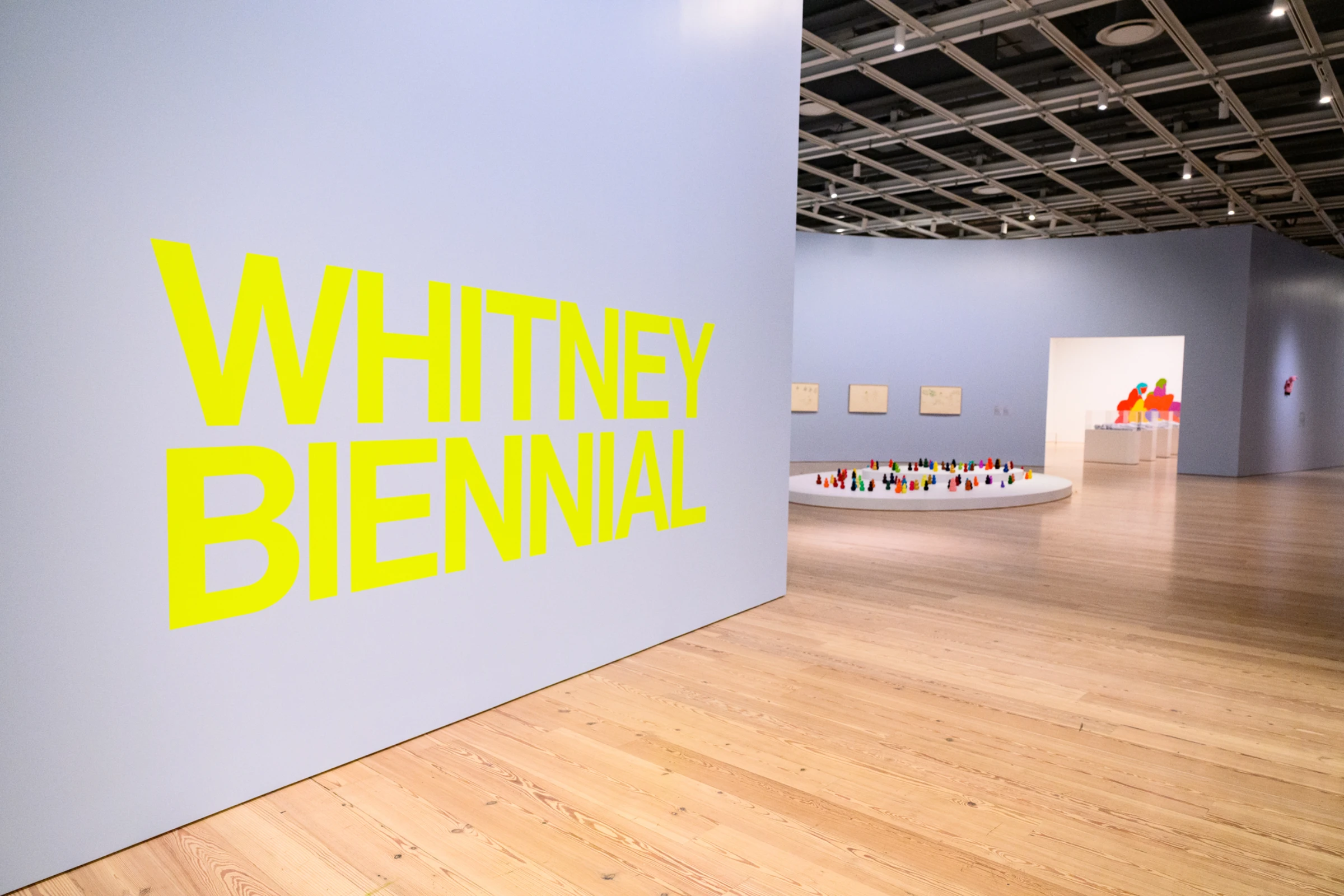
A live taping of Joshua Citarella’s Doomscroll podcast inside the Whitney Biennial 2026 has triggered the kind of argument museums usually try to avoid in public, namely what, exactly, institutional space is now for. The immediate dispute looks familiar. Some visitors see the event as a sharp extension of Citarella’s long-running research into networked political culture. Others see it as a market-ready media product given museum legitimacy because it can move tickets and attention. The deeper conflict is structural. It concerns whether museums are still rewarding work that requires slow looking, or whether they are adapting to platform logics that reward scalable formats and fast interpretive uptake.
Citarella’s practice has always sat near this fault line. His projects across social media, chat environments, and long-form online discourse framed art as a testing ground for political language and audience formation. In that sense, bringing his podcast format into the biennial is not an abrupt break. It is a continuation under different institutional conditions. Yet the Whitney context changes the stakes because biennials are not neutral stages. They are canon-making devices. Once a format enters that frame, it is no longer only an experiment in communication. It becomes part of a narrative about what contemporary art institutions believe counts as advanced practice.
That is where the criticism has gained traction. Museums have finite space, finite staffing, and finite curatorial bandwidth. Every program slot implies an opportunity cost. If a high-polish conversational format that already performs well outside institutional walls receives prime placement, observers reasonably ask what forms were displaced. This is not nostalgia for object-based art. It is an accountability question about resource allocation. If museums claim they are expanding the field, they also need to show that expansion is not simply a transfer of gallery real estate to content types already optimized for algorithmic circulation.
The Whitney case is especially revealing because it intersects with a broader governance issue: access to moving-image art. Institutions including MoMA and peers have long wrestled with how to distribute video and time-based work without reducing it to engagement metrics. That tension, access versus platform capture, now sits at the center of curatorial strategy. A live podcast in the biennial crystallizes the dilemma. It is legible, social, and promotable, but it can also import expectations from entertainment ecosystems that are not designed for sustained ambiguity or difficult form.
For artists, the lesson is mixed. On one hand, the museum’s willingness to host a format born in online discourse suggests that institutional boundaries are porous in productive ways. On the other hand, porous boundaries can become selective permeability, where formats that mimic mainstream media gain traction faster than practices that resist easy circulation. Artists building long-duration, low-visibility, or materially dense work will watch this closely, because funding and acquisition priorities often follow programming signals within a single cycle.
For collectors and trustees, this moment should not be reduced to a yes or no question about podcasting. The useful question is program architecture. Does the museum pair high-reach formats with equally resourced commitments to less marketable work. Does it publish a rationale for how audience development, scholarship, and curatorial experimentation are balanced. Does it create durable access pathways for complex works, not only event spikes. Those indicators reveal whether institutions are adapting intelligently or outsourcing judgment to attention economics.
The Whitney has the scale and visibility to set precedent. If it can articulate how this programming decision serves an art-specific thesis, not just attendance growth, the controversy could become a constructive model for mixed-format exhibitions. If it cannot, the criticism will harden into a broader narrative that museums are becoming distribution partners for already-successful media genres. Either way, this biennial episode marks an inflection point. In 2026, the defining curatorial challenge may no longer be whether digital culture belongs in museums. It may be whether museums can host it without surrendering the standards that made institutional criticism meaningful in the first place.
For now, one thing is clear. The argument around Doomscroll is not a side story to the biennial. It is the biennial’s most useful public test, because it forces institutions, artists, and audiences to state what they believe museums should optimize for when cultural authority, scarce resources, and networked media all collide in the same room.