What Whistler’s Newly Authenticated Early Portrait Really Changes
Research at Tate and the Hunterian has authenticated Whistler’s earliest known portrait, making the bigger story one of conservation, chronology, and how museums rewrite artists without market hype.
Tate is using conservation to change the chronology of a familiar artist
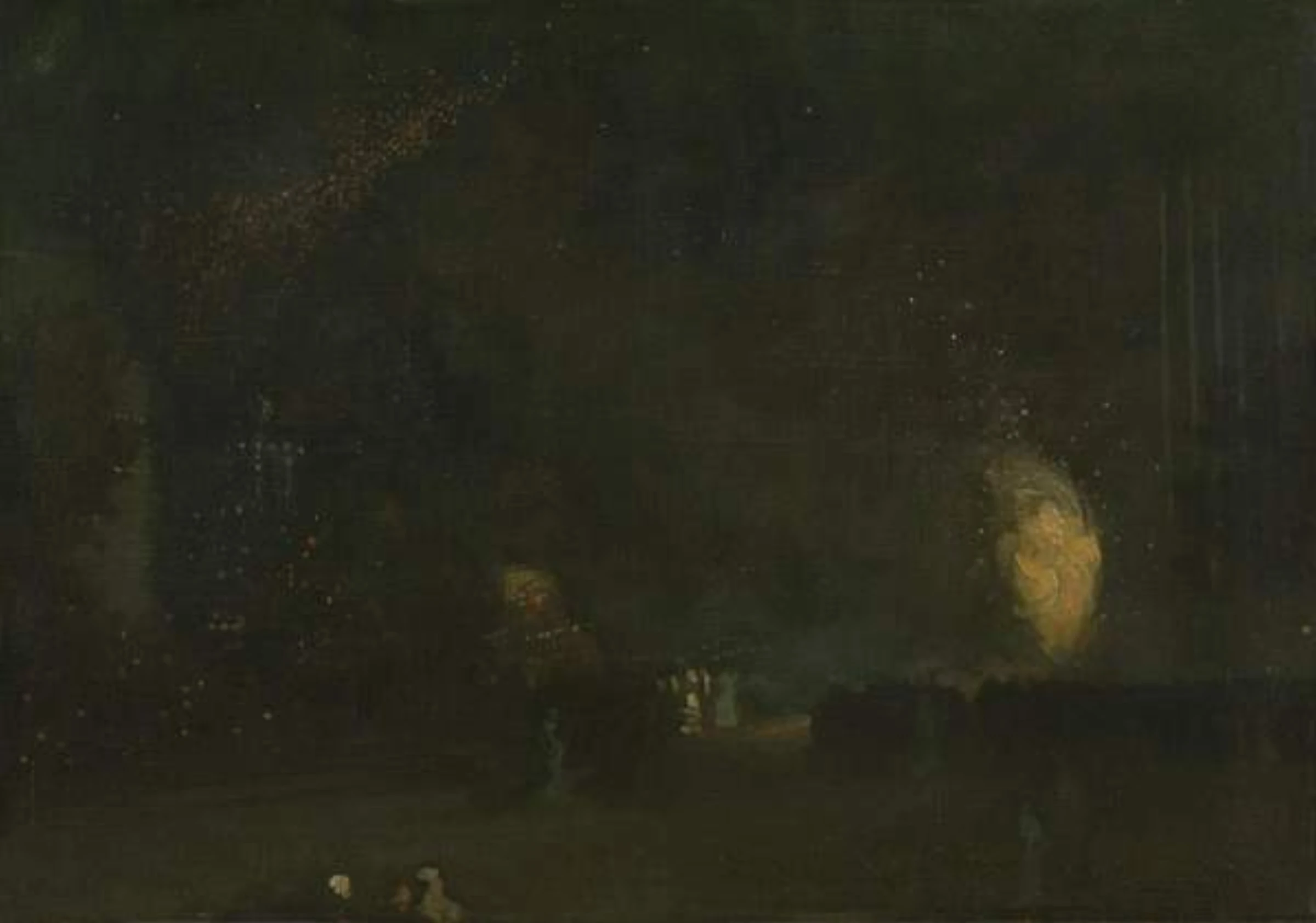
The newly authenticated Head of a Peasant Woman matters because it sharpens the story of James McNeill Whistler before he became the Whistler that textbooks and posters already know. According to new research presented around Tate Britain's 2026 exhibition, the small oil can now be identified as the artist's earliest known portrait. That sounds like a modest curatorial upgrade. It is not. Chronology is power in art history. Once a museum can place a work earlier, with stronger technical evidence and clearer relation to neighboring pictures, the whole narrative of development shifts. What looked like a tentative side path can become an origin point.
That is why this is better read as a museum story than a market story. The language around rediscoveries and authentications often tempts journalists toward sensationalism: lost master found, sleeper awakened, forgotten treasure returns. Here the interesting action is cooler and more rigorous. Tate's Whistler's Finish research project has been comparing a group of early oils across collections in London, Maine, and Glasgow, using technical analysis to understand how Whistler was teaching himself to paint in the 1850s. That makes the painting important not because it explodes the canon, but because it gives the canon better evidence.
The work clarifies how quickly Whistler moved from drawing into paint
One of the strongest details in the reporting is the description of the painting's understructure. Infrared analysis has shown that the application of paint follows a preparatory graphite drawing, while some shading is scratched in with a logic closer to etching. This matters because it lets viewers watch a young artist translating one medium into another in real time. Whistler did not spring fully formed into the bravura painter of the Thames and the great arrangement portraits. He was improvising, borrowing, and testing. In that sense the picture is less a masterpiece than a laboratory, and that is exactly why it deserves attention.
The material evidence also punctures the lazy myth that greatness arrives in a single leap. Early work is often treated as specialist bait, interesting mainly to scholars who need a before picture for later triumphs. But transitional paintings like this one show the actual mechanics of ambition. You can see Whistler deciding how much drawing to keep, how much paint to trust, and how quickly observation can turn into style. Those decisions are the substance of artistic development, not a footnote to it.
The Tate project description underscores the same point. It frames the conservation work as an examination of Whistler's methods and techniques across a set of early oil paintings, with the aim of understanding what the painted surface or finish meant in the reception of his work. That research context turns Head of a Peasant Woman into more than an isolated attribution win. It becomes part of a comparative argument about how Whistler handled oil at the moment he was moving away from being chiefly an etcher and draughtsman. The old habit of treating early works as juvenile prefaces starts to look inadequate once the technical evidence is in view.
Carol Jacobi's observation that the painting anticipates issues later explored by the Impressionists is useful so long as we do not make it too teleological. The point is not that Whistler was secretly an Impressionist early. It is that his quick, dynamic handling and his attention to the everyday were already generating pictorial questions that later movements would make central. Authentication here does not just certify authorship. It restores a set of artistic problems to the right moment in the timeline.
Museums increasingly use research projects to make exhibitions feel intellectually necessary
Tate Britain's major Whistler exhibition could have proceeded perfectly well on name recognition alone. What the conservation project does is make the exhibition feel less like a parade of known hits and more like an intervention in scholarship. That matters because museums are under pressure to justify large historical shows as more than expensive exercises in reaffirming already established greatness. Research offers that justification. By linking the exhibition to a year long collaboration involving the Hunterian Art Gallery and the Colby College Museum of Art, Tate presents the show as the public face of a deeper scholarly enterprise rather than as pure blockbuster programming.
This is an increasingly common and smart institutional move. A museum mounts a major exhibition, but around it builds a network of conservation studies, workshops, online material, and cross collection loans that can claim to advance knowledge, not simply display it. Readers who followed our recent coverage of Tate's Van Gogh rehanging will recognize the pattern. Museums now compete not only through objects but through interpretive authority. To say that a show is based on new research is to stake a claim about who gets to define the artist for the next cycle of readers, students, and lenders.
Tate's own project page makes that institutional ambition explicit by linking the research to the 2026 exhibition and its later travel to the Van Gogh Museum. Once an attribution or chronology enters that circuit, it can move quickly from specialist discussion into standard public narrative. That is why the research framework matters almost as much as the individual painting.
What is refreshing in this case is that the research appears genuinely tethered to material evidence rather than merely draped over a familiar narrative. The work had been exhibited in 1905 and then sat inside a fog of uncertainty for more than a century. Tate did not solve that uncertainty by rhetorical enthusiasm. It solved it by comparing surfaces, supports, and working methods. In a field that too often uses the language of discovery loosely, that methodological bluntness is worth defending.
The painting also enlarges Whistler before London claimed him
British audiences often inherit Whistler through London, through the Thames, Chelsea, the exhibition scandals, and the famous mother. The authenticated portrait pulls attention back to Paris and to a young artist absorbing realism, Rembrandt, Courbet, and the daily visual life around him before his mature brand identity cohered. That is historically useful because it loosens the inevitability with which later Whistler is often narrated. He did not simply arrive as a stylish apostle of tonal refinement. He worked through awkward, searching, materially experimental problems first.
The subject itself deepens that account. An unidentified peasant woman is a pointed choice for an early portrait if one wants to understand Whistler's relation to realism and modernity. He was not reaching upward toward prestige portraiture. He was trying to see what paint could do with an ordinary face and a modest scale. The resulting picture now looks like a bridge between his etching practice and his later oil confidence. That bridge is perhaps more revealing than any single finished masterwork because it shows how aesthetic ambition gets built, not merely how it appears once achieved.
There is a quiet institutional politics to this too. The work belongs to the Hunterian, and Tate's exhibition and research platform have effectively amplified its significance for a much larger audience. This is one of the better uses of a major museum's power. Instead of swallowing the loan into a generic blockbuster, Tate has made the lending institution's object newly legible. That is a model worth noting at a moment when so many collaborations merely flatter the biggest partner.
Authentication changes value, but its bigger consequence is interpretive leverage
Any authentication story raises the question of value, whether or not reporters dwell on it. A securely attributed early portrait by a canonical artist obviously affects the prestige of the object and the institutions associated with it. But the more durable effect lies elsewhere. Authentication changes what curators can say with confidence, what catalogue essays can build upon, and how future exhibitions can sequence the artist's development. It supplies leverage for interpretation.
That is why these stories deserve more attention than the market usually gives them. The art trade often cares intensely about attribution only when an object might sell. Museums should care because attribution is one of the tools by which public knowledge gets corrected. Readers of our guide to provenance claims know that the strongest museum arguments are usually the least theatrical ones: careful technical evidence, clearly stated uncertainty, and a willingness to let a modest picture do larger historical work.
In that respect, Head of a Peasant Woman offers a good lesson. The painting is not being asked to carry a giant myth by itself. It is being repositioned inside a network of early works, sketchbooks, and technical findings that together make Whistler look more exploratory and more materially restless than older public narratives sometimes allowed. That is a real gain. It gives the exhibition intellectual stakes and it gives the public a reason to look more closely at the painter's beginning rather than only at his polished legend.
What comes next will matter. Tate says the research will feed publications, workshops, and future exhibition interpretation. If that happens, then this authentication will have done what such discoveries ought to do: not simply add a line to a label, but redistribute attention within an artist's body of work. It will make the early years newly difficult and newly alive. That is a better outcome than spectacle. It is also rarer.
The broader implication is that conservation departments are now among the most consequential narrative engines inside major museums. Curators still frame arguments, but scientific imaging, paint analysis, and technical comparison increasingly determine which arguments are available in the first place. In Whistler's case, that means the future public image of the artist may be shaped as much by conservators and collaborative research infrastructure as by any single critic. That is not a demotion of art history. It is art history becoming materially accountable to the object again.