Celebrities Join Campaign to Stop Demolition of Manhattan’s West Park Church
A landmark hardship case over West Park Presbyterian Church has become a major cultural policy fight, with arts organizers, residents, and public figures arguing that preservation and adaptive reuse remain financially viable.
The fight over West Park Presbyterian Church on Manhattan’s Upper West Side has moved beyond a neighborhood preservation dispute and into a wider argument about cultural infrastructure in New York. The church, citing severe financial strain and high restoration costs, has petitioned the New York City Landmarks Preservation Commission for permission to demolish the landmarked building. Opponents, led by the Center at West Park and backed by residents, preservation advocates, and public figures, argue that demolition is neither financially necessary nor culturally defensible.
The stakes are unusually high because the case turns on the hardship clause of New York’s landmarks law, a legal pathway invoked rarely over six decades. To prevail, the church must demonstrate that maintaining the structure prevents a reasonable financial return and undermines its charitable mission. At public hearings, opposition testimony reportedly outnumbered support by roughly five to one, with many participants arguing that alternatives such as leasing strategies and transferable development rights could produce meaningful revenue without erasing the site.
The building is not an ordinary property in local memory. Completed in 1890 and designed by Henry Kilburn, West Park is a Romanesque Revival structure with deep red sandstone, a prominent tower, and historic stained glass. In its designation record, the New York City Landmarks Preservation Commission emphasized the church’s architectural significance to the Upper West Side streetscape. For preservationists, that status imposes public obligations. For owners facing deferred maintenance, it can also impose costs that become politically explosive when no funding coalition materializes quickly enough.
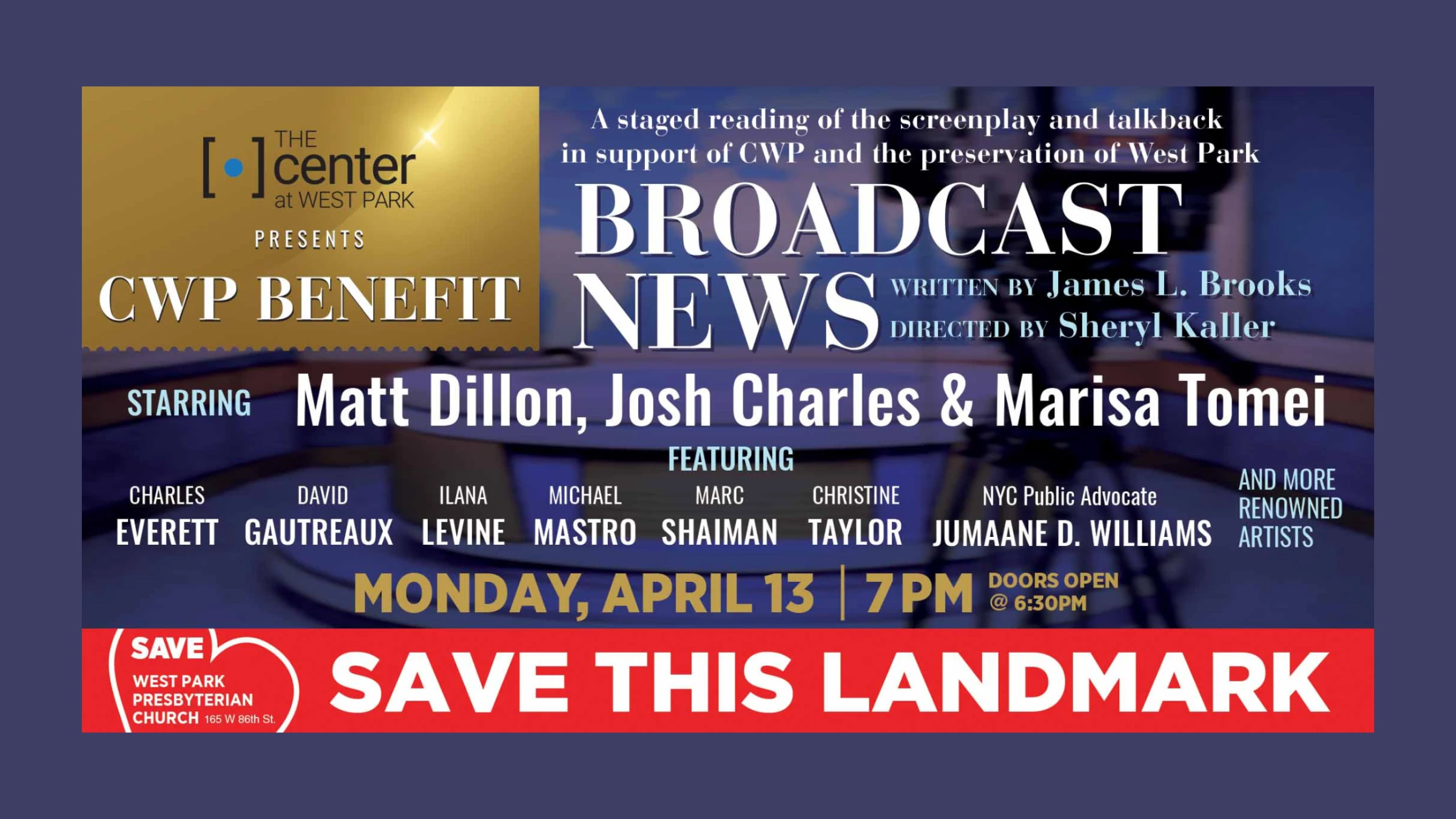
The Center at West Park, which managed and programmed the building between 2017 and 2024, has framed the conflict as a question of civic value, not sentiment. During its tenure, the center hosted hundreds of events across arts, performance, community programming, and youth activity. The organization argues that the church can function as a productive mixed-use cultural anchor if governance and financing are restructured. Its campaign has drawn support from actors including Mark Ruffalo and Matt Dillon, turning an otherwise technical land-use dispute into a citywide public conversation.
Celebrity participation can distort policy debates, but in this case it has done something useful, it has forced broad media attention onto the mechanics of landmark hardship law and the economics of adaptive reuse. At hearings, supporters of preservation emphasized that demolition is a permanent solution to what may still be a financing problem. They also challenged assumptions about absent demand for air-rights transfers, noting that market conditions can change and that irreversible demolition should not be treated as first resort.
The church, for its part, has presented sharply higher repair estimates than preservation advocates and contends that years of unresolved financial stress left no realistic path forward. That argument cannot be dismissed lightly. Across major cities, religious and cultural institutions are confronting inherited buildings with capital needs far beyond operating budgets. What makes West Park decisive is that both sides now claim to represent stewardship, one through redevelopment and financial reset, the other through preservation and program continuity.
For curators, arts administrators, and municipal policymakers, this case functions as a template for future conflicts. Many urban cultural buildings occupy similar fault lines, high symbolic value, constrained ownership structures, deferred maintenance, and contested public benefit. The best outcomes usually come from early capital planning and transparent governance before a hardship filing becomes the only leverage point. Once demolition enters the formal process, trust collapses and every option narrows.
West Park now sits at that narrowing point. If demolition proceeds, New York loses a designated landmark and a contested but historically active civic venue. If preservation prevails, stakeholders will still need a credible long-term financing model, not just legal victory. Either way, this case is likely to influence how cities evaluate the next wave of hardship claims from cultural and religious institutions with aging real estate and unstable revenue.