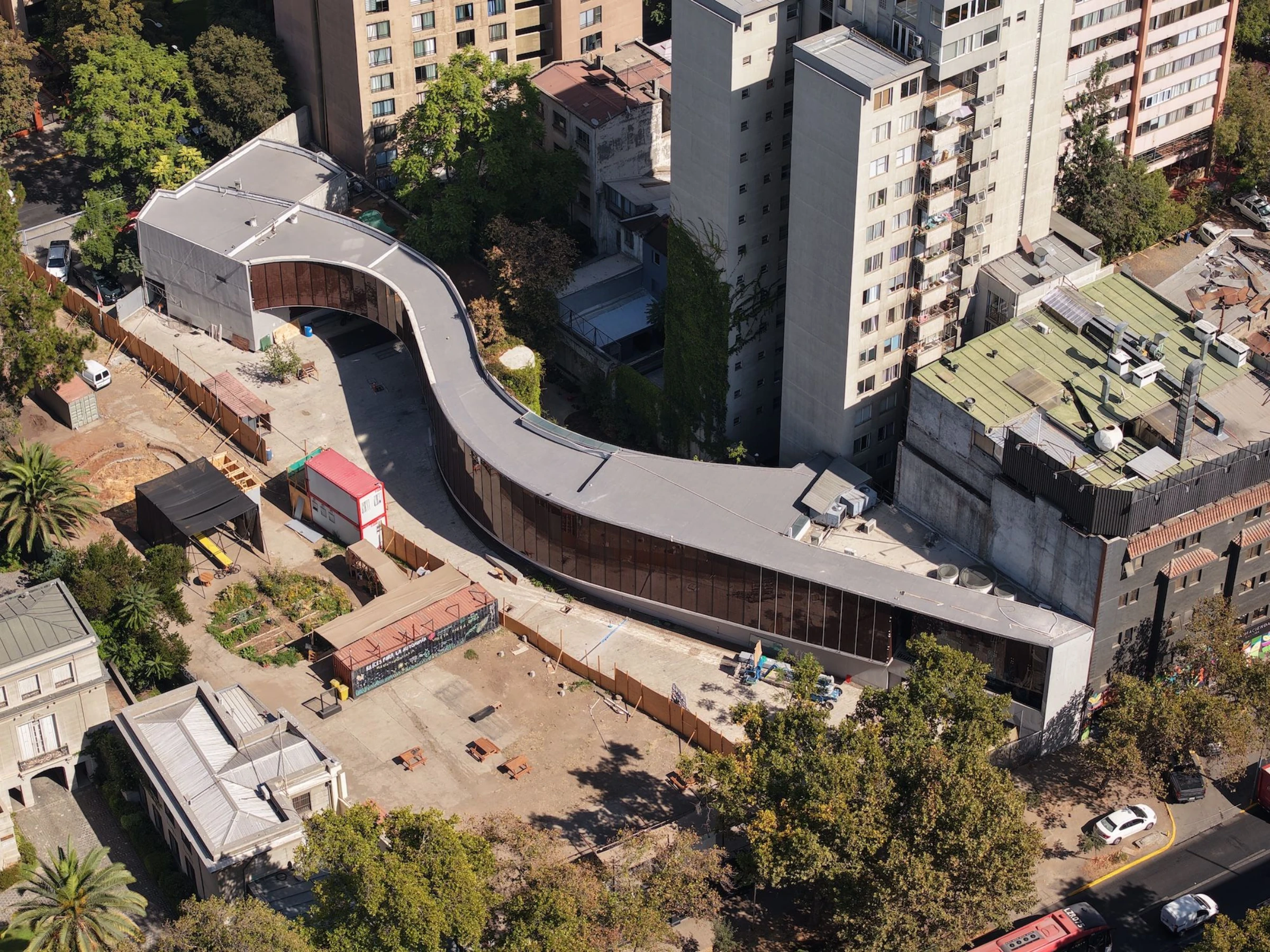
Santiago’s Violeta Parra Museum Reopens Six Years After Arson Attacks
Chile’s Violeta Parra Museum has reopened after a six-year closure, reopening a key cultural institution while exposing how vulnerable museum infrastructure remains in politically charged urban zones.
After more than six years offline, Santiago’s Museo Violeta Parra reopened on 24 March with a difficult kind of victory: the building survived politically charged arson attacks, the collection was protected, and the institution has returned under a hardened operating model. For directors and trustees, this reopening reads less like a ceremonial cut-ribbon and more like a practical model for how small and mid-scale museums can stay public in high-volatility urban contexts.
The museum’s closure followed three fires in February 2020 during social unrest in Chile. Works were reportedly evacuated before major structural damage escalated, which preserved the curatorial core of the institution even as the site went dark. That distinction matters. A museum that protects collections and documentation can reopen as a continuation of mission, while a museum that loses those assets often reopens as a symbolic restart with broken scholarly continuity.
Restoration costs were covered at roughly $1 million through insurance, and the rehabilitation process brought back architect Cristián Undurraga, whose original design referenced the shape of a guitar in acknowledgment of Parra’s musical legacy. Under director Denise Elphick, appointed in 2023, the institution has now reopened with reinforced windows and expanded emergency coordination. In operational terms, security is no longer separate from program. It is now part of the museum’s curatorial precondition.
What makes this case important for the wider field is that the museum did not retreat into restricted access after reopening. It resumed a public-facing program around Violeta Parra’s multidisciplinary practice, linking song, textile, painting, and sculpture inside a single historical frame. That continuity strengthens the institution’s role in Chile’s cultural infrastructure and reinforces the museum’s position in relation to partner ecosystems such as the University of Chile and national culture agencies.
Parra’s profile has also maintained transnational relevance through traveling institutional frameworks and sustained scholarly comparison to other artists whose legacies sit across folk and modern traditions. Those comparisons are often over-simplified, but they point to a real curatorial challenge: institutions must hold both popular-cultural resonance and art-historical rigor at once. Museums that flatten one side of that equation usually weaken audience trust on the other.
The reopening should therefore be read as a governance signal as much as a cultural one. In a budget-tight environment, leadership teams are being asked to deliver public value while maintaining risk discipline. This museum’s approach, insurance-backed reconstruction, targeted technical upgrades, and explicit security integration, gives other institutions a usable template. It is neither triumphalist nor defeatist. It is procedural.
For curators and collectors, the immediate implication is to follow programming depth over opening-week optics. Watch how long-term loans are managed, how exhibition narratives are rebuilt, and whether the museum can sustain publication output and partnerships over a full cycle. If that structure holds, the reopening becomes durable. If it does not, the site risks becoming an occasional symbolic venue rather than a stable research institution.
The broader lesson is clear. In the current decade, institutional resilience is not a communications concept. It is engineering, insurance, labor coordination, and governance continuity under pressure. Museums that adapt early will preserve both collections and public trust. Museums that postpone this shift will spend more, lose more time, and reopen weaker. Santiago’s Violeta Parra Museum has now shown one credible path through that reality.