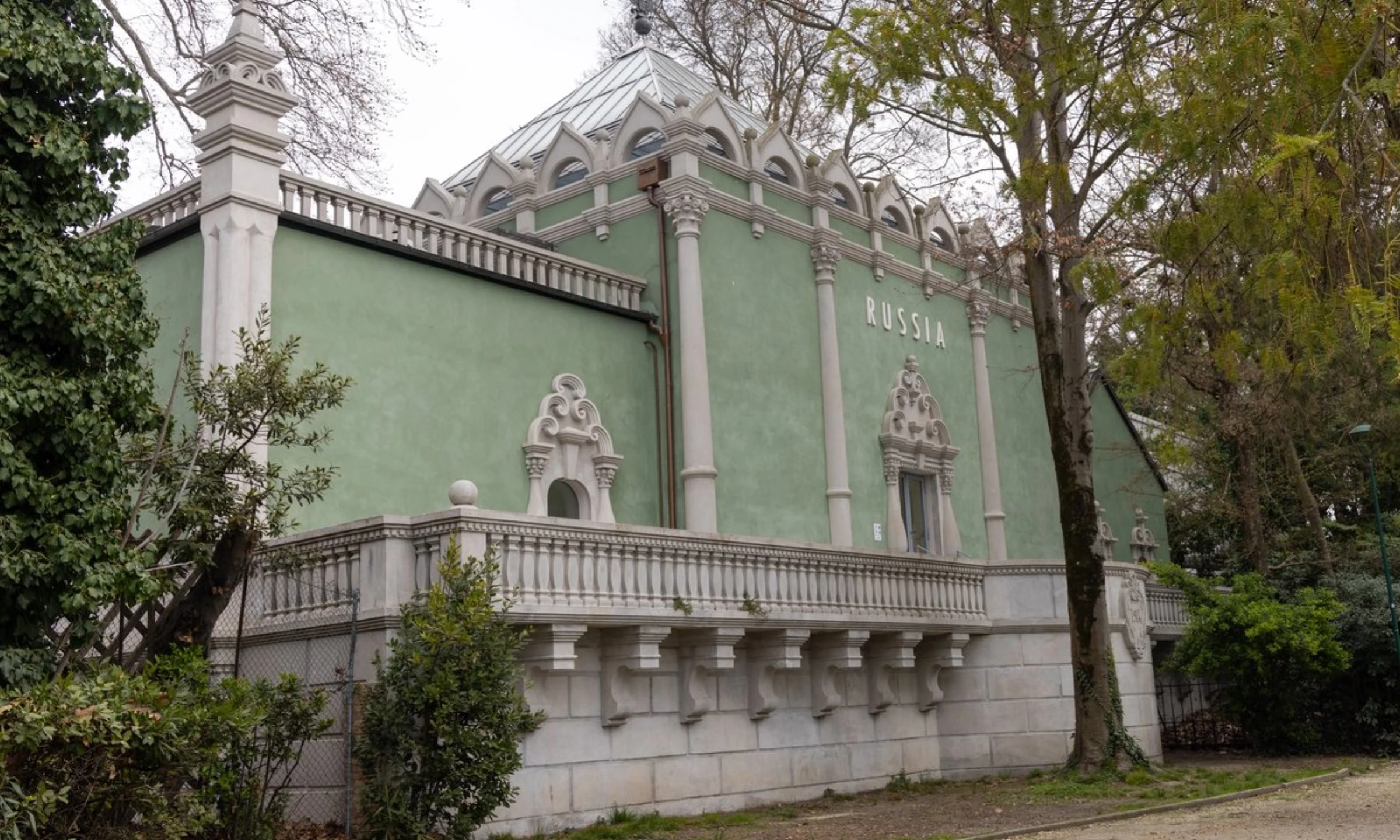
Venice Mayor Warns Russia Pavilion Could Be Closed Over Propaganda
Venice mayor Luigi Brugnaro said the Russian pavilion would be shut if used for propaganda, as political pressure intensifies around Russia’s planned return to the 2026 Biennale.
Venice mayor Luigi Brugnaro has said that Russia's pavilion at the 2026 Venice Biennale would be closed if it functions as propaganda. The statement arrives as Russia plans a formal return to the Biennale after its absence following the full scale invasion of Ukraine in 2022, and as pressure grows from European institutions and funding channels.
The Art Newspaper reports a widening split among Italian cultural authorities over how the return should be handled. The issue is no longer only about whether Russia participates. It is about who defines acceptable participation terms, how compliance is monitored, and what enforcement looks like if political messaging crosses declared limits.
Brugnaro's framing is deliberately two track. He warned against propaganda but also defended Venice as a place of diplomacy and openness. That dual line mirrors the tension inside many large cultural platforms: preserve international exchange claims while preventing an event from becoming a stage for state narrative laundering.
The conflict has practical consequences for governance at the Biennale itself. If organizers accept participation and then police content in real time, they assume editorial and political accountability that is unusually exposed for a cultural institution. If they do not police content, they invite accusations that neutrality language is functioning as cover.
European Union funding pressure has intensified that dilemma. Financial leverage can move policy faster than institutional ethics debates, and this case shows exactly how. Once funders signal potential withdrawal, governance decisions that seemed abstract become immediate budget risk calculations.
The Biennale's own statements have focused on sanctions compliance and procedural legality. That is necessary, but not sufficient. Legal compliance does not automatically resolve the reputational or moral legitimacy question. For many stakeholders, the threshold is whether participation conditions can be enforced transparently and consistently across politically sensitive cases.
Artists and activist groups are already testing those claims in public. Pussy Riot's response, as cited in coverage, reframes the event's proposed dissent programming as potentially performative if official state representation proceeds in parallel. This critique matters because it targets institutional coherence, not only state behavior.
For the art world, this is a precedent case. The outcome will influence how other biennials and major fairs design participation frameworks for state actors under sanctions pressure or active conflict conditions. Institutions are watching whether Venice can build a rule set that is both enforceable and publicly legible.
The immediate headline is a mayoral warning. The structural story is that the Biennale has become a live laboratory for cultural diplomacy governance under war conditions. Institutions that claim to be apolitical are finding that logistics, funding, and platform access are already political instruments whether they admit it or not.
Collectors, curators, and artists should treat this moment as a governance signal for the next decade of mega events. The question is not only who gets in, but how institutions document principles before crisis pressure arrives and how evenly those principles are applied once politics intensify.
Reference context: <a href='https://www.labiennale.org/en' target='_blank' rel='noopener'>La Biennale di Venezia, municipal governance context from the <a href='https://www.comune.venezia.it/en' target='_blank' rel='noopener'>City of Venice, and European policy pressure background via the <a href='https://culture.ec.europa.eu/' target='_blank' rel='noopener'>European Commission culture portal.