Venice Biennale Jury Resigns Days Before Opening Amid Russia and Israel Dispute
The five-member international jury resigned nine days before the Biennale opening, forcing a last-minute rewrite of the 2026 prize process.
The Venice Biennale has entered its most volatile pre-opening week in recent memory. On April 30, organisers confirmed that the full international jury for the 61st edition had resigned, just days before the exhibition opens. The jury, chaired by Brazilian curator Solange Farkas, had been central to awarding the Golden Lion prizes that often shape market momentum and institutional visibility for years.
The resignation follows escalating conflict over participation by Israel and Russia. In an earlier statement, jurors said they would not award prizes to countries whose leaders are currently charged with crimes against humanity by the International Criminal Court. While no country was named, the implications were clear and immediately read as applying to both states. The fallout has now forced the Biennale to move the formal prize ceremony to November and replace jury selection with a visitor vote process.
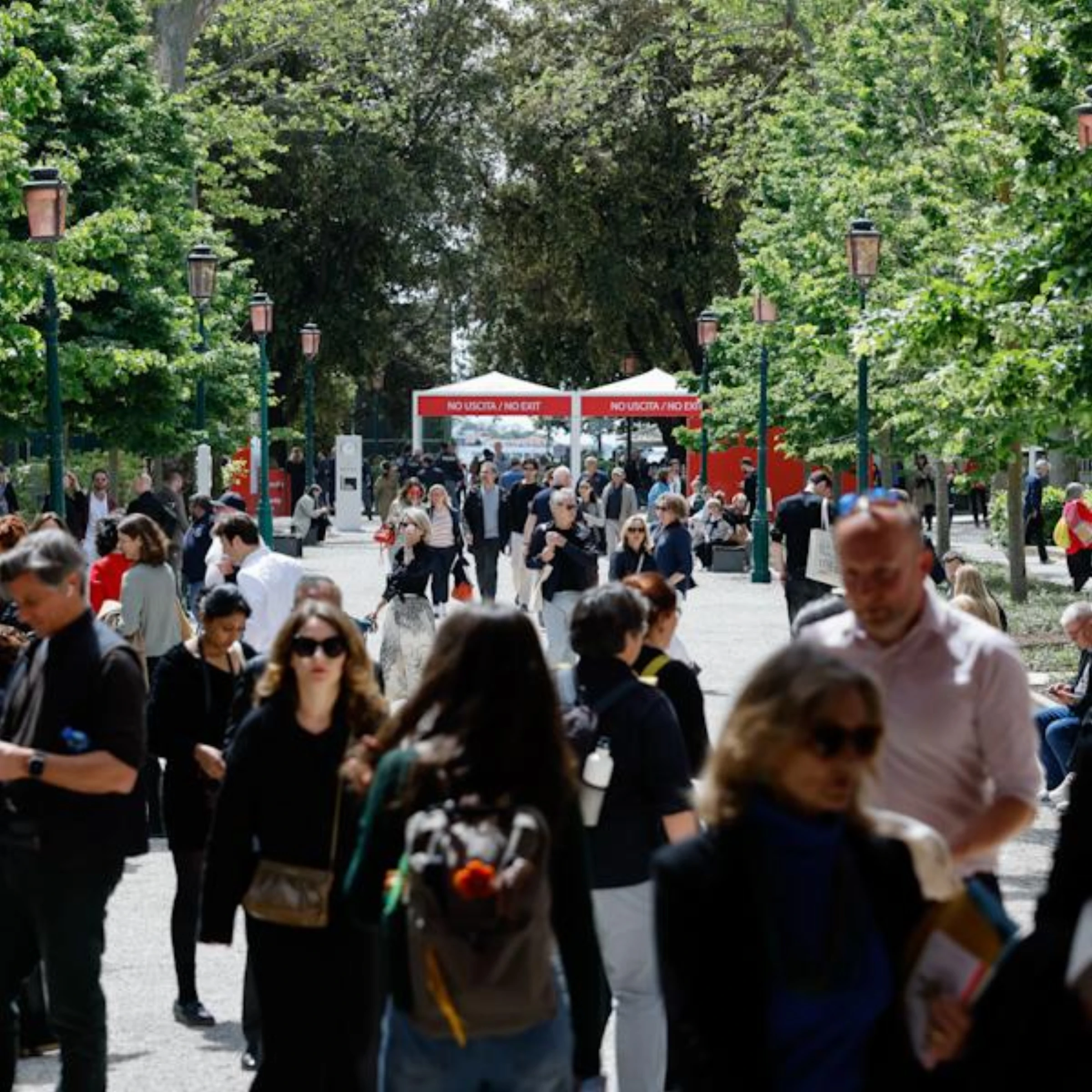
The Biennale says visitors who have attended both major venues, the Giardini and the Arsenale, will be eligible to vote for best artist and best national pavilion. That procedural pivot is not cosmetic. It changes the logic of recognition at the most influential recurring exhibition in contemporary art, shifting from peer adjudication to audience participation at the point where geopolitical pressure is highest.
For artists and commissioners, the timing is damaging. National pavilions spend years and substantial public money preparing for Venice, in part because jury awards can convert directly into museum invitations, acquisitions, and long-tail international exposure. A reconfigured awards structure this late in the calendar introduces uncertainty not only for this edition but also for how future biennials manage political legitimacy.
The controversy is also occurring within a wider institutional argument about whether major art events can remain formally neutral while operating in an era of active sanctions regimes, war crimes litigation, and highly visible cultural boycotts. That pressure has already intensified across the ecosystem, from public letters by artists and curators to direct intervention by state ministries. In Italy, government officials have reportedly sought documentation regarding compliance and governance decisions connected to the Biennale.
Read against the curatorial framework for this year, In Minor Keys, the institutional rupture is striking. A show expected to foreground nuance and attunement has instead become a test case for procedural authority under geopolitical stress. The official Biennale schedule remains in place, and the exhibition opens as planned. But one of its core legitimating mechanisms, independent jury judgment, has collapsed in public view.
The episode has immediate legal and diplomatic spillover. Formal statements from the International Criminal Court and official Biennale communications now shape how the dispute is being interpreted institutionally. Public records around jury criteria, ministry correspondence, and pavilion governance will likely be examined as closely as the exhibition itself. That matters because biennials are not only cultural showcases, they are also quasi-civic institutions that operate with public funding, diplomatic participation, and reputational capital across multiple states.
For curators and directors, this is now a procedural case study. Teams preparing for São Paulo, Sharjah, Gwangju, or Kassel will watch how Venice documents its emergency governance choices, how those choices are communicated to artists, and whether revised processes are perceived as fair. A rushed fix can stabilise headlines but still weaken long-term trust.
That collapse will matter well beyond Venice. Curators, trustees, and ministry officials across Europe and North America are watching how this episode resets expectations around governance, public accountability, and the boundaries between curatorial practice and state power. Whatever the quality of the exhibition itself, the 2026 edition is already defining a new institutional threshold for the global biennial model, and a warning that procedural legitimacy can fail as quickly as artistic reputations are made.