Venice Biennale Jury Excludes Certain National Pavilions From Golden Lion Consideration
The 2026 Venice Biennale jury says it will withhold Golden and Silver Lion consideration from countries whose leaders are charged with crimes against humanity.
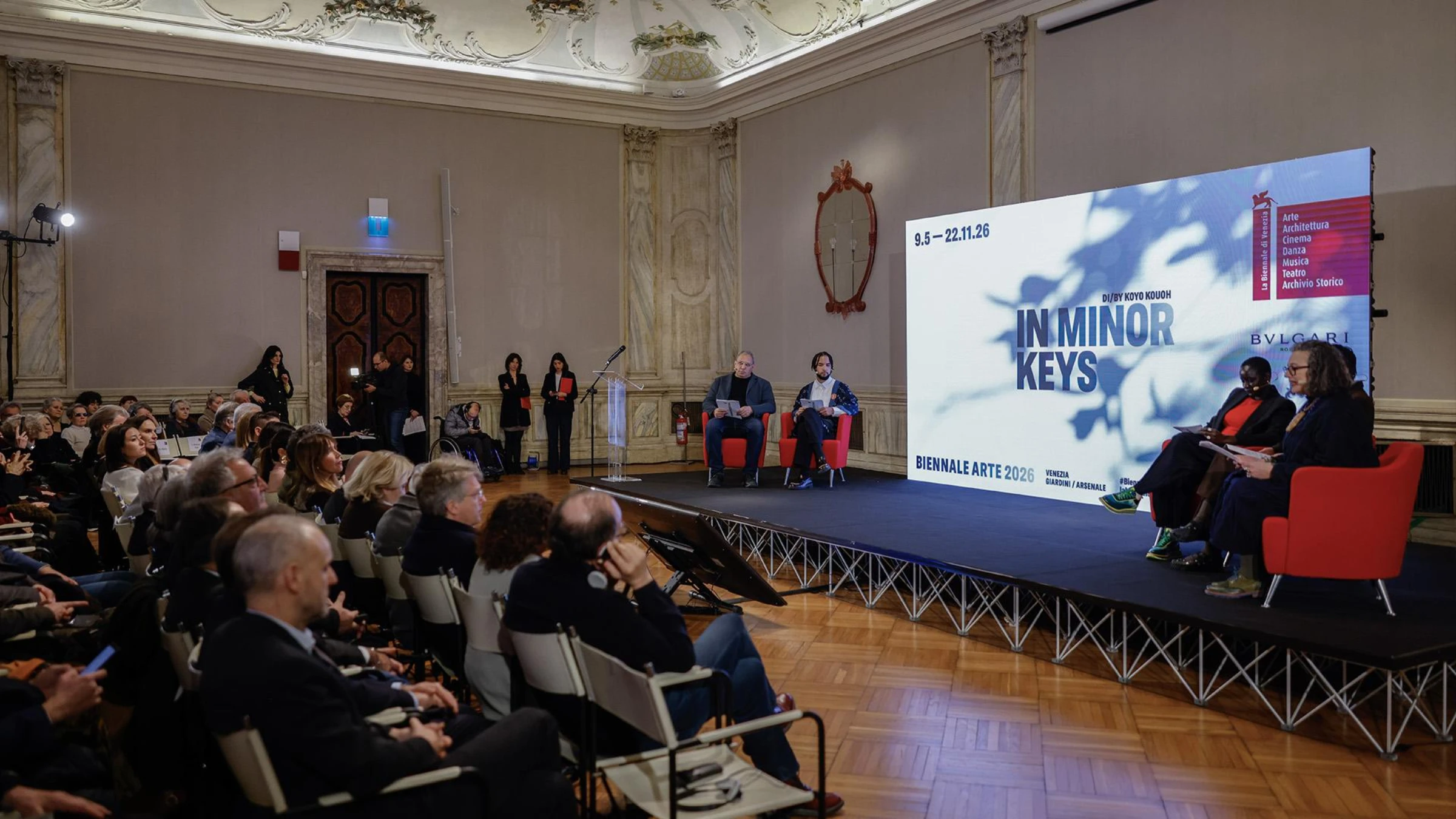
The jury for the 2026 Venice Biennale has announced a consequential awards policy: it will not consider pavilions from countries whose leaders are currently charged with crimes against humanity when awarding the Golden Lion and Silver Lion prizes. The statement does not dissolve participation itself, but it creates a two-track system inside the most visible part of the event, one for exhibition and another for prize eligibility.
That distinction matters because awards are not ceremonial side notes in Venice. They influence acquisition pipelines, museum invitations, gallery positioning, and the language institutions use to historicize artists in real time. To remain visible but become ineligible for top honors is not neutral. It reshapes the symbolic economy of the Biennale while preserving its diplomatic architecture.
The jury framed its position as a human-rights commitment aligned with the curatorial ethos of the 2026 edition. In practical terms, this is an attempt to intervene at the level of institutional recognition rather than participation bans. It is a narrower instrument than exclusion, but it is still a sanctioning gesture within a curatorial framework, and that is why it has triggered immediate debate.
Supporters read the move as overdue ethical clarity: if biennials claim public relevance, they cannot treat severe international legal charges as external noise. Critics read it as selective enforcement that leaves the national model intact while applying moral pressure unevenly through prizes. Both readings can be true at once. The policy is ethically pointed, but structurally partial.
The decision also lands in a week already marked by pressure on Venice governance, including broader disputes over public funding and geopolitical participation. Together, those disputes show that biennials no longer have the luxury of treating legal regimes, foreign policy, and curatorial rhetoric as separate domains. The interfaces are now operational, not theoretical.
For artists and commissioners, the immediate challenge is strategic positioning. If awards pathways can be altered by legal status at the state level, pavilion planning now has to include scenario analysis that historically sat outside curatorial prep. Teams will need legal counsel, reputational planning, and communication frameworks alongside production and installation schedules.
The deeper consequence is conceptual. Venice has long marketed itself as a global stage where national representation and artistic experimentation coexist in tension. The jury’s policy intensifies that tension by saying the representational frame remains, but recognition within that frame is conditional. Whether this becomes precedent for future editions will depend on enforcement consistency and whether other major biennials adopt comparable criteria.
Either way, the threshold has moved. A jury statement now functions as governance, not commentary. That shift will outlast this cycle, and institutions across the circuit are already taking notes.
The practical reference points are now public and trackable. The exhibition framework is set by La Biennale di Venezia, while legal thresholds around crimes against humanity sit with the International Criminal Court. Parallel political pressure comes through EU institutions, including the European Commission. Together, these systems are now shaping prize eligibility as much as curatorial discourse.
For collectors, the implication is concrete: if awards become contingent on geopolitical criteria, acquisition strategy has to account for eligibility rules, not just critical response. For curators, catalog framing will need to explain how and why recognition structures changed inside the same edition, so audiences can parse policy effects without losing sight of the artworks themselves.