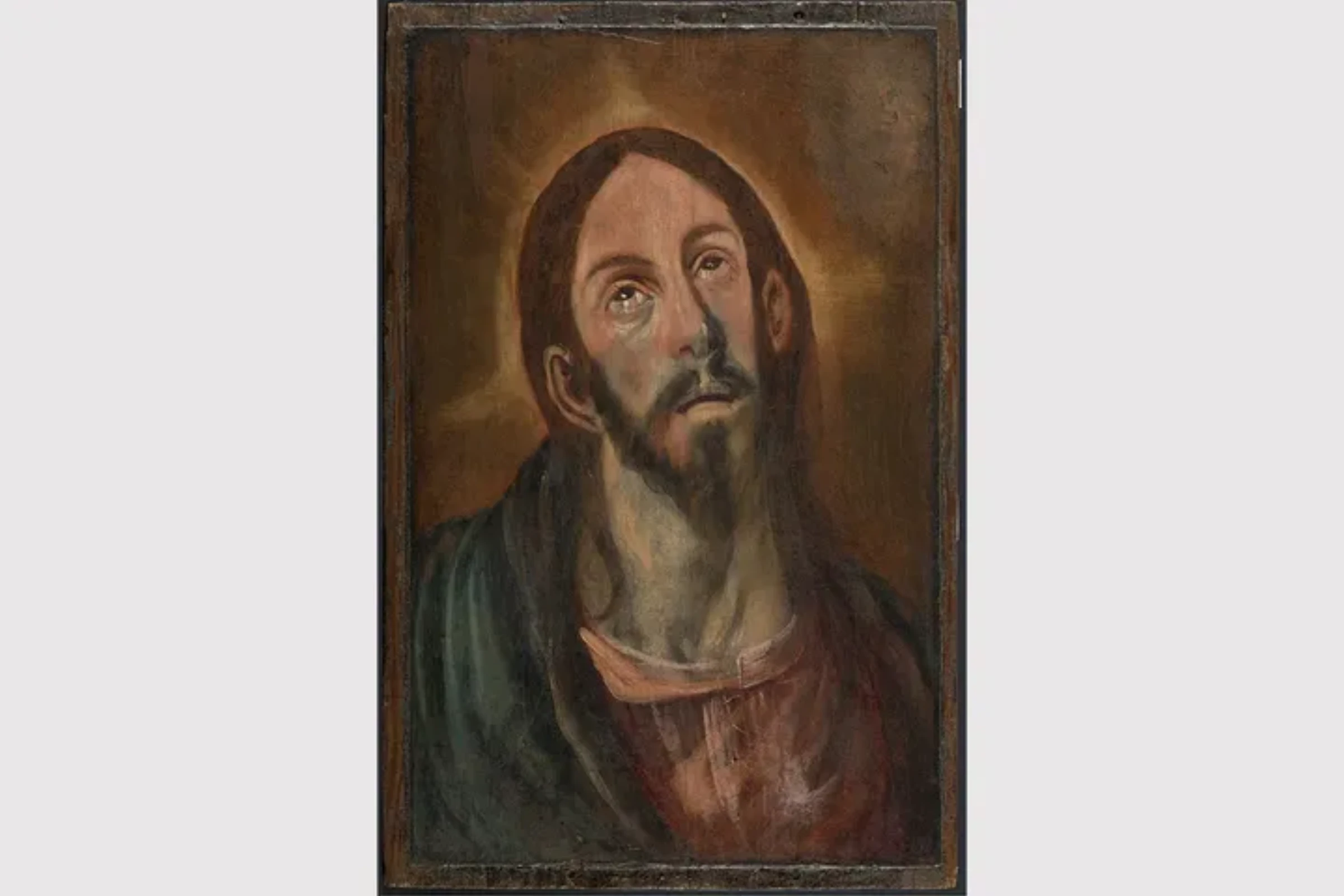
Vatican Restorers Identify Newly Attributed El Greco in Collection
Conservation work in the Vatican has identified The Redeemer as an El Greco, underscoring how restoration and technical study continue to produce major attribution shifts in old master collections.
The Vatican has announced that The Redeemer, a late sixteenth-century painting in its holdings, has been newly identified as a work by El Greco after restoration and technical review by conservators.
According to reports, restorers Alessandra Zarelli and Paolo Violini recognized that an overpaint layer had obscured the original hand, preserving a long-standing misreading of authorship until treatment exposed key underlying passages.
This is a classic old master scenario. Attribution moves when material evidence changes. Once varnish, overpaint, and later intervention are clarified, stylistic comparisons can be made on a cleaner visual field and with stronger technical support.
The practical consequences are substantial. A revised attribution influences valuation, insurance, catalogue records, exhibition planning, and scholarly framing. It can also trigger reassessment of related works that were grouped under workshop or follower labels.
The Vatican’s case also highlights conservation’s strategic role inside major collections. Restoration is not only care and stabilization. At institutional scale, it is a research engine that can rewrite art-historical maps and reset curatorial priorities.
For the wider field, the finding is a reminder that many important collections still hold partially unresolved objects, especially where nineteenth- and twentieth-century restoration campaigns introduced interventions now considered methodologically noisy.
Attribution claims tied to major names require publication discipline. The fastest way to build confidence is transparent documentation: treatment history, imaging protocols, pigment analysis where available, and clear argumentation distinguishing observable facts from interpretive leaps.
Museums that do this well create both scholarly trust and public credibility. Museums that do it poorly invite cyclical controversy, with each claim treated as branding rather than evidence.
The Vatican discovery should therefore be watched beyond headline value. If fuller technical notes follow, the case could become a useful benchmark for conservation-led attributions in ecclesiastical collections where archival complexity is the norm.
For context, readers can compare conservation communication practices at institutions such as the Museo del Prado, the National Gallery, and restoration resources from the Getty Conservation Institute.
If the attribution consolidates, The Redeemer will matter not only as a recovered El Greco but as evidence of how much art history still depends on sustained institutional craft rather than one-off market theatrics.
The larger lesson is simple: serious conservation programs continue to produce serious knowledge. In a field often dominated by speculative narratives, that remains one of the most reliable ways new facts enter the record.
The institutional message extends beyond one painting. Collections with layered restoration histories are likely to hold other works where attribution can change once technical evidence is revisited under contemporary standards. Museums that schedule systematic review cycles are better positioned than those relying on ad hoc interventions.
For public-facing context, readers can also compare ecclesiastical and museum approaches at the Vatican Museums and conservation documentation models at the National Gallery, London, both of which illustrate how technical transparency can strengthen attribution confidence over time.
The case also underlines a staffing reality: when conservation departments are treated as central research units rather than back-office support, institutions gain both scholarly output and stronger public trust in attribution decisions.