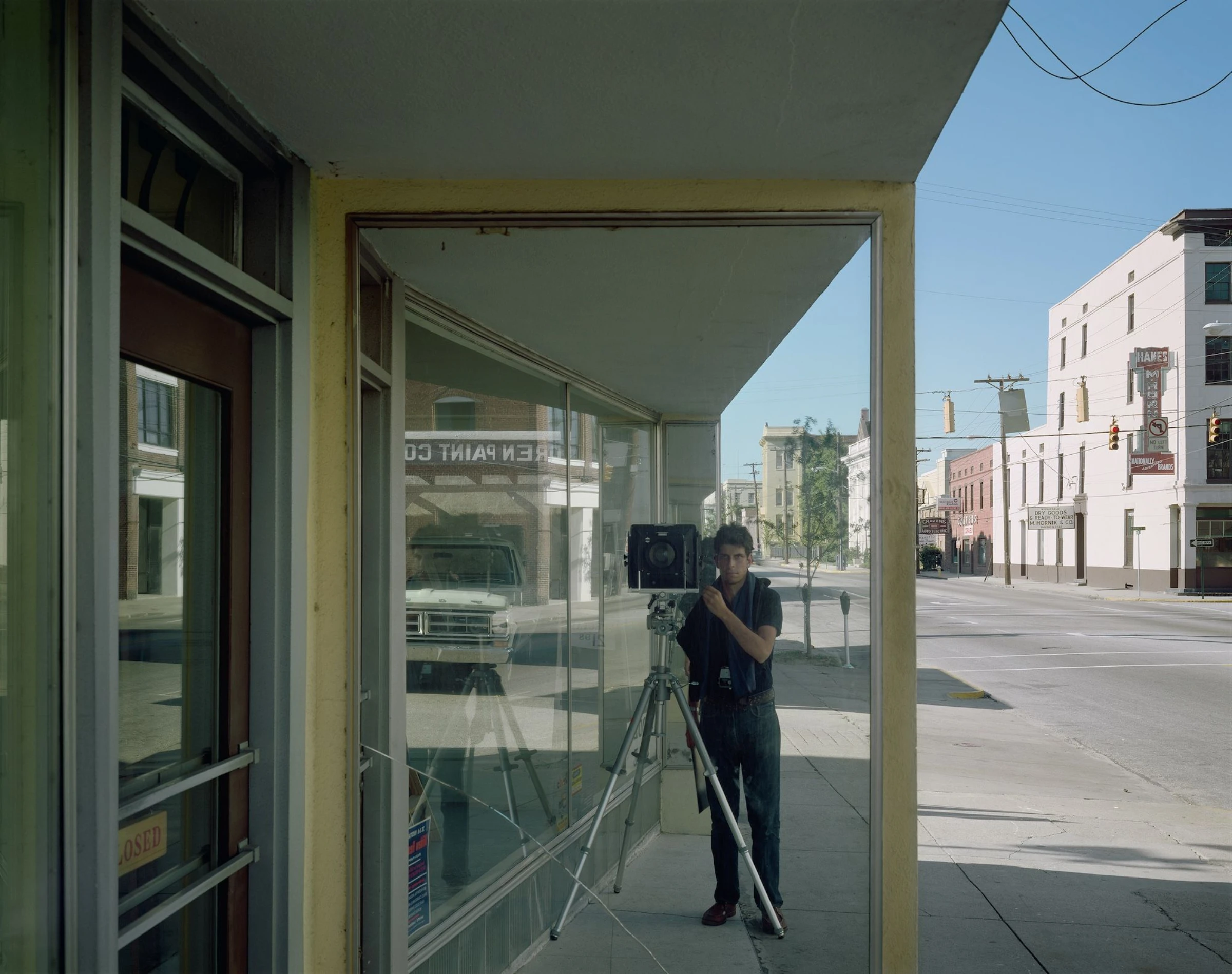
Vancouver Art Gallery Receives Landmark Gift of 800 Stephen Shore Photographs
A major promised gift of more than 800 works by Stephen Shore gives the Vancouver Art Gallery one of the deepest institutional holdings of the artist outside the United States.
The Vancouver Art Gallery has announced a promised gift of more than 800 photographs by Stephen Shore, a transfer that instantly changes the institution's position in North American photography. The donation, assembled over decades by private collectors with close ties to Shore's career, includes vintage prints, later large format works, and examples from the bodies of work that made his reputation in the 1970s and 1980s. Museum leaders described the gift as both an art historical resource and a long term public commitment, noting that the scope allows for sustained research, not just a single headline exhibition.
Shore's influence is easy to summarize and harder to measure. He helped legitimize color photography as serious museum material at a moment when black and white still carried institutional prestige. He treated ordinary American streets, motel rooms, parking lots, and intersections as formal problems, then solved them with a rigor that younger photographers are still learning from. An 800 work holding means curators can show that evolution in detail: shifts in framing, shifts in print scale, and shifts in his relationship to documentary truth as the medium moved from analog to digital workflows.
For Vancouver, the timing is strategic. The city has a strong photography audience, but its major holdings have historically been more dispersed than concentrated. This gift offers the kind of depth that supports serious scholarship, graduate level study partnerships, and repeat thematic installations over multiple years. It also gives the museum leverage when building adjacent acquisitions. Once an institution becomes a destination for one canonical figure, loans and gifts of related artists often follow. In practical terms, this could strengthen the museum's ability to present exhibitions that connect Shore to Bernd and Hilla Becher, Lewis Baltz, Nan Goldin, and contemporary image makers influenced by his serial logic.
The Shore gift positions Vancouver not as a regional footnote in photography, but as a city where the medium's key debates can be studied at full scale.
The gallery has indicated that the gift will be integrated in phases, with conservation review, cataloging, and digitization already underway. That process matters because Shore's production spans different print technologies and paper types, each with its own preservation requirements. A rushed rollout would flatten the collection into a publicity moment. A careful rollout can build a decade of programming. Early plans reportedly include a focused opening presentation around street level vision, followed by a larger survey that situates Shore's North American scenes within wider conversations on mobility, suburban design, and the politics of looking at everyday life.
The announcement also arrives as institutions face pressure to justify why canonical male artists still receive major resources. In this case, the answer will depend on curatorial framing. If the museum treats the gift as a static monument, the criticism will be fair. If it treats the material as an active teaching tool, set in dialogue with women, Indigenous, and diasporic photographers working on parallel questions of place and representation, the collection can become genuinely productive. The best outcome is not reverence. It is friction, comparison, and new scholarship built from direct encounters with the prints.
No opening date has been finalized for the first public installation, but the museum has said details will be released after initial cataloging milestones are complete. For now, the headline is clear: Vancouver has secured a major photography resource that most institutions spend years trying to build, and it now has the curatorial burden of proving what that scale can do in public.