Los Angeles Artists Mark 40 Years of Everyday Urban Portraiture in New Calendar
Nib Geebles and Abira Ali’s 2026 "Unknown Landmarks" project turns strip malls, storefronts, and street signage into a sustained civic archive, insisting that ordinary neighborhood spaces carry cultural memory worth defending.
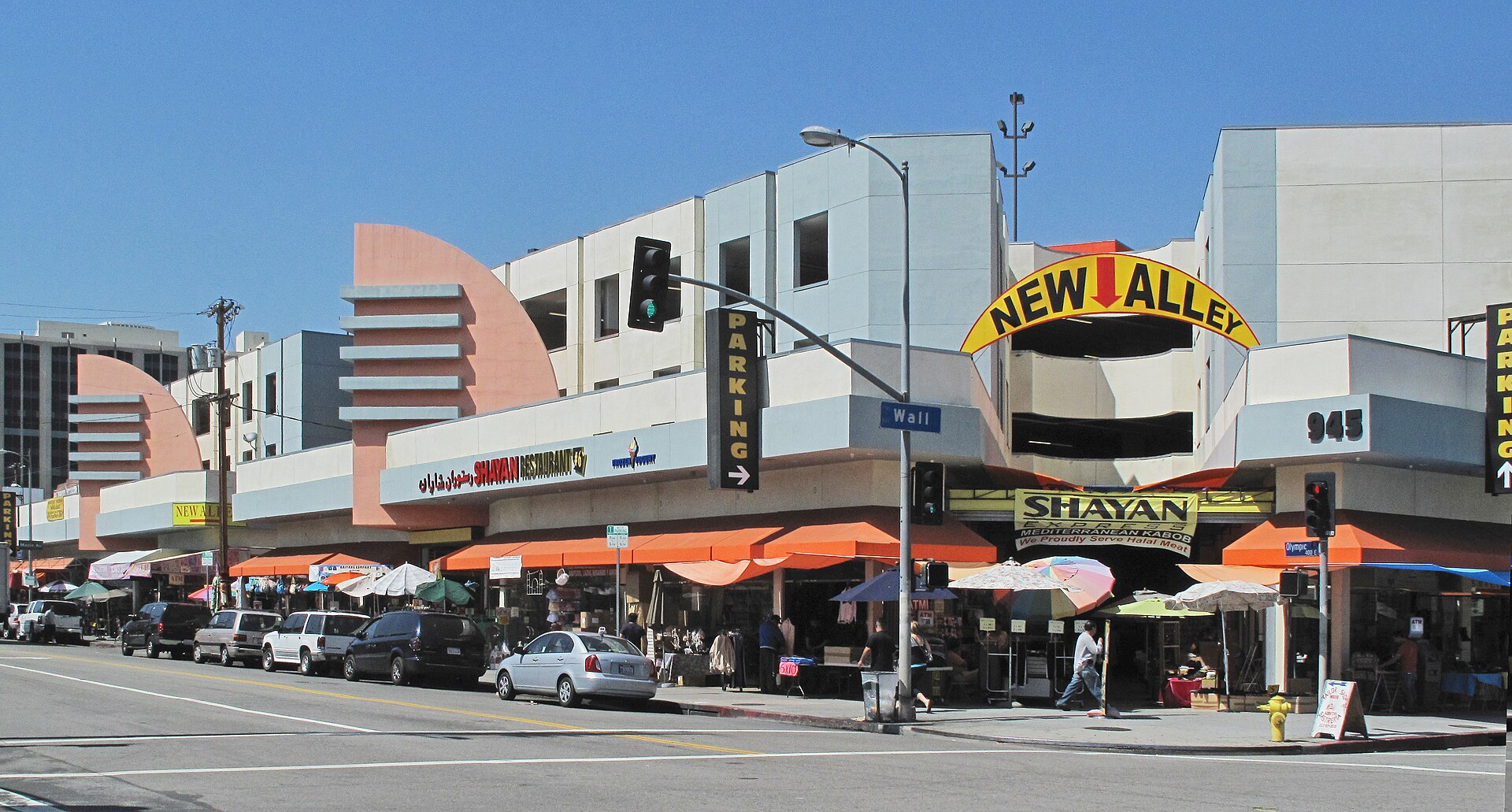
A long-running Los Angeles artist collaboration has reached its 40-year mark with the release of "Unknown Landmarks," a 2026 calendar by Nib Geebles and Abira Ali that documents the city’s underseen visual fabric: neighborhood flower shops, donut counters, hand-painted signs, and weathered storefront facades. Presented as a modest annual object, the project functions more ambitiously as a cumulative record of urban life under constant redevelopment pressure.
Geebles, the pen name of Gordon Henderson, and Ali began collaborating as teenagers and sustained the project through shifts in medium, neighborhood demographics, and city economics. Their recent pages continue a recognizable visual language, quick linework, selective distortion, and deliberate informality, while expanding the project’s political frame. The choice of subject matter, especially immigrant-owned and locally rooted businesses, reads as intentional resistance to the branding logic that tends to flatten Los Angeles into entertainment districts and lifestyle shorthand.
The calendar’s argument is simple and forceful: if the city is changing faster than memory can keep up, drawing becomes a form of local governance.
The calendar format matters because it links image-making to lived time. These works are not encountered in a white cube in one concentrated visit, they are revisited month by month as practical objects. That temporal structure lets the project register attrition, closures, and neighborhood turnover in ways that exhibition cycles rarely can. The artists have also maintained a tradition of inserting invented "holidays" into calendar pages, embedding sharp social prompts inside a familiar domestic tool rather than a specialist art context.
Reported statements by the artists underline the preservation stakes. Henderson has emphasized the disappearance of personally expressive storefront culture, while Ali has framed the project as a defense of the city they inhabit. Their distribution model reinforces that stance: calendars circulate through small local businesses and were recently shown at North Figueroa Books, with proceeds from a closing event directed to the Coalition for Humane Immigrant Rights in Los Angeles. The work links observation to resource transfer, not only commentary.
In art historical terms, the project sits between vernacular drawing practice, social documentary, and conceptual publishing. It treats seriality as method and neighborhood attention as ethics. It also complicates common distinctions between "major" and "minor" urban landmarks, proposing that civic identity is produced as much by corner shops and painted signs as by architect-designed icons.
There is also a media ecology argument here. In an image economy dominated by frictionless capture and endless upload, Geebles and Ali commit to slow looking, selection, and hand-rendered translation. That process reintroduces authorship and judgment into urban documentation, refusing the idea that more images automatically produce better civic understanding. Their drawings are partial by design, and that partiality is what makes them interpretive rather than merely illustrative.
As municipal development accelerates and commercial leases continue to reshape cultural geographies, the calendar’s long duration becomes its critical power. Four decades of sustained looking has built a body of evidence that city narratives are always contested in ordinary places first. Geebles and Ali have made a durable point: what is dismissed as background is often the most exact portrait of a city’s social life, and often the first terrain where cultural erasure begins.