Why Britain’s VAT Shift Puts Church Art at Risk
The end of UK VAT relief for listed places of worship turns routine conservation bills into a direct threat to murals, stained glass and carvings.
The policy change lands hardest where the art is oldest and the cash is thinnest
The British government’s decision to let the Listed Places of Worship Grant Scheme lapse looks bureaucratic on paper and brutal in practice. For a quarter century the scheme allowed listed churches to reclaim VAT on repair and maintenance projects, removing a 20% surcharge from work that is rarely optional and never cheap. The Art Newspaper reports that the sudden loss of that relief is already pushing projects back into doubt, with conservation bills rising by tens of thousands of pounds at exactly the institutions least able to absorb the hit. When the buildings in question house wall paintings, carved monuments, stained glass and rare decorative schemes, this is not simply a church-finance story. It is a story about whether a nation is willing to fund the ordinary maintenance that keeps an enormous distributed collection of art alive.
Church heritage is easy for policymakers to underrate because it is spread across thousands of sites rather than concentrated inside a handful of famous museums. That diffusion is exactly what makes it culturally serious. England’s parish churches and chapels hold paintings, memorial sculpture, textiles, vernacular craftsmanship, choir screens, furnishings and local records that would be considered national treasures if they were lifted out of devotional settings and installed behind museum glass. Instead they remain embedded in buildings maintained by volunteers, small congregations and overstretched wardens. Once VAT relief disappears, those custodians are not choosing between ideal and ideal. They are choosing between patching a roof, stabilising a tower, saving a mural or giving up.
The new burden also reveals how badly the state still misunderstands maintenance. Politicians like capital campaigns because they come with ribbons, plaques and ministerial photo opportunities. Maintenance has no glamour. It consists of lime mortar, scaffolding, drainage, specialist conservators and the long slow work of keeping water away from vulnerable surfaces. Yet maintenance is where stewardship becomes real. A church does not lose its art all at once. It loses it through deferred repairs, damp, a cracked gutter, a postponed tower job, a funding gap that turns one winter into three. The VAT change accelerates exactly that kind of damage.
What looks like a tax decision is really a cultural triage system
Claire Walker of the National Churches Trust told The Art Newspaper that 21,000 churches were exposed to new VAT costs overnight. The scale matters. This is not a targeted intervention in a narrow subsector. It is a nationwide shift in the economics of care. Once costs rise that sharply, institutions begin triaging: urgent structural work first, specialist conservation later, ambitious restoration maybe never. The casualties are often the artworks and interiors that cannot argue for themselves in a fundraising spreadsheet. A leaking roof can produce visible panic; flaking paint or salt bloom on a mural often produces deferred concern until the repair becomes vastly more expensive.
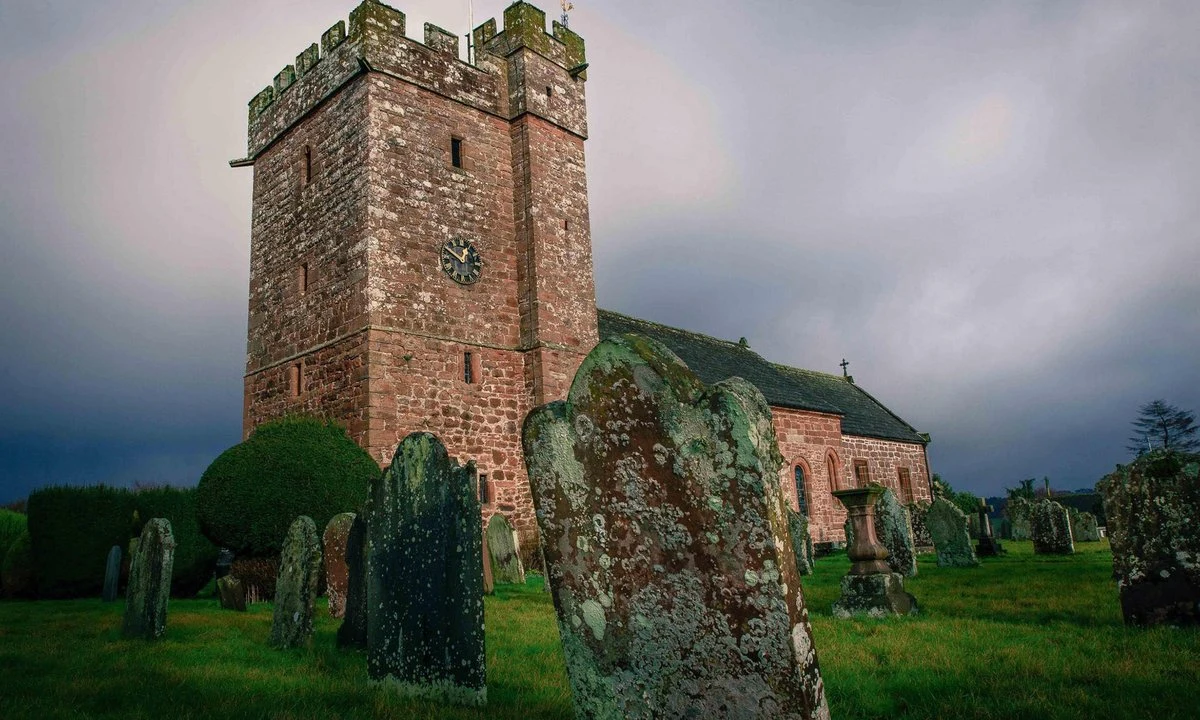
The examples in the reporting are telling. St Cuthbert’s Church in Great Salkeld now faces the prospect of an extra £19,000 in VAT on a £95,000 Peel Tower project. At St Peter’s Church in Retford, the murals by Phoebe Anna Traquair need specialist intervention because damp and water ingress are already doing their work. Adding another £50,000 to the target is not a rounding error. It can be the difference between a project moving forward with professional care and a project stalling while damage deepens. Once conservation becomes contingent on heroic volunteer fundraising, the state has effectively built a triage system in which the luckiest sites survive and the quieter ones decay.
That dynamic should matter even to readers who are not invested in church life. The argument here is not theological. It is civic. Historic churches function as local museums, public rooms, archives, landmarks and repositories of workmanship that no current market could recreate at equivalent cost. In many rural places they are the most significant art spaces available to the public without a ticket. If the state is comfortable subsidising museum repairs while withdrawing comparable relief from churches open to visitors, it is not being neutral. It is choosing a narrower definition of public culture.
The government’s replacement fund does not solve the structural problem
The announced Places of Worship Renewal Fund is better than nothing and weaker than the scheme it replaces. Historic England will deliver the programme in England with an annual budget of £23 million for four years, well below the £42 million that supported the previous system in 2024 and 2025. That gap is not an accounting technicality. It means institutions will be pushed from an automatic reclaim mechanism into a more selective grant environment where some projects receive help and others do not. Grants create winners and losers. VAT relief treated repair as a baseline public good.
The territorial limits worsen the problem. The new fund applies only to England, leaving places of worship in Scotland, Wales and Northern Ireland without equivalent support. Heritage does not respect administrative neatness, and neither does deterioration. A mural in Nottinghamshire and a roof in rural Wales do not age according to ministerial jurisdiction. The policy therefore creates two layers of inequality at once: between churches and museums, and between English churches and the rest of the United Kingdom.
There is another practical problem. Grant regimes usually move slower than damage. Application windows, eligibility criteria and assessment timelines can be rational from the center and disastrous on the ground. A parish confronted with an unexpected VAT bill today cannot stabilize its budget by reading that guidance is coming soon. Conservation does not pause while Whitehall finalises paperwork. This is why the old scheme worked as a governance tool. It acknowledged that the state cannot micromanage thousands of urgent small repairs and should not pretend it can.
This is also a warning about how cultural policy undervalues distributed collections
Readers who followed artworld.today’s recent piece on the Sainsbury Centre’s transformational gift have already seen the opposite end of the cultural-finance spectrum: major institutions with visibility, capital campaigns and donor leverage. Parish churches live in another universe. They hold extraordinary material but lack the branding power that turns preservation into a prestige cause. The VAT shift exposes how vulnerable distributed collections become when cultural policy is built around headline institutions rather than the dense fabric of places where art survives without spectacle.
There is a dangerous habit in heritage politics of treating church art as incidental decoration to architecture. In reality many of these buildings are inseparable ensembles. The tower, plaster, screen, glass, carvings and murals form one conservation problem because water or structural movement in one part of the building affects the art elsewhere. You cannot save the image while neglecting the stone around it. That is why a tax on repair is never just a tax on masonry. It is a tax on the conditions that allow the art to remain legible at all.
The deeper ideological issue is whether Britain wants to keep pretending that heritage can be preserved mostly through goodwill. Volunteers are indispensable, but volunteers are not a fiscal strategy. Every time government withdraws a practical support mechanism and then praises community resilience, it is shifting national responsibility downward. That move may look frugal in budget lines. It looks reckless when the objects at stake are irreplaceable.
What matters now is speed, clarity and political pressure
In the short term churches need immediate clarity about the replacement fund, realistic access to emergency help and blunt public explanation of what will be lost if projects stall. Heritage organisations should resist the temptation to frame this as a niche religious matter. The stronger case is that the state has made conservation harder at the exact moment when many historic buildings are coping with inflation, skills shortages and long-postponed maintenance. The language should be direct: a tax change is now threatening nationally significant art in buildings that already operate on fragile margins.
Longer term the political test is simple. Either ministers restore a system equivalent to full VAT reclaim, or they accept that more repairs will be delayed and more heritage will be degraded. There is no clever rhetorical bridge across that fact. A nation that values medieval glass, Victorian murals and local craftsmanship should not fund their survival through attrition and grant anxiety. It should remove obvious barriers to routine care.
The churches most at risk are not necessarily the most famous ones. They are the ones with enough significance to warrant specialist work and too little cash to treat a 20% surcharge as manageable. That combination describes a huge amount of Britain’s cultural inheritance. If this policy remains in place, the damage will accumulate quietly, site by site, until future restorers are asked to rescue losses that present-day government chose to make more likely. That is the real cost of the VAT shift, and it is far larger than the tax line itself.
There is still time to reverse course, but reversal has to be understood as preservation policy rather than as a concession to a lobby. Britain already knows that emergency conservation is costlier than routine care and that once a work is lost, recreated authenticity is a contradiction in terms. The practical case for reinstating full relief is stronger than the ideological case against it. Governments that claim to value place, continuity and local identity should be willing to fund the maintenance mechanisms that make those values physically real. Otherwise the burden of keeping national heritage alive will continue to fall on the smallest institutions with the least spare cash, and the public will inherit the damage later as if it were inevitable.