Gold Toilet Intervention on the National Mall Tests How Political Satire Enters Monument Space
A guerrilla sculpture mocking Trump-era interior politics has turned the National Mall into a renewed battleground over protest aesthetics, permits, and symbolic authority.
The sudden appearance of a giant gold toilet sculpture near the Lincoln Memorial has pushed a familiar U.S. argument back into view: when does political satire in public space function as civic critique, and when does it slide into spectacle that dilutes its own claim? The intervention, attributed to the Secret Handshake collective, targeted Trump-era design excess while exploiting the symbolic charge of the National Mall itself.
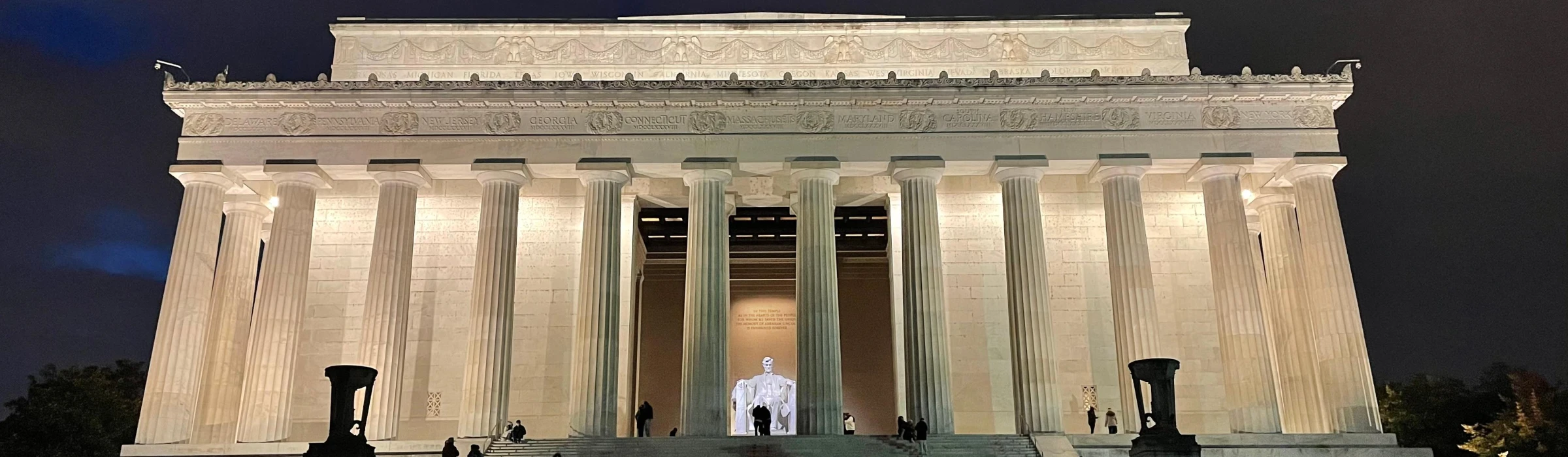
What makes this episode notable is less the object alone than its placement. Monument grounds in Washington are highly regulated representational environments where architecture, memory, and state ritual are tightly choreographed. Inserting satirical sculpture into that frame changes the reading conditions. The work becomes a test of spatial permission as much as a test of political message. Even brief interventions can shift how audiences experience nearby memorial narratives.
For curators and public-art administrators, the case highlights a broader trend: political artists increasingly bypass institutional mediation and use high-visibility civic sites as immediate distribution channels. That strategy can generate rapid attention but also produces a compressed interpretation cycle where nuance is often replaced by meme velocity. The question for institutions is not whether such works are valid, but how documentation, context, and public education can keep pace with their circulation.
The National Park Service context is central here because the Mall is managed through layered rules on assembly, display, and temporary use. Site governance under the Lincoln Memorial unit and broader National Mall and Memorial Parks protocols shapes what interventions can physically occur, how long they remain, and how authorities classify them.
Politically charged interventions also reveal how quickly contemporary protest art borrows branding logic from campaign media and advertising. Monument-scale irony, oversized objects, and instantly legible symbols are optimized for image spread. That does not make the work empty, but it does require critical frameworks that can separate communicative efficiency from artistic depth.
For public institutions, the practical response should include faster archival capture, transparent permitting records where applicable, and partnerships with researchers who can contextualize interventions as part of evolving civic visual culture. Without that infrastructure, each event is consumed and forgotten, and policy debate defaults to reactive enforcement rather than informed stewardship.
This intervention will likely be remembered less for craft than for its tactical understanding of symbolic real estate. On today’s National Mall, political sculpture succeeds first by finding the right site, then by forcing institutions and viewers to decide what counts as legitimate civic speech once the object is already in the frame.
For artists considering similar interventions, the hard lesson is that site fluency matters as much as iconography. Understanding permit systems, enforcement patterns, and memorial governance can determine whether a work becomes a lasting public question or a short viral flashpoint.
Administrative clarity starts with primary-site documentation at National Park Service resources and policy-level rules around assemblies, temporary displays, and protected grounds. Public-art discourse improves when institutions and artists engage those frameworks directly rather than performing conflict as pure spontaneity.
That shift, from object shock to governance literacy, is where future public-art practice will either mature or stall. The current intervention is a clear reminder that context is part of the medium.