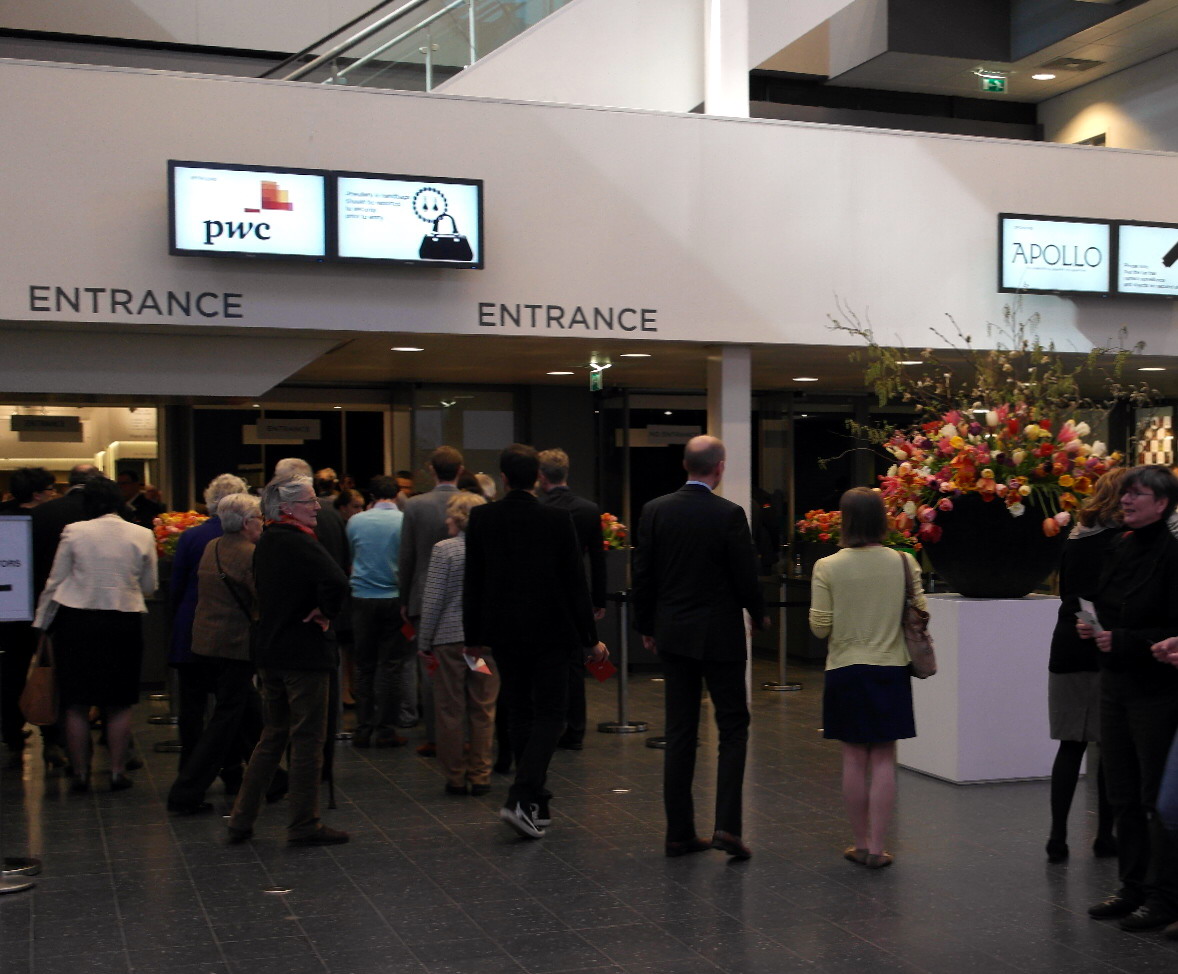
TEFAF Maastricht 2026 Preview Signals Selective Demand and Provenance Discipline
Early fair-week reporting points to active high-end buying at TEFAF, with collectors prioritizing condition quality, publication history, and legal clarity over broad speculative momentum.
Preview sentiment around TEFAF Maastricht 2026 suggests a market that is active but highly selective, with buyers concentrating spend on works supported by strong provenance chains, clean condition reports, and deep scholarly framing. The fair remains one of the few environments where Old Masters, antiquities, design, and modern material can be evaluated inside a single high-trust ecosystem, and this year that cross-category context appears to be working in favor of disciplined acquisitions.
What distinguishes the current cycle from recent momentum-driven periods is the return of evidentiary rigor as a primary buying driver. Collectors and advisors are signaling less tolerance for thin documentation, uncertain attribution pathways, and cosmetic presentation unsupported by technical records. In practical terms, this produces fewer impulsive transactions and more concentrated bidding around best-in-class examples within each category.
TEFAF’s long-standing vetting infrastructure is central to this behavior. The fair’s credibility has always rested on the perception that objects arrive with a higher baseline of scrutiny than many standard market channels. In a period where restitution questions, legal transparency, and market confidence are tightly linked, that vetting layer has renewed strategic value for both buyers and institutions seeking acquisition defensibility.
The strongest pattern in this preview cycle is not universal market confidence, it is conviction concentrated around quality-proofed objects.
The category interaction is also worth noting. Contemporary buyers entering historical sectors are no longer treating Old Master and design positions as decorative side allocations. Many are using them as collection-stabilizing anchors that improve long-term narrative coherence and risk balance. At the same time, legacy historical buyers are showing increased openness to postwar and contemporary works where scholarship depth and medium quality are comparably robust.
This does not indicate a uniformly expanding market. It indicates a tiered market with clearer thresholds. Premium objects with persuasive documentation are moving. Mid-tier works with unresolved questions are facing longer decision timelines and heavier negotiation pressure. Dealers who can articulate condition history and comparative quality with precision are winning attention faster than those relying on prestige signaling alone.
For museums and foundations, the preview environment reinforces a familiar but important lesson: acquisition windows in complex markets open around confidence, not noise. When due diligence standards rise, institutions with prepared research pipelines and clear collection strategy can move decisively while speculative capital hesitates. TEFAF remains one of the few places where that preparation can translate quickly into high-quality placements.
If early signals hold through the full fair cycle, Maastricht 2026 will likely be remembered less for headline theatrics and more for method. The market is not rewarding maximal volume. It is rewarding serious evidence, curatorial clarity, and object-level excellence. In the current art economy, that is not caution. It is maturity.