A Sydney Biennale Commission on Dingoes Lands in a Rawer Public Context
Cannupa Hanska Luger’s installation at White Bay Power Station now arrives alongside a real-world tragedy on K’gari that reframes its stakes.
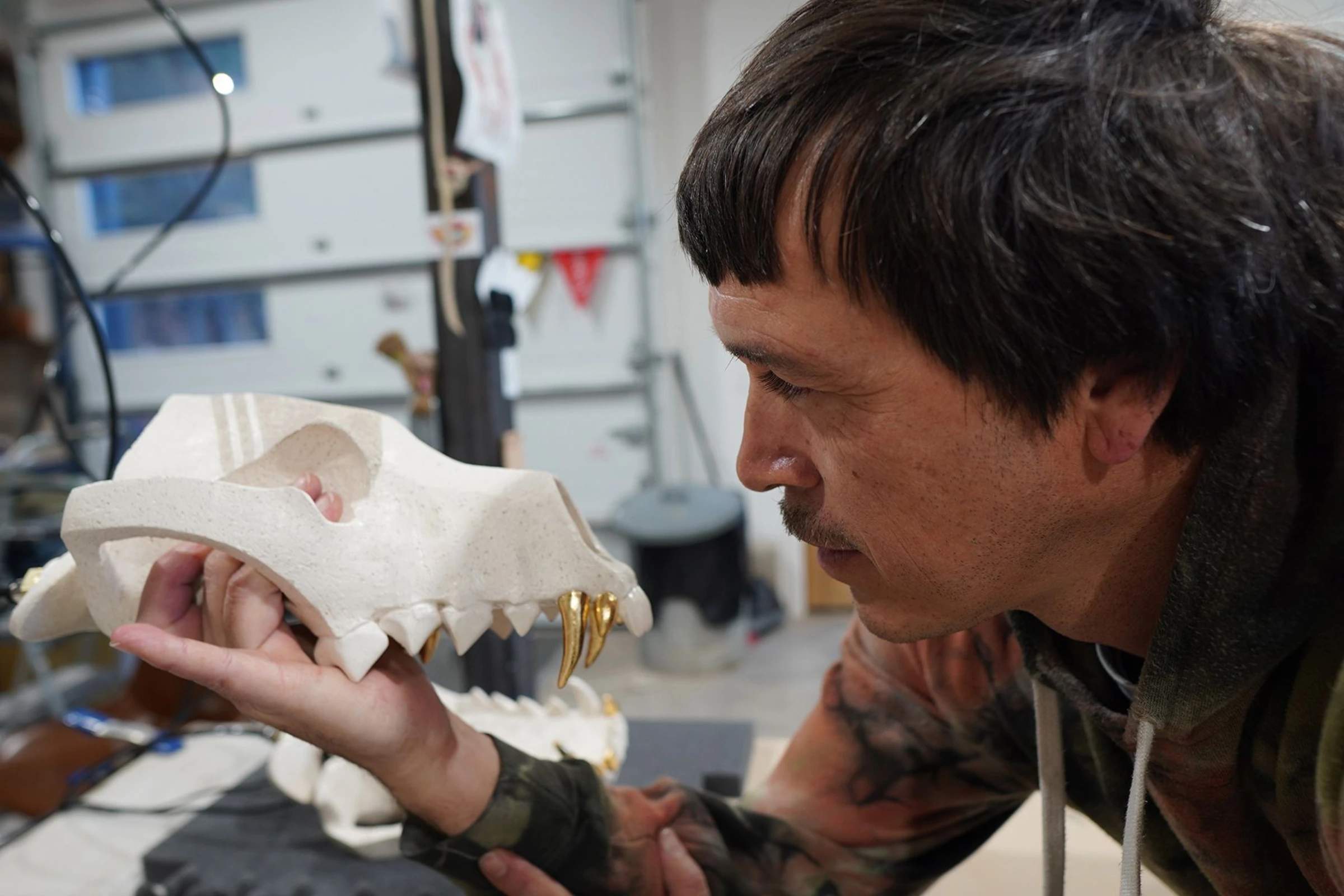
The Biennale of Sydney opens this week with a commission that would have carried weight in any case. In the current moment, it arrives with far sharper edges. The Art Newspaper reports that Cannupa Hanska Luger’s work at White Bay Power Station, featuring ceramic dingo skulls animated by whistles and a mechanical lung, has taken on renewed intensity after the death of a young backpacker on K’gari, where dingoes are protected and deeply contested public symbols.
What matters is not opportunistic topicality. The work was developed before the latest headlines. Its timing, however, reveals how quickly artworks about ecological and Indigenous relations can move from metaphor into a live civic argument. On K’gari, law, tourism, species protection, and public safety have collided for decades. The reported death and subsequent culls place those tensions back in full view just as the biennial begins drawing global attention.
Luger’s commission reportedly includes seven ceramic skulls whose whistle tones simulate a pack’s collective call. Installed in the volume of White Bay Power Station, that sound design converts architecture into a listening chamber. Visitors are not given a didactic script first. They are placed in relation to a presence that can read as warning, mourning, territorial signal, or memory. The ambiguity is not decorative. It is the point.
Biennials often promise urgency and then deliver atmosphere. This case is different because the work sits inside an active policy and ethics debate. Authorities, local communities, and First Nations voices do not share one framework for what responsibility should look like when wildlife interacts with mass tourism. The piece therefore does more than represent an animal. It stages a conflict over how institutions narrate coexistence when risk is unevenly distributed and governance is reactive.
There is a broader curatorial question here as well. Large exhibitions routinely include Indigenous artists while leaving institutional logistics and authority structures intact. The Sydney edition has foregrounded First Nations perspectives in a meaningful way, but credibility depends on what follows the opening week. If programming is serious, it should include sustained public conversation with communities tied to the lands and species being represented, not only symbolic acknowledgments.
For curators and museum directors outside Australia, this episode is a useful warning against treating ecological art as universally legible. Meaning is local, and local conditions can change faster than exhibition timelines. Commissioning frameworks need room for responsive interpretation when external events shift the stakes. That means flexible educational materials, transparent context notes, and real collaboration with knowledge holders who are accountable to place.
The work’s formal intelligence still deserves attention on its own terms. Luger’s use of ceramic fragility, animal anatomy, and controlled breath mechanics creates a structure where beauty and threat are inseparable. Gold-leafed details, cited in reporting, add a valuation argument directly into the object: what societies protect, what they extract, and what they ritualize too late.
By opening week, the commission has become a test case for contemporary exhibition ethics. Can institutions hold complexity without flattening grief into spectacle or reducing Indigenous frameworks to branding language? The right answer is not silence, and it is not grandstanding. It is precise context, serious listening, and a refusal to separate cultural programming from the conditions in which it is read.
Further reading: Biennale of Sydney, Australian federal profile on K’gari, Queensland tourism context.