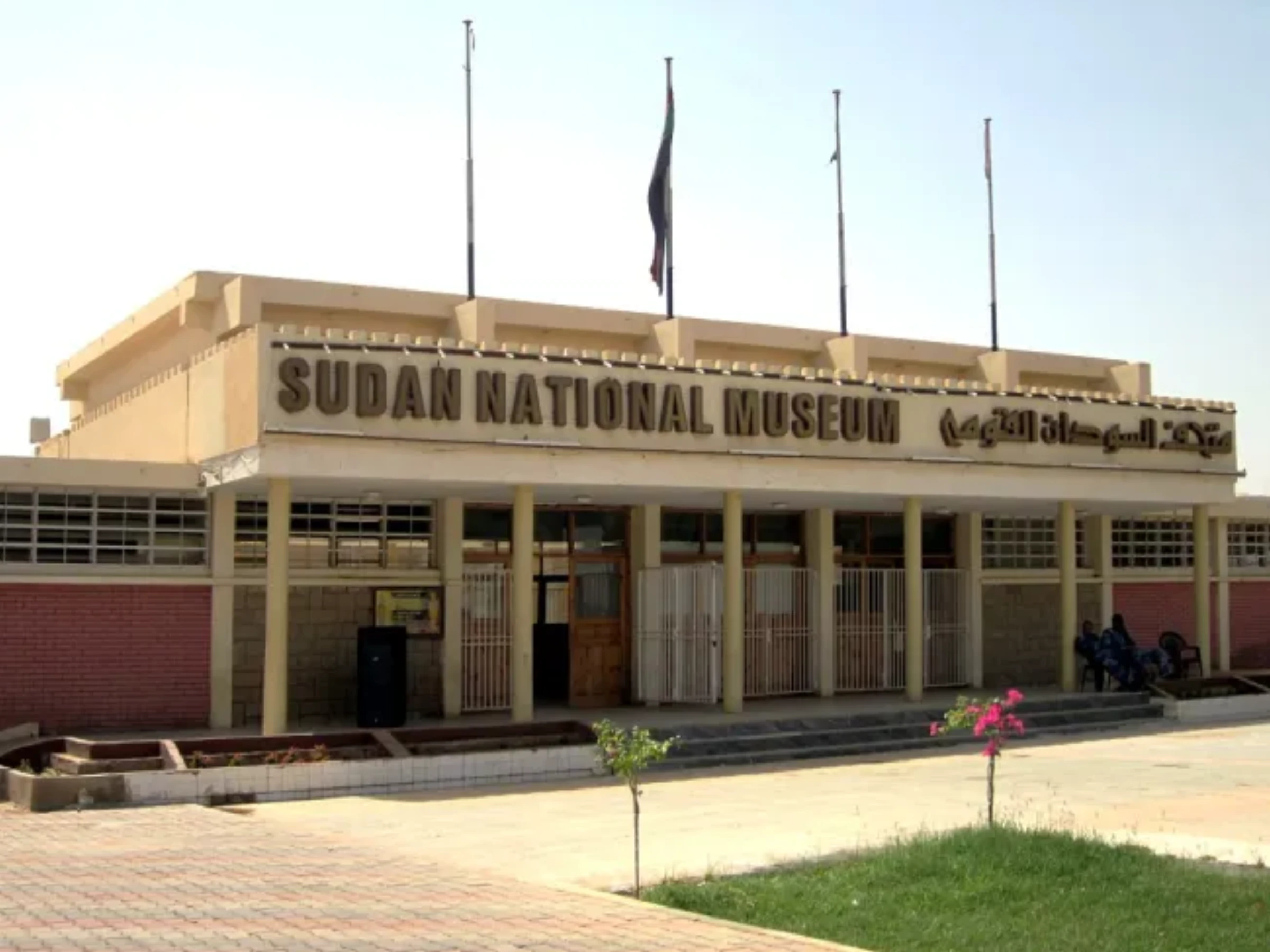
More Than Half of Sudan National Museum Holdings Reported Looted
Officials say over 60% of the Sudan National Museum's collection has been looted during the civil war, marking one of the gravest recent losses of cultural heritage in the region.
Sudanese officials report that more than 60% of the Sudan National Museum's holdings were looted during wartime occupation in Khartoum. By any institutional standard, this is catastrophic: a mass loss affecting one of the most important archaeological repositories in northeast Africa.
Before the conflict, the museum held around 150,000 objects spanning prehistory to the kingdoms of Napata and Meroe. Officials indicate that precious-metal artifacts were heavily targeted, suggesting theft driven by portability and resale value rather than random destruction alone.
The immediate impact is visible in empty cases and missing inventories. The longer impact is epistemic. Collections like this are not ornamental; they anchor school curricula, field research, and public memory infrastructures that shape how a nation narrates itself across centuries.
Emergency responses in heritage crises typically require rapid action across borders: customs alerts, auction-house watchlists, digitized object registries, and legal coordination. The ICOM solidarity call and related preservation networks now look less advisory and more existential.
When theft enters online markets, recovery windows can close quickly. That is why registry visibility is crucial. Institutions and enforcement teams should be working from shared datasets such as those maintained by INTERPOL's stolen art database and cross-checking suspicious provenance narratives in real time.
There is also a policy test for major museums in wealthier markets. Any institution acquiring antiquities from vulnerable regions now carries heightened ethical and legal risk. Due diligence cannot remain a box-ticking exercise; it must include conflict-period origin stress-testing and independent verification.
The Sudan case should force a harder conversation about prevention capacity. International actors often mobilize after loss, but resilient systems depend on pre-conflict digitization, secure storage planning, and emergency evacuation protocols coordinated with local authorities and museum staff.
For readers tracking broader heritage protection, UNESCO's material on combating illicit trafficking and ICCROM's crisis-response frameworks offer practical context. But frameworks only matter if funded and enforced.
This is not a peripheral cultural story. It is a major rupture in the historical record of the Nile region, and recovery, if it comes, will take years of coordinated legal, archival, and conservation work. The world should treat it with the urgency usually reserved for far more visible geopolitical headlines.
Museums in Europe and North America should also be proactive right now: publish emergency acquisition moratorium guidance for high-risk categories, require enhanced provenance affidavits, and flag suspect objects to authorities instead of quietly declining consignments. Silence is operational complicity in moments like this.
Scholars, too, have a role beyond commentary. Shared publication of excavation archives, old exhibition catalogs, and field photography can help identify looted pieces as they circulate. In some past recovery efforts, open scholarly documentation has succeeded where formal enforcement initially stalled.
If there is any constructive path forward, it starts with coordinated humility: foreign institutions supporting Sudanese leadership, funding restoration and records reconstruction without ownership capture, and treating restitution of stolen material as baseline duty rather than diplomatic favor.
The decisive variable now is speed: every week without coordinated intervention increases the likelihood that undocumented objects disappear into private channels beyond practical recovery.