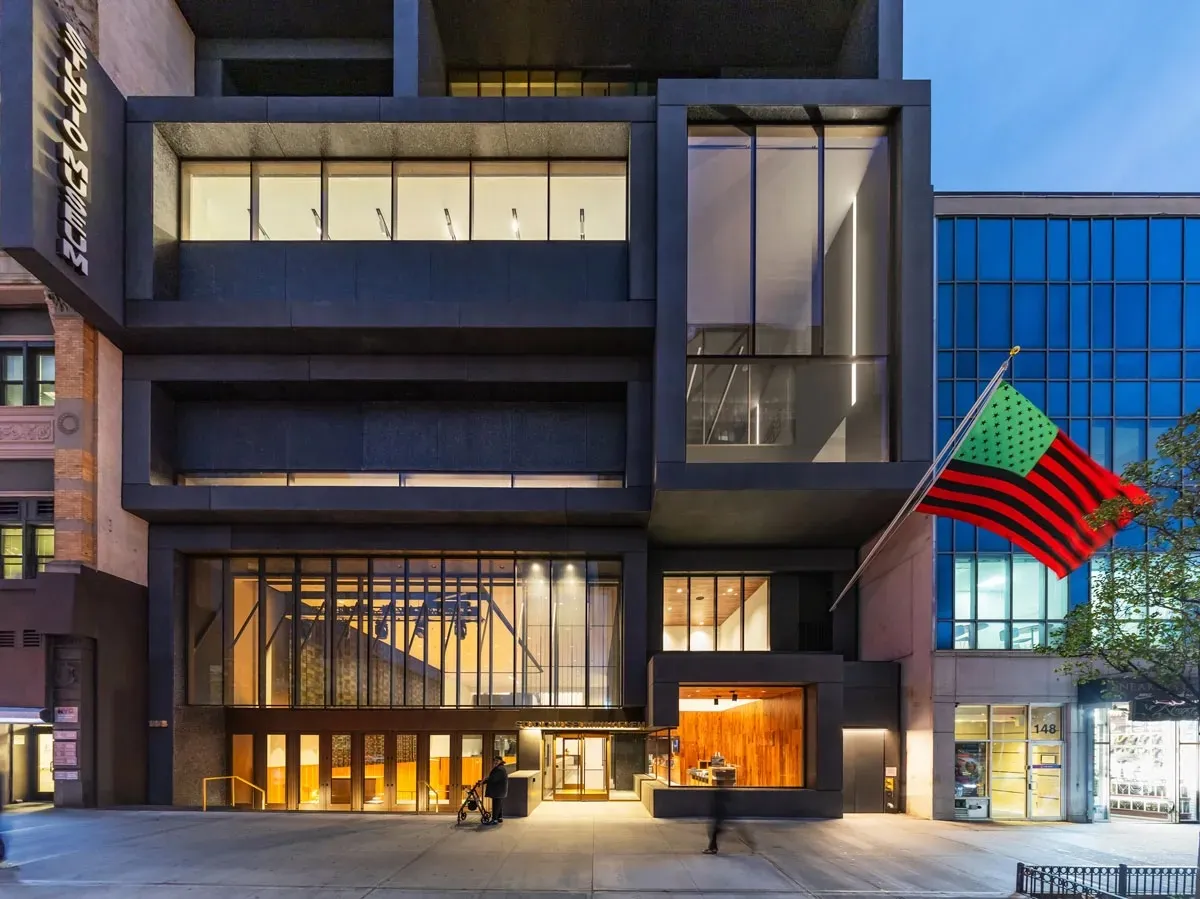
Studio Museum in Harlem Unveils Spring Program Centered on Living Artists
The museum's spring lineup combines emerging artist commissions, a major new work by Kapwani Kiwanga, and a rotating collection installation rooted in Harlem's contemporary cultural life.
The Studio Museum in Harlem has announced its spring 2026 season, anchored by three initiatives that clarify the institution's current direction: a new edition of its emerging artist exhibition series, a site responsive commission by Kapwani Kiwanga, and a collection installation that will rotate through summer. Taken together, the program signals continuity rather than holding pattern. Even amid the long arc of institutional transition and expansion, the museum is positioning itself as a working cultural engine with a clear editorial line around contemporary practices by artists of African descent.
The sixth installment of the museum's focused emerging artist series, titled Fade, opens in May and is expected to continue the museum's longstanding role as an early platform for artists who later shape broader discourse. The point of these presentations is not prediction theater. It is disciplined exposure at the right moment, where experimentation is legible but not overmanaged. In market terms, this kind of institutional timing often matters more than a fast commercial debut. In curatorial terms, it allows risk without spectacle, which is harder to preserve in larger survey formats.
Kiwanga's project, BLEED, opens in March and will remain on view into 2027. Her practice has consistently examined infrastructure, control, and the politics embedded in architecture and material systems, so a long run installation is a strong fit. Extended duration changes how audiences meet a work. Visitors can return, read the piece against shifting news cycles, and track how interpretation evolves through repeated contact. For an institution deeply invested in public dialogue, duration is not just logistics. It is method.
The season frames the museum not as a pause before reopening, but as an active institution with clear curatorial priorities now.
The rotating collection display may prove the most consequential component for local audiences. Rather than staging a static identity statement, the museum is opting for a dynamic installation that can hold multiple histories at once. This is where institutional rigor is tested: selection, sequencing, wall text, and context either sharpen the museum's argument or blur it. Harlem audiences are highly attentive and historically informed. They do not need a generic celebration of diversity. They need specific work, specific stakes, and curatorial choices that respect what this neighborhood already knows.
Programmatically, the spring season reinforces a model that many peer institutions are trying to recover: continuity between emerging practice, mid career inquiry, and collection stewardship. Too often, these sit in separate silos. The Studio Museum is treating them as one ecology. That approach has practical advantages for artists and publics alike. It also builds a stronger long term archive, because the institution is not only presenting work, it is documenting a curatorial position in real time.
There is also a staffing and training dimension behind this announcement that deserves attention. Season plans of this complexity require educators, installers, registrars, and visitor staff working in sync long before opening week. When an institution programs with intention, those teams are not invisible support, they are part of the public experience. The Studio Museum has historically excelled at translating scholarship into accessible encounters on the floor, and this season's structure gives that strength room to operate. If execution matches ambition, the spring program could become a benchmark for mission-led institutional programming in a year crowded with louder but thinner cultural launches.
The spring calendar opens in March and extends through August, with full visitor details available through the museum's channels. The larger takeaway is strategic. At a moment when many museums are flattening their programming into crowd metrics, the Studio Museum is doubling down on mission precision. It is betting that depth, continuity, and accountability to a specific community still produce the strongest cultural impact.