After a Government Block, Gabrielle Goliath’s ‘Elegy’ Will Still Reach Venice, Outside the National Pavilion System
South Africa’s cancelled Biennale project will be shown independently in Venice, turning a pavilion dispute into a broader test of cultural governance, ministerial control, and artistic autonomy.
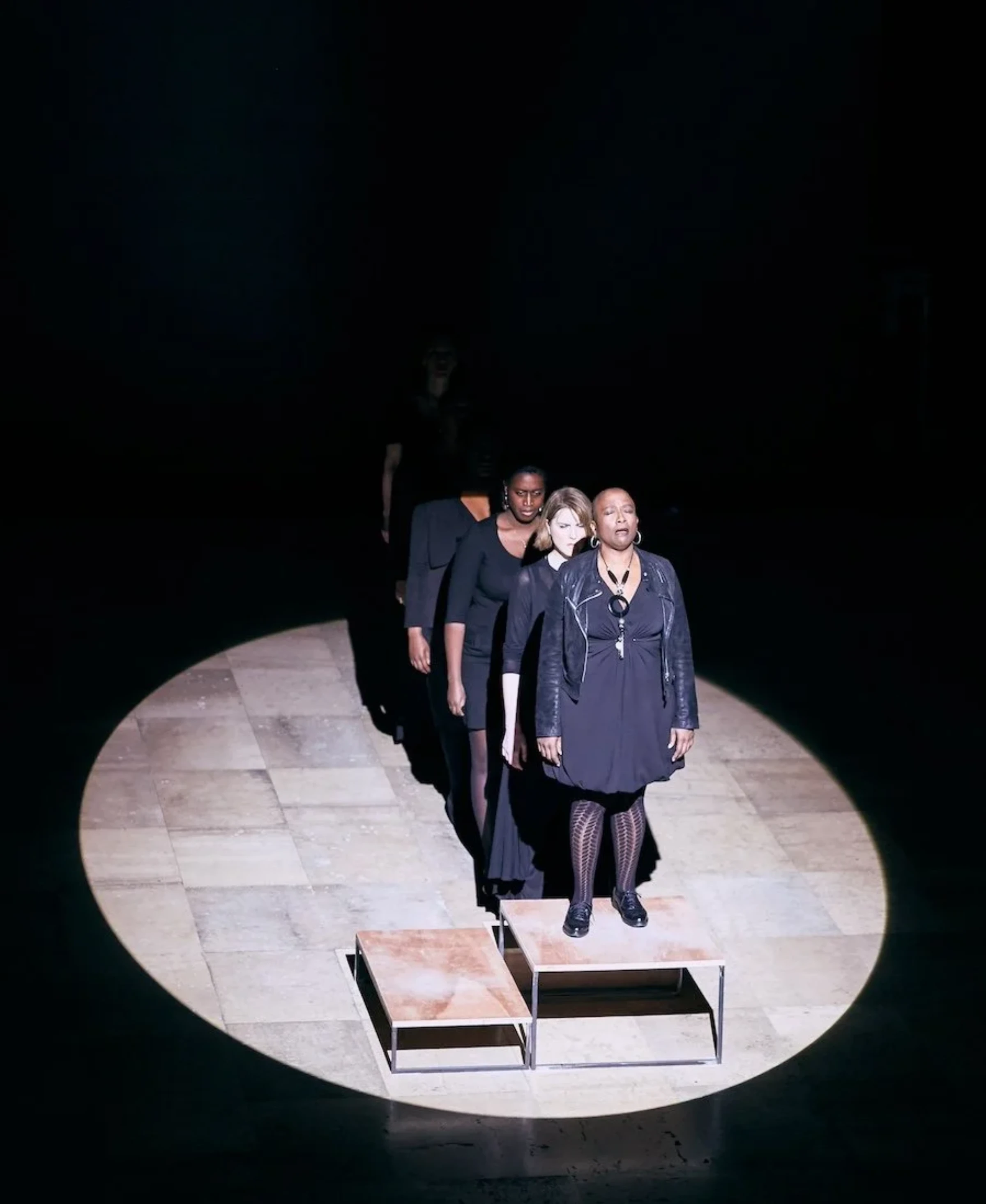
Gabrielle Goliath’s Elegy, the project that South Africa removed from its 2026 Venice Biennale pavilion, will still be presented in Venice, but outside the official national-pavilion structure. The work will run as a video installation at Chiesa di Sant’Antonin in Castello for three months from early May, while South Africa’s pavilion remains empty. That split outcome, a visible artwork and an empty state space, captures the central conflict of this story: the difference between cultural representation and state control.
The case began when South Africa’s culture ministry objected to language surrounding the work’s dedication, which includes reference to Palestinian poet Hiba Abu Nada alongside women killed in other histories of gendered and racial violence. The ministry called the subject matter divisive and tied to a live geopolitical conflict. Goliath maintained that the core work is a ritual mourning structure, not a didactic war statement. The refusal to amend framing language contributed to the project’s cancellation, then to litigation that failed at deadline stage.
For curators, the episode is not only about one work. It is about procurement architecture. A Venice pavilion commission depends on contracts among artist, curator, commissioner, and ministry. If any one actor can collapse a commission at the final stage without clear procedural standards, curatorial due diligence loses practical meaning. Institutions can build rigorous selection panels, but those systems fail if ministerial override is politically discretionary and operationally opaque.
The independent Venice presentation matters because it preserves public encounter. It also changes the interpretive frame. In a national pavilion, viewers read a work through state representation. In an autonomous venue nearby, viewers read it through curatorial and civic alignment. That is not a downgrade. In many cases it clarifies where agency sits. Here it allows Goliath’s long-running project, documented on the artist’s archive and rooted in a decade of performances, to be seen on its own terms rather than as a proxy battle over foreign policy alignment.
There is a second-order effect for biennial governance. Biennials increasingly rely on hybrid ecosystems: state pavilions, independent foundations, nonprofit partners, and parallel city programs. When official pipelines fail, informal and semi-formal networks can absorb works that would otherwise disappear. This produces resilience, but it can also normalize instability if governments learn that reputational damage is containable because artists will eventually self-route through alternative venues.
Collectors and trustees should pay attention to what this means for commissioning risk. Political sensitivity was always part of contemporary art, but the present cycle adds procedural volatility. Contracts need explicit clauses on curatorial statements, ministerial review windows, and cancellation remedies before shipping and production costs are sunk. Ambiguity now has immediate budget consequences, especially for time-bound events like the Biennale where missed deadlines are unrecoverable.
The broader policy question is straightforward. National pavilions exist to stage a country’s cultural intelligence in public. If they become instruments for narrowing what counts as acceptable grief, they lose diplomatic credibility while independent venues gain it. South Africa’s empty pavilion is therefore not neutral. It will be read by peers as an institutional choice, and by artists as a warning about where editorial authority really resides.
What survives this cycle is the work itself. Elegy continues in Venice, and that continuity matters more than the pavilion badge. Still, the governance failure remains on record. The lesson for ministries and commissioning bodies is simple: if a project can pass selection, fundraising, and production, it should not be overturned by late-stage political pressure without transparent standards. Otherwise, the exhibition does not represent a nation’s cultural confidence, it exposes its administrative fragility.