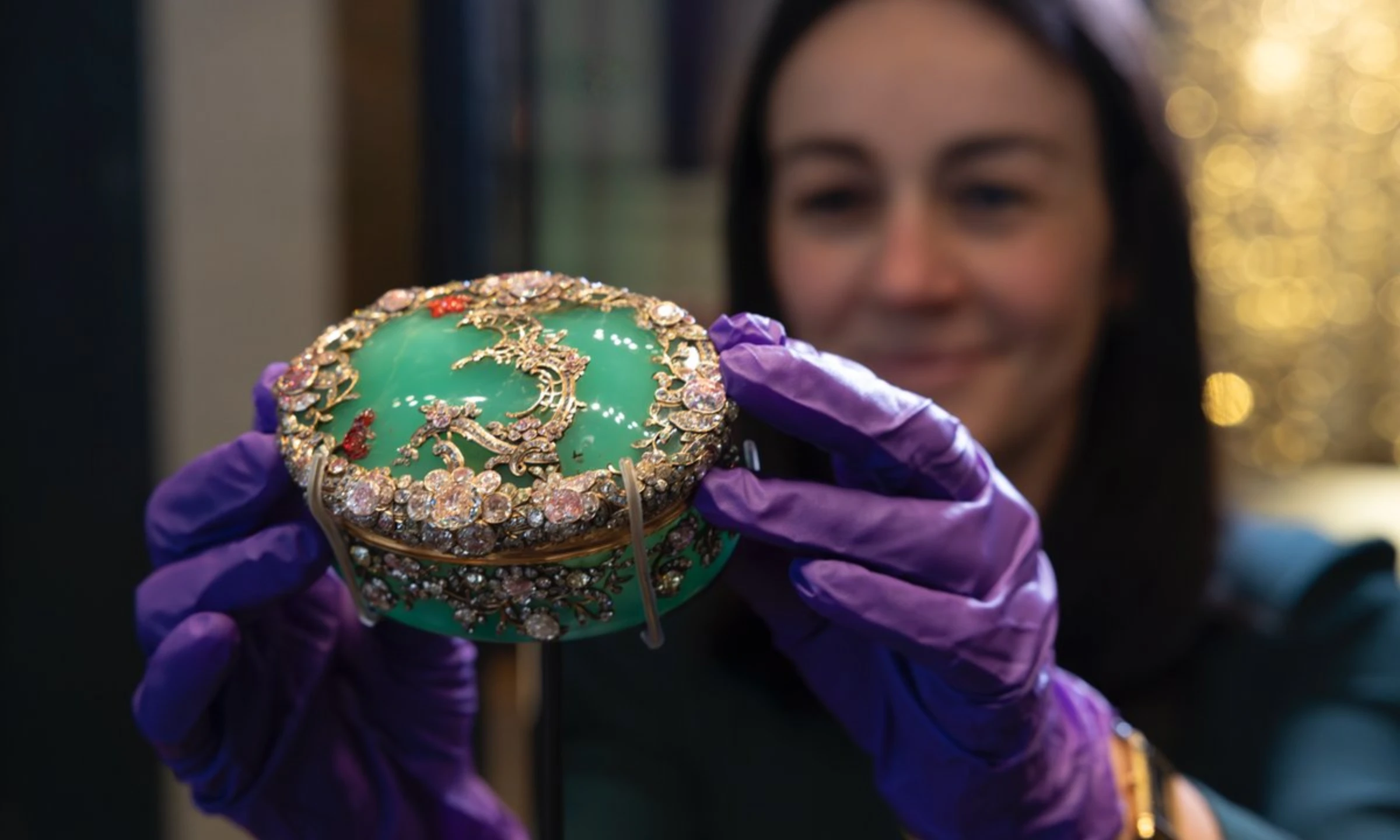
Recovered Paris snuffboxes return to public view in the V&A’s relaunched Gilbert Galleries
Two 18th-century gold snuffboxes stolen in a 2024 Paris robbery are returning to view in London as the V&A reopens its Gilbert Galleries, turning a security story into a test of stewardship and public trust.
Two 18th-century gold snuffboxes stolen in broad daylight in Paris in 2024 will return to public view this week in London, inside the Victoria and Albert Museum’s renewed Gilbert Galleries. The objects, part of the Rosalinde and Arthur Gilbert Collection, move from police and insurance paperwork back into the symbolic arena that matters most: the gallery floor.
The theft took place during Luxe de poche at the Musée Cognacq-Jay, where seven historic objects were taken, including loans tied to the Louvre and the UK Royal Collection. Five were later recovered. That recovery arc has now become museum policy in miniature: security is one chapter, but restitution, interpretation, and public confidence are the larger institutional test.
The V&A’s reopening moment is therefore not merely architectural. It is reputational. By returning the boxes to display rather than keeping them in prolonged conservation limbo, the museum is signaling that the collection can re-enter civic circulation without turning the incident into spectacle. The framing will matter as much as the labels.
This is also a reminder that portable luxury objects are structurally vulnerable. Their scale, material value, and market recognizability create a risk profile different from monumental paintings or fixed installations. Museums across Europe are already reassessing case design, object movement protocols, and lender communication in response to recent incidents.
The Gilbert Galleries relaunch gives the V&A a chance to reassert what decorative arts displays can do when they are not treated as secondary to painting and sculpture. If handled well, the rehang can connect craftsmanship, circulation, and ownership histories in one narrative rather than isolating them into separate departments.
For curators and registrars, the practical lesson is that post-theft recovery workflows need the same public-facing rigor as acquisitions. Transparency around status, condition, and display decisions should be legible to visitors, not only to insurers and legal teams. Institutions such as the V&A and Louvre are now setting expectations for that standard.
The case also lands in a moment of heightened scrutiny over museum governance, where boards and directors are judged on operational resilience as much as programming ambition. A recovered object can become a quiet governance success if institutions show procedural competence and avoid triumphalist messaging.
Visitors, meanwhile, encounter an object that carries two timelines at once: the 18th-century courtly history that produced it, and the 21st-century security and ethics debate that now surrounds it. Good display writing can hold both without flattening either into a headline.
In that sense, these snuffboxes are not only decorative survivals. They are evidence of how museums negotiate fragility under pressure. As major institutions from the British Museum to regional collections revisit risk protocols, this V&A display will be read as part of a larger European benchmark for stewardship after breach.
What happens next will be watched by lenders as much as by visitors. If security and interpretation are clearly integrated, the return will read as institutional competence rather than damage control. That distinction is crucial as museums negotiate loans for increasingly fragile, high-value decorative arts material across borders.