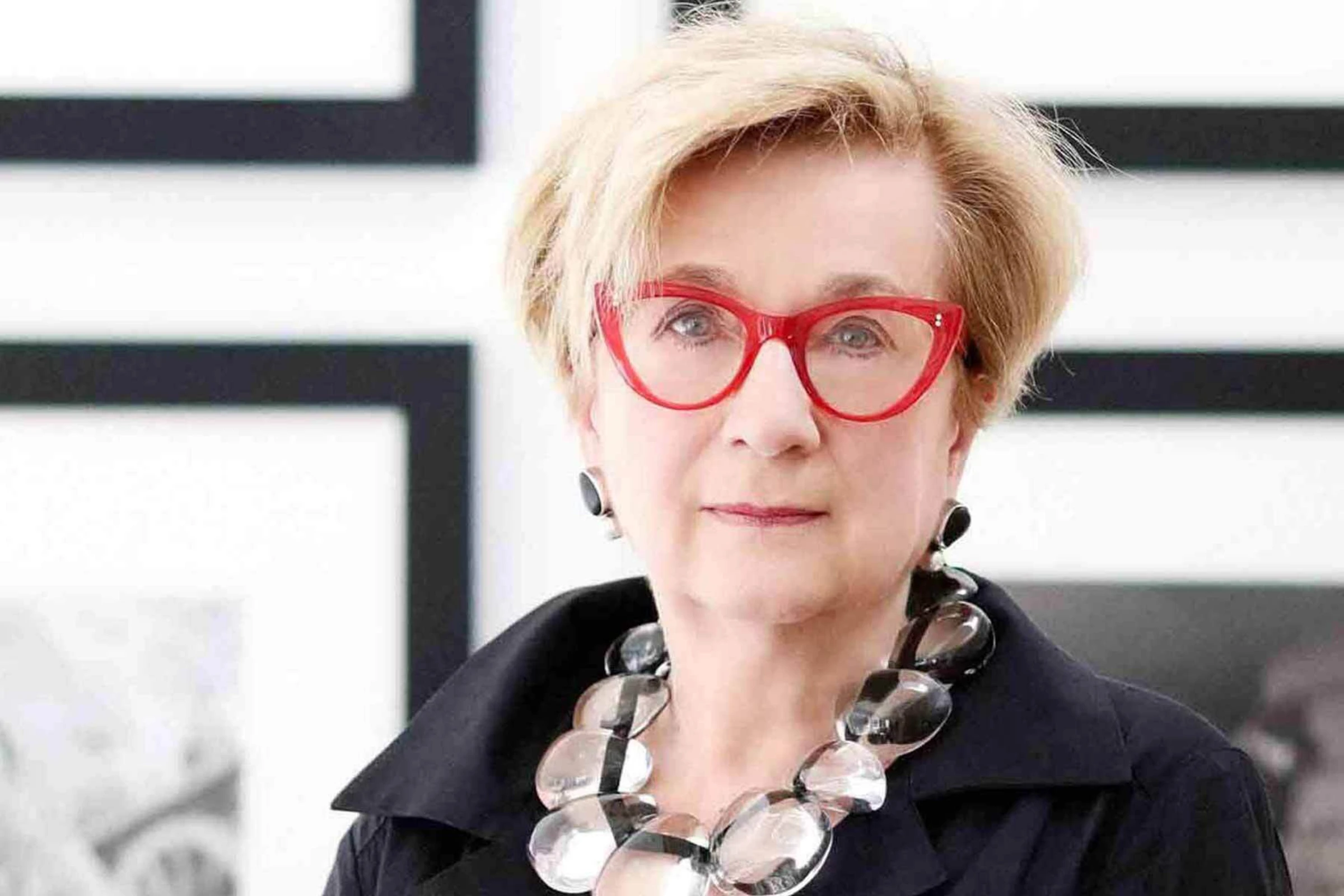
Smithsonian American Art Museum Names Lynda Roscoe Hartigan as Director
Lynda Roscoe Hartigan will return to the Smithsonian American Art Museum in September, bringing curatorial depth and institutional management experience from the Peabody Essex Museum.
Smithsonian American Art Museum has named Lynda Roscoe Hartigan as its next director, with her term beginning September 8. The appointment is more than an internal personnel move. It lands at a moment when leadership at major US cultural institutions is being examined through political, governance, and public-trust lenses all at once. Hartigan comes in with a rare profile for this specific challenge, part scholar of American art, part operator who has run a major institution through expansion, fundraising pressures, and audience change.
Hartigan is currently executive director and CEO of the Peabody Essex Museum in Salem, where she has overseen a period defined by collection stewardship and programmatic repositioning. Before that, she spent years at SAAM, including as chief curator, where she helped build holdings in American folk and African American art and established the museum's Joseph Cornell Study Center. That background matters. SAAM is one of the few institutions that has to speak to both a broad national canon and regional, vernacular, and historically under-recognized traditions in the same curatorial voice.
The Smithsonian's formal statement from Secretary Lonnie G. Bunch III framed Hartigan as a leader with deep curatorial credibility and public-facing instincts. That language aligns with the museum's practical needs. SAAM is not short on historical material or public profile. Its challenge is interpretation under pressure, how to maintain scholarly rigor while absorbing intensified debate over what national collections should foreground, and how explicitly museums should position themselves in ongoing civic arguments.
Her appointment also follows a stretch of leadership instability inside Smithsonian-affiliated institutions. Acting roles and vacant posts have become part of the public conversation, not just internal governance mechanics. For curators, artists, and collectors who track institutional continuity as a proxy for program quality, this context is not abstract. Leadership transitions can alter acquisition priorities, curatorial hiring, partnership strategies, and lending relationships within one budget cycle.
Hartigan's immediate advantage is that she knows the Smithsonian ecosystem from the inside. She does not need a long runway to understand federal constraints, board dynamics, and the pace of decision-making in Washington. That familiarity could let her move quickly on medium-term priorities, staffing and retention in key departments, sharpening exhibition planning cadence, and clarifying how SAAM will balance blockbuster visibility with slower scholarship-driven projects.
The collecting dimension is equally important. SAAM's holdings include foundational strengths in New Deal art, American Impressionism, and Gilded Age material, but the museum's contemporary relevance will depend on how it structures future acquisitions, especially in areas where private and institutional collecting now overlap aggressively. As auction pressure and private foundation activity reshape the market for modern and contemporary US work, directors who can build donor confidence without flattening curatorial judgment are increasingly valuable.
From an institutional strategy standpoint, Hartigan's return may allow SAAM to reconnect curatorial memory with current operational demands. Museums often lose momentum when those two functions split, scholarship in one lane, management in another. Hartigan's career suggests she can hold both. If that proves true in practice, SAAM could regain strategic consistency at a moment when consistency itself has become a competitive edge among US museums.
For now, the signal to the field is straightforward. SAAM chose an experienced insider with external executive credentials rather than a symbolic outsider hire. In this cycle, that reads as a stability choice, but also as a statement that curatorial literacy still matters at director level. Whether the appointment becomes transformative will depend on what follows, exhibition agenda, collection development, and how the museum defines public responsibility in a politically charged national setting.