Why Rodney Mims Cook’s Russian Forum Visit Matters
The US Commission of Fine Arts chair joined a St. Petersburg panel, raising hard questions about sanctions, symbolism, and cultural diplomacy.
Rodney Mims Cook’s appearance in St. Petersburg was not a minor etiquette lapse but a cultural signal
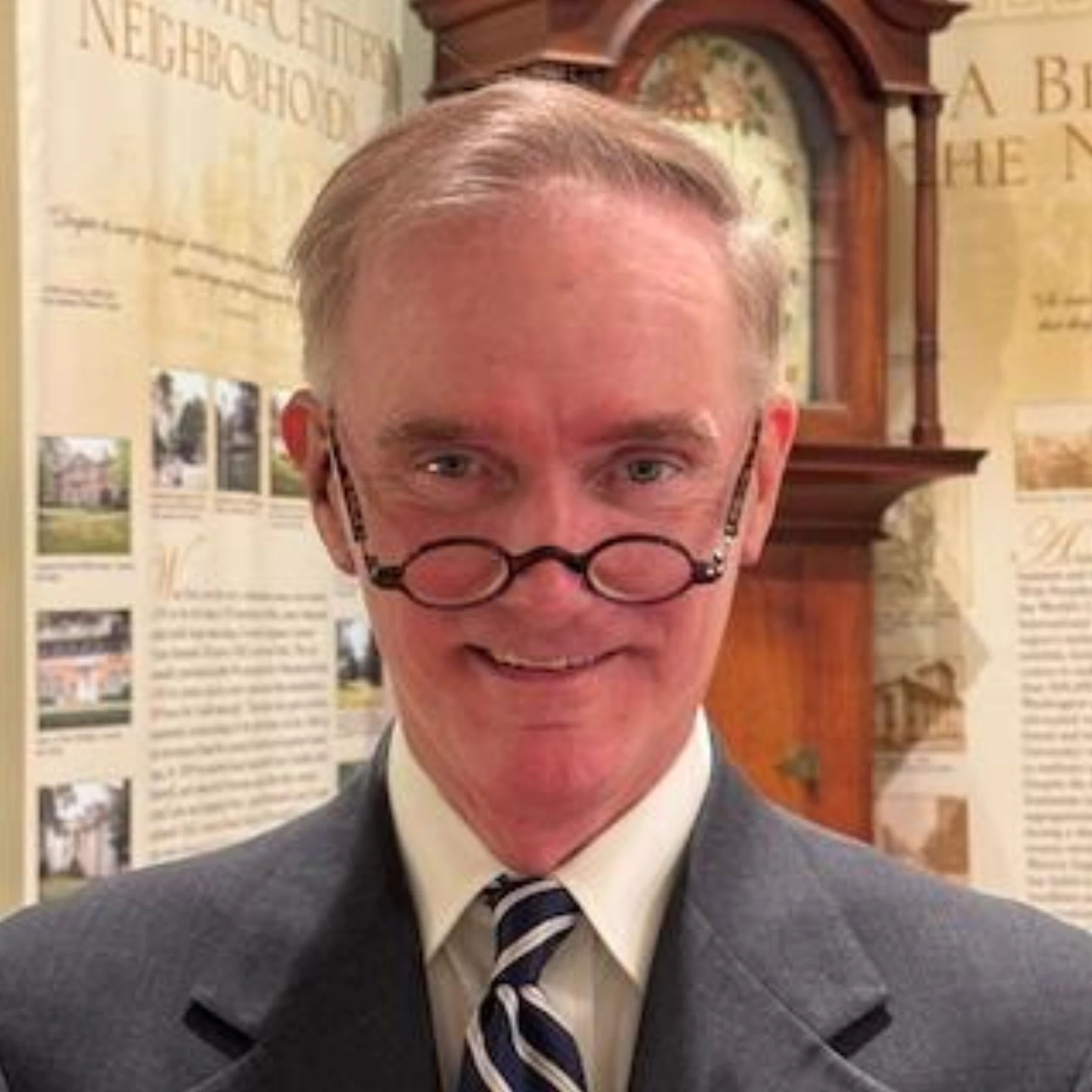
Rodney Mims Cook Jr., the chairman of the US Commission of Fine Arts, took part this week in a roundtable on American and Russian cultural exchange at the St. Petersburg International Economic Forum. On paper, that can be made to sound innocuous: an architecture-minded official with longstanding ties to Russian heritage circles participating in a discussion about culture. In reality, as The Art Newspaper reported, the panel placed Cook alongside sanctioned Russian officials and cultural operators at an event widely understood as Vladimir Putin’s showcase forum. That makes the visit important not because it instantly changes policy, but because it clarifies how symbolic authority is being used.
The episode also reveals how quickly cultural bureaucracy can become politically legible once it leaves its usual niche. A commission chair who might seem technocratic at home can read very differently on an international stage built to convert aesthetics into symbolism.
The forum context matters here too. SPIEF has long functioned as a stage on which Russia projects normalcy, sophistication, and international relevance even when formal relations are strained. A cultural roundtable offers a particularly efficient route to that projection because art and religion still carry residues of seriousness that business and politics have lost. Put a heritage advocate, a museum director, and a sanctioned minister onstage together and the scene can be made to look like civilization itself speaking softly above conflict.
The Commission of Fine Arts is not the State Department. But its chair is not a random private citizen either. Cook currently occupies a role connected to the aesthetic shaping of federal space, including support for Donald Trump’s highly politicized architectural ambitions in Washington. When a figure in that position appears at a forum branded by the Russian state, speaks warmly about cultural ties, and shares a stage with actors using culture as geopolitical cover, the message is larger than any single speech. It suggests that the boundary between official cultural representation and personal ideological affinity is being deliberately softened.
This is why the usual defense of such appearances, that culture should remain separate from politics, rings hollow. In authoritarian contexts culture is never separate from politics. It is one of politics’ preferred costumes. The panel title itself, “Russia-USA: dialogue of cultures,” was not neutral language. It was a diplomatic frame designed to make continued exchange look elevated, civilizational, and above the mess of sanctions and war.
Culture is being used here as a diplomatic solvent, and that is exactly why the event matters
The reporting places Cook beside figures such as Hermitage director Mikhail Piotrovsky, Russian culture minister Olga Lyubimova, and conductor Valery Gergiev, all of whom sit inside a system where cultural prestige and state power are tightly interwoven. This matters because Russia’s cultural institutions have long served as channels through which legitimacy can be re-exported even when military and political reputations are damaged. A panel about heritage, exchange, and the spiritual value of culture sounds gentler than a sanctions debate. That is the point.
The fact that religion was threaded through the discussion only strengthens that reading. When icons, monasteries, and Orthodox dialogue enter the frame, culture is being presented not just as diplomacy but as civilizational destiny. That move can be emotionally powerful precisely because it asks audiences to mistake hierarchy for continuity and geopolitical theater for spiritual depth.
There is another reason the episode lands hard in the art world. Many US institutions still rely on the comforting belief that their international entanglements are inherently liberalizing. Sometimes they are. Sometimes they simply confirm that elites on both sides of a political divide share a taste for prestige, ritual, and architectural grandeur. When that happens, culture does not transcend power. It becomes one of power’s preferred meeting rooms.
Cook’s own background makes the symbolism sharper. The Commission of Fine Arts biography foregrounds his commitment to classical architecture, preservation, and civic design. Those are not suspect interests on their own. But they fit neatly into a transnational conservative aesthetic politics that treats heritage as a language of order, continuity, and elite stewardship. That language is highly portable. It can move from Washington’s triumphal architecture debates to Russian state-managed cultural diplomacy without changing tone very much at all.
There is also a practical lesson here for anyone still pretending the arts are peripheral to power. They are not peripheral. They are often where ideology acquires elegance. A ballroom, a memorial arch, a museum forum, an icon delivered as a gift: these are not trivial ornaments around “real” politics. They are part of how political identity is staged and normalized. We have seen adjacent versions of this logic in our reporting on institutional pressure inside American arts education, where cultural rhetoric conceals structural struggle. In St. Petersburg the concealment is more geopolitical, but the mechanism is familiar.
The visit exposes a growing confusion about who speaks for American culture and under what authority
One of the most revealing details in the story is that Secretary of State Marco Rubio reportedly told the US Senate he was not aware of the delegation at this level. Whether that reflects bureaucratic disconnect or careful distancing, it underscores the present disorder. Cultural representation in the United States has always been diffuse, but that diffuseness now creates openings for ideologically aligned actors to project significance without clear accountability. Cook did not need to be an ambassador to be useful to the forum. He only needed to be legible as an American official with prestige, taste credentials, and proximity to presidential architectural projects.
For American institutions, the lesson is awkward but necessary. Governance in the arts is full of people whose influence exceeds their public visibility. When one of them steps into an overtly geopolitical scene, the sector cannot afford to shrug simply because the title sounds obscure. Obscure titles often carry very clear symbolic weight.
That is the larger warning. As culture wars intensify domestically, figures associated with architecture, preservation, and museum governance will not remain peripheral. They will increasingly be asked to bless political projects with the language of beauty, continuity, and civilization. Cook’s appearance in St. Petersburg is notable because it shows that process already underway in public.
That ambiguity is particularly potent in the art and heritage fields because they reward informal influence. Many of the people who shape architecture commissions, preservation agendas, museum boards, and international cultural exchange do not operate through mass democratic visibility. They operate through networks of donors, trustees, patrons, and old cultural ties. That can produce nuance and independence in healthy circumstances. In unhealthy ones it produces plausible deniability. Nobody is fully in charge, so everybody can claim to be merely participating.
The Russian forum did not need formal diplomatic recognition to benefit from that dynamic. It needed images, testimony, and the appearance of Western seriousness. Cook supplied all three. That is why dismissing the episode as “just a panel” misses the mechanism. Soft power rarely announces itself as a policy breakthrough. It accumulates through scenes that teach audiences to see renewed proximity as normal.
What comes next is less about punishment than about learning to read cultural legitimacy more critically
There may be no immediate institutional consequence here. The Commission of Fine Arts may decline comment, the panel may fade from the domestic news cycle, and the forum will move on to its next symbolic performance. But the episode should sharpen how the art world reads cultural diplomacy. The question is not whether exchange is inherently good or bad. The question is who defines the terms, who benefits from the staging, and what political conditions the rhetoric of culture is being asked to wash clean.
That distinction matters for curators, trustees, and critics alike. Cultural legitimacy is never neutral once states begin using it as evidence of normality.
That is why the most responsible response is not moral panic but better institutional literacy. The arts need sharper habits for identifying when culture is functioning as exchange, when it is functioning as cover, and when it is being mobilized to make power look timeless.
Art workers do not need to become amateur spies to read such moments clearly. They only need to take symbolism seriously. Who is pictured with whom, on what stage, under what language of exchange, is not superficial detail. In the cultural field it is often the substance.
For museums, academies, and preservation bodies, that means abandoning the comforting fiction that art automatically occupies the moral high ground. Cultural forums can create understanding, but they can also launder power. Heritage language can honor complexity, but it can also romanticize hierarchy. Calls for depoliticization often arrive precisely when politics has become too obvious to ignore.
Cook’s St. Petersburg appearance deserves scrutiny because it shows how quickly architecture, taste, religion, and heritage can be recruited into a larger ideological theater. That is not a side story to world affairs. It is one of the ways world affairs learn to look civilized again. Anyone working in art institutions should pay attention, because the next version may arrive not as a scandal abroad but as a perfectly respectable invitation at home.