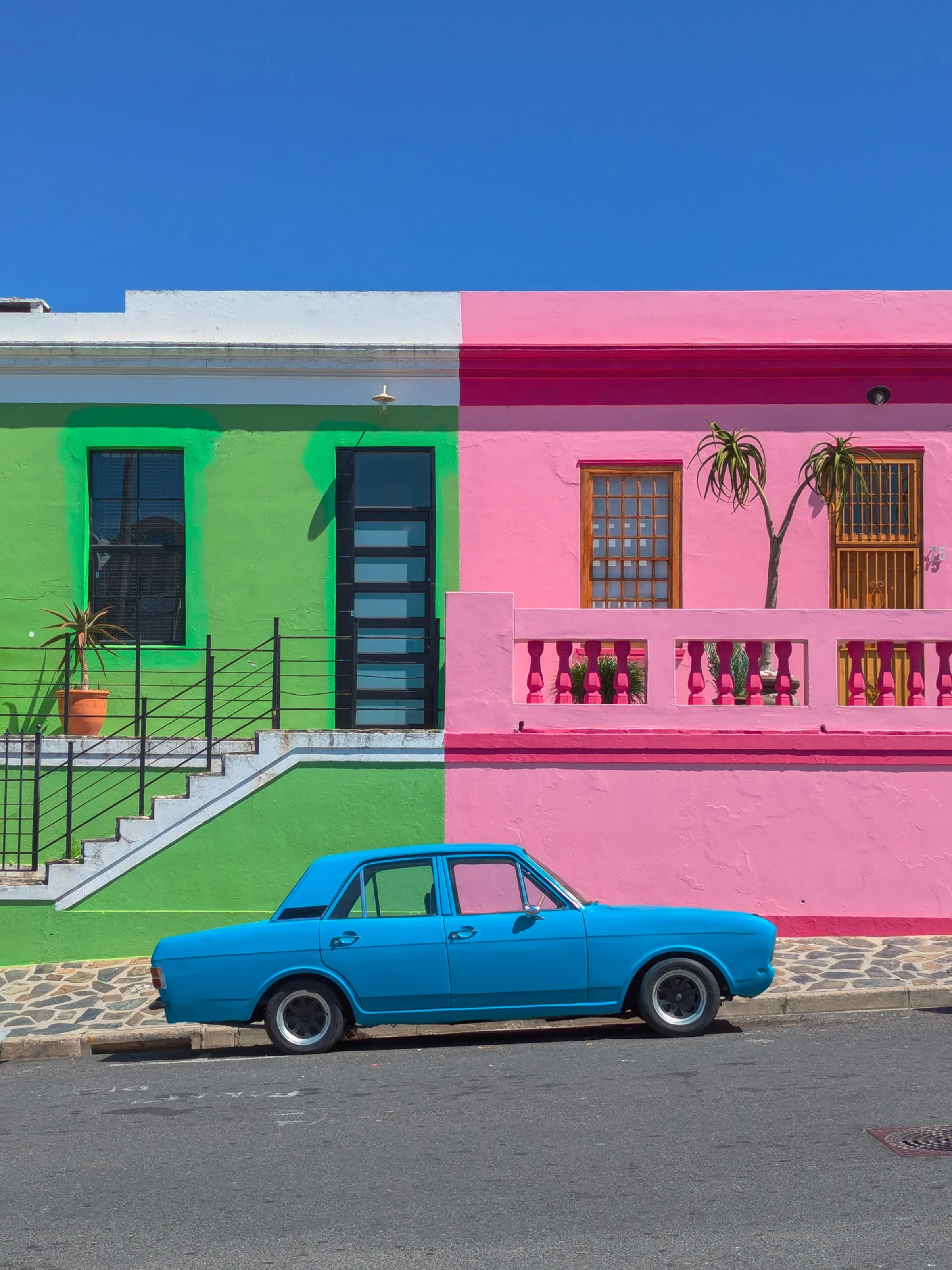
Robby Ogilvie's Phone Shot Wins at Sony Awards, Spotlighting Bo-Kaap's Layered Urban Narrative
Scottish photographer Robby Ogilvie's image of a Ford Cortina in Cape Town's Bo-Kaap won the Sony World Photography Awards Open Object category, turning a casual street scene into a study of color, place, and social division.
Robby Ogilvie's winning image in the Sony World Photography Awards 2026 Open Object category is deceptively simple: a Ford Cortina under a deep blue Cape Town sky, framed against the vivid architecture of Bo-Kaap.
What lifts the picture beyond postcard color is structural clarity. Ogilvie identifies the car as an anchor, then lets hue and geometry carry the frame, producing a composition that reads as both immediate and tightly resolved.
The work was shot on a Google Pixel 6, which is less a novelty detail than a sign of where contemporary practice already is: decisive seeing matters more than equipment mythology, especially in public-space photography.
Ogilvie has also framed the image politically, naming visible and invisible divisions in Cape Town as part of its meaning. That choice avoids the common trap of extracting visual charm from a neighborhood while ignoring social context.
In award ecosystems, mobile images are often still treated as side categories. This result suggests the center is shifting: judges are willing to reward conceptual framing and visual rigor regardless of capture device.
Bo-Kaap itself is not a neutral backdrop. The area's historic identity, tourism pressure, and ongoing debates around urban change complicate any surface-level reading of color as merely decorative. A successful image from the district must hold that tension rather than flatten it.
For emerging photographers, the signal is clear. Build repeatable habits of attention, not gear anxiety. A coherent visual argument can start with what is already in your pocket, provided you understand frame logic, subject relationship, and context.
For institutions, the corollary is equally clear: if smartphone-native work continues to deliver this level of compositional and contextual intelligence, acquisition and exhibition criteria will need to evolve accordingly. Organizations from the World Photography Organisation to major venues like Somerset House are already normalizing this shift through platform design and display strategy.
The broader media ecosystem is moving the same way. Research initiatives at centers such as the International Center of Photography and public-facing practice communities like Urban Sketchers continue to collapse old hierarchies between pro equipment and mobile-first seeing.
There is also a market-side implication. As award circuits normalize mobile capture, commercial clients and editorial desks will increasingly evaluate photographers on narrative clarity and reliability under real conditions, not just on technical maximalism. That shift favors practitioners who can work quickly without sacrificing composition.
The educational consequence is equally clear. Foundations programs that still silo mobile photography as secondary will look outdated fast, while programs that treat phones as valid observational instruments, alongside dedicated cameras, are likely to produce more adaptable image-makers.
A final point for editors: this kind of image travels well across formats because its composition survives aggressive cropping for social cards and mobile feeds, which is increasingly non-negotiable for contemporary publishing workflows.
Ogilvie's image does not win because it is convenient. It wins because it is exact, and because it understands that contemporary street photography succeeds when formal control and social reading arrive in the same frame.