Reina Sofía Blocks Guernica Loan, Reopening Spain’s Basque Cultural Fault Line
Madrid’s refusal to lend Picasso’s Guernica to Bilbao has revived a long-running argument over conservation, memory, and who gets to steward Spain’s most politically loaded painting.
The Museo Reina Sofía has refused a request from the Guggenheim Bilbao to borrow Pablo Picasso’s Guernica for a commemorative presentation tied to the ninetieth anniversary of the 1937 bombing that gave the painting its title. In procedural terms, this is a loan denial. In political terms, it is a flashpoint. Any movement of Guernica activates unresolved arguments about memory, regional identity, and state stewardship in Spain, especially in relation to Basque claims that the work should periodically return to the territory marked by the atrocity it depicts.
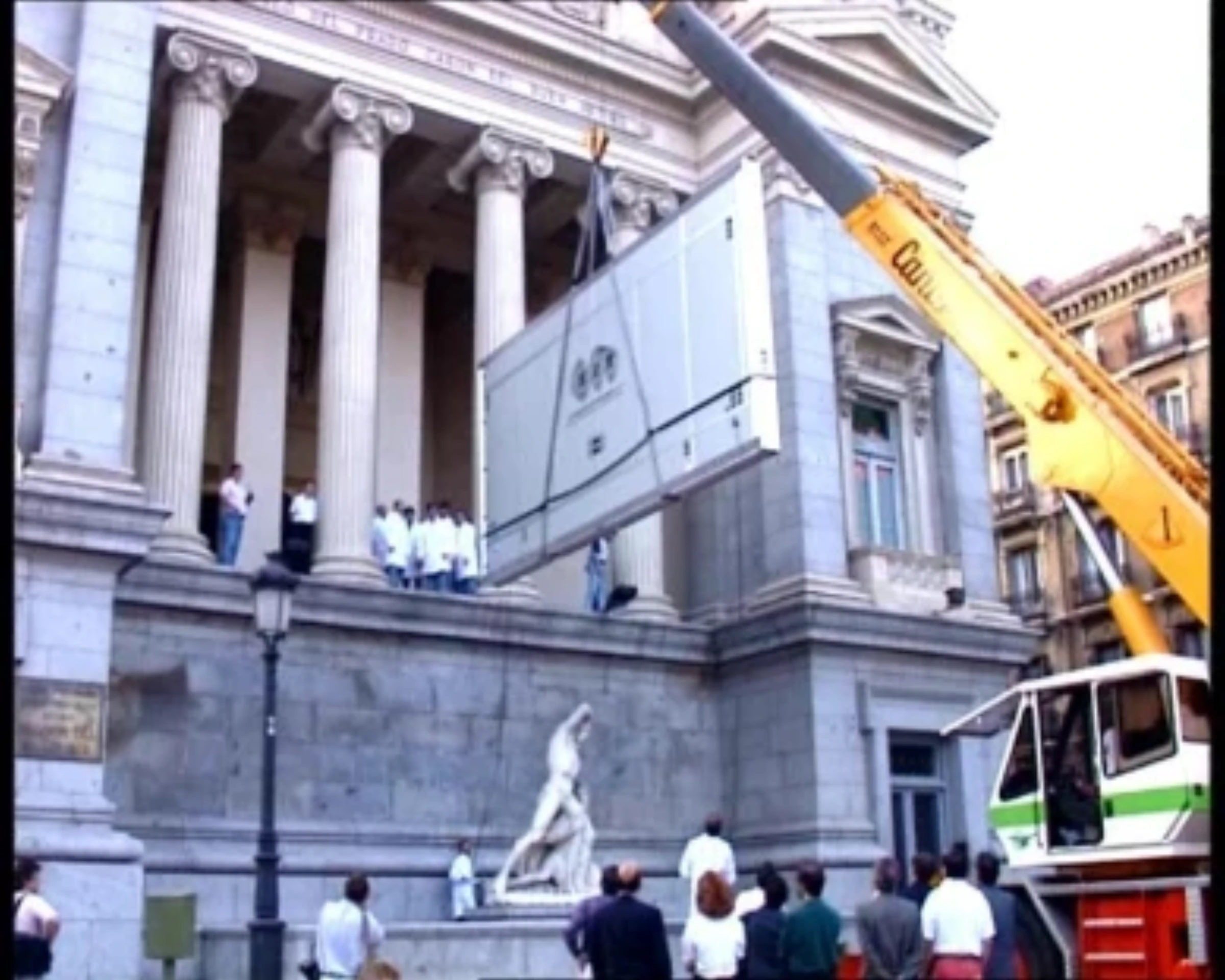
The work’s institutional biography is central to why this request matters. Picasso painted Guernica for the Spanish Pavilion at the 1937 Paris Exposition. The painting then spent decades outside Spain, most notably at The Museum of Modern Art in New York, because Picasso refused repatriation while Franco remained in power. It returned only after Spain’s democratic transition and eventually settled at Museo Reina Sofía, where it has become one of Europe’s most visited and most tightly controlled twentieth-century works.
The Basque argument has always been straightforward: the painting names and memorializes an event that took place in Guernica, so symbolic access in Basque Country is not a matter of prestige branding, it is a matter of historical proximity. That position has never overridden conservation policy in Madrid, and the current refusal follows the same line. Reina Sofía has emphasized physical fragility, citing accumulated damage and transport risk. Conservation teams are not wrong that vibration, handling, and climate shifts can produce irreversible stress in large, historically unstable canvases. Yet conservation language also functions as governance language, because deciding what counts as acceptable risk is always an institutional choice.
This is why the current episode cannot be reduced to a conservation memo. Spain’s leading institutions have different mandates and political constituencies. Guggenheim Bilbao framed the request inside a specific civic anniversary and a public-history argument. Madrid answered through preservation doctrine. Both positions are coherent within their own frameworks, and both are incomplete when treated in isolation. A painting with this level of symbolic charge does not sit comfortably inside one museum’s risk matrix, even when that matrix is technically defensible.
The deeper issue is precedent. If Guernica moves for one politically meaningful occasion, institutions will face pressure to justify future approvals or refusals under comparable criteria. If it never moves, Madrid’s custodial position remains clear but recurrently contested. Either way, the work continues to function as a live constitutional object in Spain’s cultural field, not simply as a canonical modernist masterpiece. The practical question for policymakers is whether they can design a framework that acknowledges regional historical claims without forcing conservators into unsustainable technical compromises.
For curators and directors watching from outside Spain, this case is instructive because it shows the limits of the standard blockbuster-loan model. There are works whose value structure is fundamentally non-portable. Their authority comes from the institutional, legal, and political ecology around them as much as from authorship and market stature. In that sense, Guernica resembles objects governed by strict patrimony regimes, where location and custody are part of meaning. Museums that ignore that condition often misread stakeholder conflict as a communications problem when it is actually a sovereignty problem.
What should happen next is not another round of improvised press statements. Spain’s cultural ministry, Reina Sofía leadership, and Basque institutional representatives need a formal protocol for high-symbolic works: transparent criteria for transport feasibility, explicit thresholds for exceptional loans, and public documentation of conservation assessments. Without that structure, each request will replay the same conflict, with escalating political cost and no durable legitimacy gains for any side.
For now, Reina Sofía’s refusal keeps the painting in Madrid and keeps the dispute alive. The museum has protected the canvas in the short term. It has not resolved the underlying question of democratic cultural access to a work that was created as an anti-fascist public statement and still carries that burden in the present.