Vatican Begins 500-Year Restoration of Raphael Loggia
A five-year project funded by Stephen Schwarzman aims to preserve the Apostolic Palace's Renaissance masterpieces using laser cleaning
Restoring the Renaissance Gateway
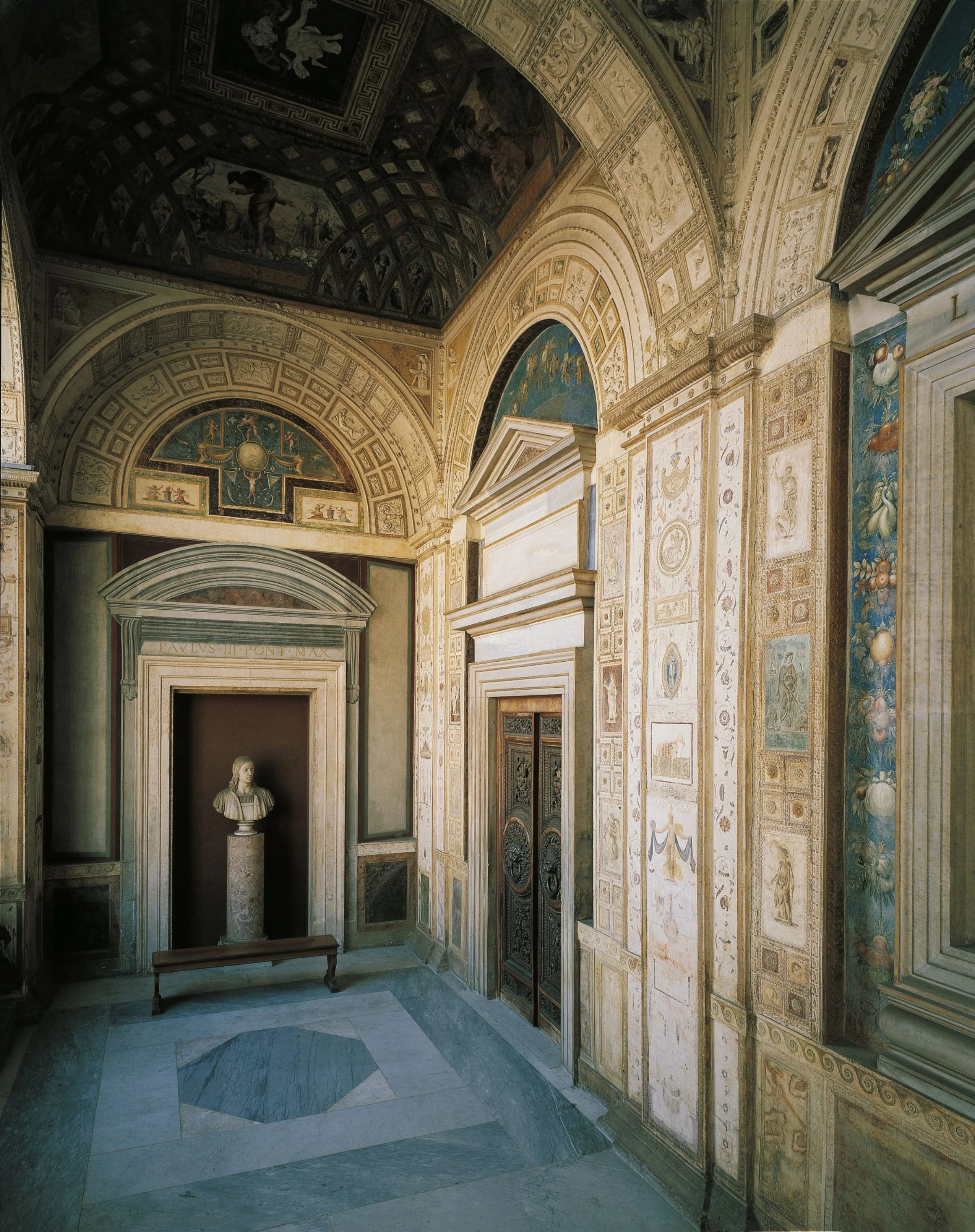
The Vatican Museums have officially launched a comprehensive five-year restoration of the Raphael Loggia, an elite corridor within the Apostolic Palace that has not seen a major conservation effort in half a millennium. This project, a collaboration with the World Monuments Fund and funded by the Stephen A. Schwarzman foundation, represents one of the most significant interventions in the papal apartments in recent history. The Loggia is not merely a passage but a critical transition space in the Apostolic Palace, reserved for the most distinguished visitors and personnel of the Holy See.
The scale of the initiative is underscored by a $14.5 million commitment from Schwarzman, with $5.5 million dedicated specifically to the physical restoration. This effort is critical because the Loggia's structural history has left it vulnerable; originally an open-air corridor designed by architect Donato Bramante for Pope Julius III in 1512, it was later enclosed in 1813 by Antonio Canova. While the glass windows protected the art from rain, they inadvertently created a greenhouse effect, trapping humidity and heat that accelerated the decay of the delicate fresco layers. You can find more on the current state of the Raphael Loggia restoration via Artnet.
The psychological impact of this restoration extends beyond the physical paint. For the Vatican, the Loggia serves as a manifesto of papal power and intellectual ambition. By restoring it, they are not just cleaning a wall, but reclaiming the visual language of the High Renaissance. This specific corridor was designed to lead visitors toward the core of the papal apartments, acting as a sensory primer for the grandeur that follows. The current state of decay—marked by flaking pigments and structural cracking—mirrors the broader challenges of managing an ancient palace that must simultaneously function as a modern museum and a secure residence for the Pope.
The Science of Conservation
The technical approach to the Loggia is a study in modern conservation science. Following trial runs conducted between 2019 and 2024, the Vatican Restoration Laboratory has opted for a "dry" cleaning method. Chief restorer Paolo Violini has emphasized that traditional chemical procedures would be too aggressive for the fragile remnants of the original layers. Instead, over 20 specialists will employ lasers to surgically remove grime and deposits without disturbing the underlying tempera or lime finishes. This precision is necessary because the Loggia's ceilings contain 13 bays of biblical scenes, meticulously executed by Raphael's students to his exacting specifications before his death in 1520.
Beyond the cleaning, the project integrates a massive digitization effort. The remaining funds from Schwarzman's donation are supporting a collaborative training program between the Vatican Museums and the University of Applied Sciences and Arts of Southern Switzerland. This ensures that the restoration is not just a momentary fix but a pedagogical investment in the next generation of conservators. By documenting every phase of the process digitally, the Vatican is creating a blueprint for future interventions in Renaissance art, moving away from the invasive methods of the 19th century toward a data-driven, minimally invasive standard of care. Further details on these Vatican Museums conservation standards highlight the shift toward scientific rigor.
The use of laser technology represents a fundamental shift in the Vatican's approach to materiality. In previous centuries, the goal was often to make the art look "new" again, which frequently involved overpainting and the use of harsh solvents that permanently altered the artist's intent. The new protocol prioritizes stability and reversibility. By using lasers to vaporize contaminants, the restorers can stop the moment they hit a layer of original pigment, ensuring that the 16th-century hand remains untouched. This surgical approach is essential given the complexity of the Loggia's surfaces, which blend fresco, tempera, and azurite, each reacting differently to environmental stressors and cleaning agents.
From Domus Aurea to Mannerism
To understand the Loggia is to understand the birth of Mannerism. Raphael's design for the space was heavily influenced by the recently rediscovered Domus Aurea, Emperor Nero's sprawling palace. The discovery of those ancient ruins provided the Renaissance masters with a new vocabulary of "grottesche"—hybrid figures combining human, animal, and plant forms. These playful, often surreal ornaments define the walls of the Loggia and served as the primary catalyst for the Mannerist movement, which favored artifice and intellectual complexity over the balanced naturalism of the High Renaissance.
The Loggia's current restoration is part of a broader trend of institutional reckoning with the physical decay of the Vatican's treasury. Just this past April, the Vatican completed an intensive two-month restoration of Michelangelo's Last Supper in the Sistine Chapel. Together, these projects suggest a systemic effort by the Holy See to stabilize its most high-traffic masterpieces for the next century of tourism. The addition of new UV-protectant windows and an updated lighting system, funded by the Vatican Museums Patrons of the Arts group, will finally correct the architectural mistake made by Canova in 1813, ensuring that the laser-cleaned frescoes are not immediately subjected to the same degradative forces.
The intellectual lineage of the Loggia also reflects the transition from the High Renaissance to the more decorative, complex styles of the mid-16th century. While Raphael provided the overall scheme, the execution fell to his students, who were tasked with interpreting his sketches across 13 distinct bays. This collaborative process is what makes the Loggia a critical archive of the "Raphael school." By removing the centuries of grime, the restoration will reveal the subtle differences in hand and technique between the various artists involved, providing art historians with new data on how Raphael managed his workshop and delegated the production of monumental cycles.
Implications for Global Heritage
The Schwarzman-led model of philanthropic intervention in the Vatican suggests a shifting dynamic in how the world's most guarded art collections are maintained. While the Vatican maintains absolute sovereignty over its halls, the reliance on private American capital for core conservation projects is a notable trend. This partnership with the World Monuments Fund elevates the Loggia from a private papal corridor to a site of global heritage, emphasizing that the preservation of these works is a responsibility shared by the international community.
As the five-year project progresses, the result will be more than just cleaner paint; it will be a revitalized understanding of Raphael's final visions. The Loggia stands as a testament to the collaborative nature of the Renaissance studio, where the master's blueprint was realized by a dedicated team. By stripping away five centuries of dust and pollution, the Vatican is not just restoring an image, but recovering the original luminosity and intent of a space that bridged the gap between the classical world and the modern era. This project aligns with other major institutional preservation strategies we have tracked this year.
The long-term success of this project will be measured not by the visual brilliance of the frescoes, but by the sustainability of the environment that houses them. The integration of new climate-control measures and UV filtration is the only way to prevent the recurrence of the decay that plagued the Loggia since 1813. For those tracking the intersection of global heritage and private philanthropy, this project serves as a primary case study in a new era of institutional maintenance, where scientific rigor is funded by strategic private partnerships.