Qatar Names Rirkrit Tiravanija for a Collaborative Debut Pavilion at the 2026 Venice Biennale
Qatar’s Biennale project will pair Tiravanija with artists, musicians, and chefs from the Arab world in a program designed for the Giardini site of its future permanent pavilion.
Qatar has named Rirkrit Tiravanija to lead its 2026 Venice Biennale presentation, a commissioning move that reads as both curatorial strategy and institutional positioning. The project, Untitled (a gathering of remarkable people), will be staged in a tent in the Giardini on the future site of Qatar’s permanent pavilion. That temporary-to-permanent sequence matters, because it allows the country to test a public identity before architectural permanence locks expectations in place.
The exhibition is cocurated by Tom Eccles and Ruba Katrib and brings together multiple contributors across mediums, including moving image, performance, sculpture, and culinary programming. Tiravanija’s role is key. His practice has consistently treated social encounter as artistic structure, so the pavilion is being framed less as a single-author statement and more as a platform where collaboration itself becomes the work’s operational language.
Institutionally, this is not a soft entry. It is a deliberate claim to long-term visibility inside the Biennale’s most symbolic geography. The program is tied to Qatar Museums leadership and wider cultural infrastructure, and it aligns with a broader strategy visible through Qatar Museums and related commissioning activity. When a national actor moves toward a permanent Giardini footprint, curators and collectors should read the move as structural, not episodic.
The content architecture is promising because it avoids the standard pavilion trap of stacking unrelated marquee names. Announced contributions include a film by Sophia Al-Maria, performance systems developed by Tarek Atoui, sculpture by Alia Farid, and a culinary program led by Fadi Kattan with chefs from the region. If executed with rigor, that mix can produce a coherent field of relations instead of a themed sampler.
The geopolitical context is unavoidable but should be handled precisely. National pavilions operate as cultural diplomacy whether they admit it or not. The relevant question is whether the artistic form can preserve complexity under branding pressure. This project has a chance to do that because the curatorial format privileges process and encounter, both of which can register contradiction better than slogan-driven installation narratives.
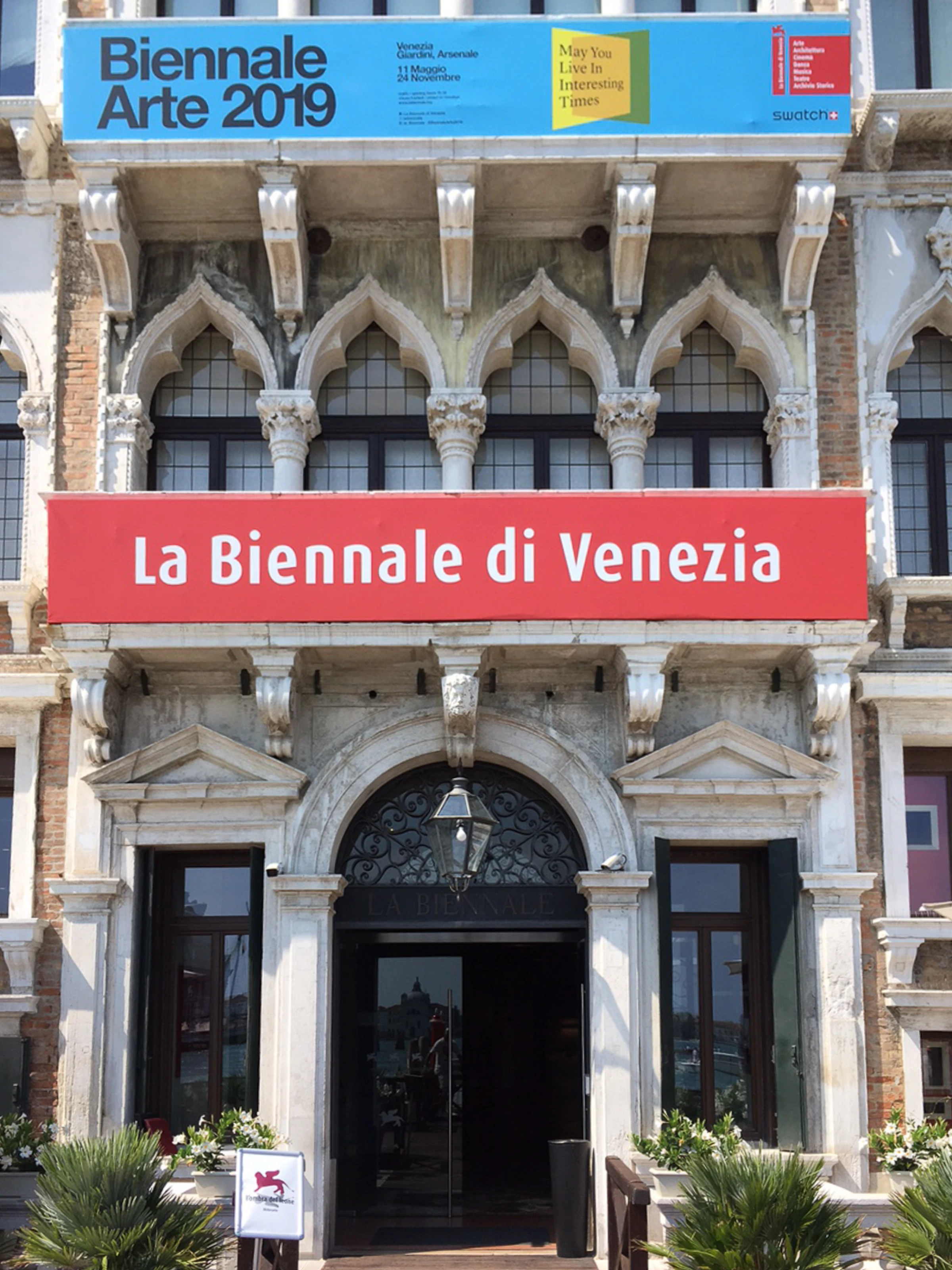
There is also a meaningful urban and architectural dimension. The pavilion sits within the circulation logic of La Biennale di Venezia, where viewers make fast comparative judgments across dense programming. Work that depends on slow social duration can fail in that environment unless facilitation, timing, and spatial design are disciplined. That is where Tiravanija’s long experience with participatory formats could become a practical advantage.
For institutions planning acquisitions or follow-on exhibitions, the key metric will be transferability. Can this pavilion’s logic travel into museum conditions without collapsing into documentation? Projects that rely only on event energy often fade quickly. Projects with strong internal structure can generate second lives through publications, institutional restaging, and public programs. Early signals suggest Qatar is aiming for the second category.
In short, this pavilion announcement should be read as a serious first chapter in a longer Venetian strategy. It links artist selection, curatorial method, and institutional trajectory in a way that is uncommon at this stage. If delivery matches framing, Qatar’s debut phase could become one of the more consequential national narratives of the 2026 cycle.