Pittsburgh Opens Arts Landing, a $31 Million Public Art Site Timed to a Major Civic Weekend
Arts Landing opened in downtown Pittsburgh with permanent commissions, a playground, and event infrastructure that tests whether public art can function as real civic space rather than symbolic beautification.
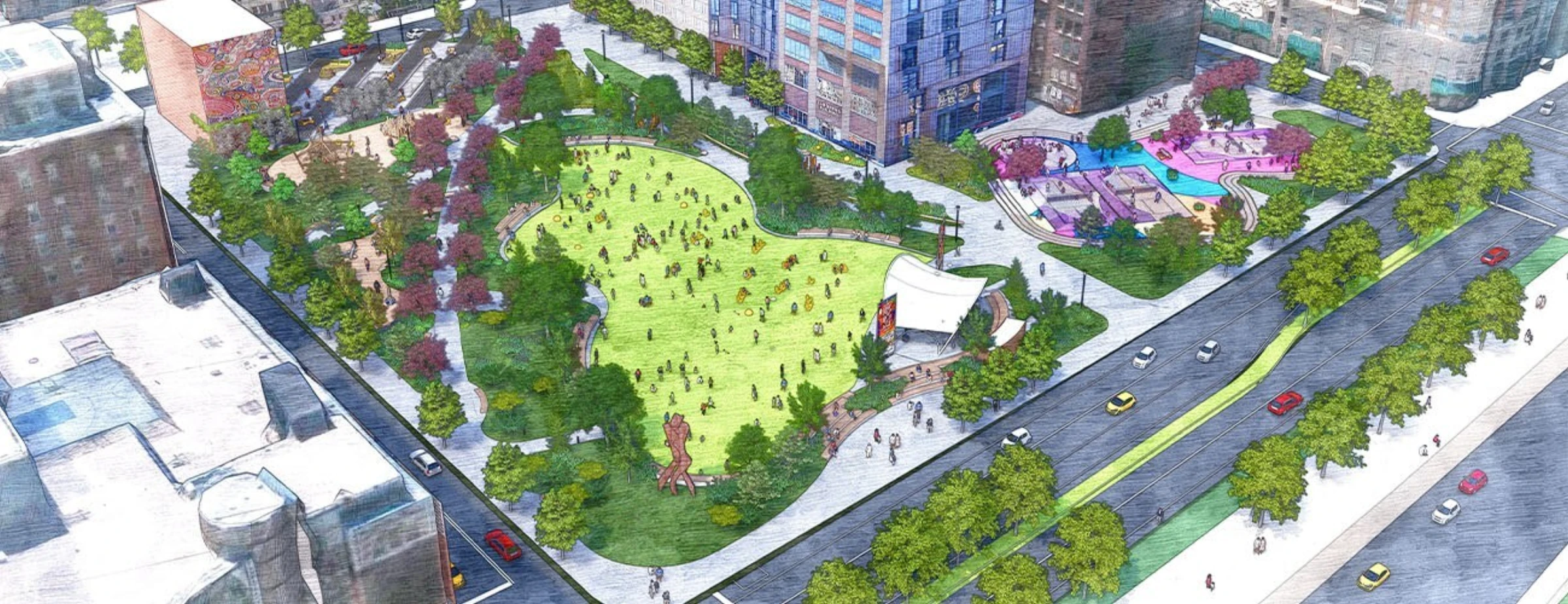
Pittsburgh has opened Arts Landing, a $31 million public project at the edge of downtown, just ahead of a high visibility weekend that includes both NFL Draft activity and the opening cycle around the Carnegie International. The timing is strategic, but the real question starts now: whether the site can operate as durable civic infrastructure and not merely as event scenery. The project, delivered through the Pittsburgh Cultural Trust, combines commissioned artworks, a lawn and bandshell zone, a new playground, and circulation paths that tie together a fragmented section of the district.
That mix matters because public art projects in US downtowns often fail for structural reasons, not aesthetic ones. Cities install objects, cut ribbons, and then leave weak programming, weak maintenance, and weak social integration to solve themselves. Arts Landing has at least attempted a fuller model by pairing commissions with practical amenities. It includes places to sit, routes to move through, and obvious invitations for multiple age groups, especially children. In operational terms, that gives the project a better chance than sculpture first approaches that assume visual interest alone can generate public life.
The roster of artists includes vanessa german, Darian Johnson, Lenka Clayton and Phillip Andrew Lewis, Sharmistha Ray, Mikael Owunna and Marques Redd, John Peña, Shikeith, and the late Thaddeus Mosley. What is notable is not only name recognition but format diversity. The site is not built around one monumental anchor. It distributes attention across works that engage land, play, light, and social use. That approach aligns with how many successful public sites function now: less as singular icon, more as layered environment where no one piece has to carry all symbolic weight.
Shikeith’s light based work and Mosley’s relocated sculptures set one productive tension in the project. One registers as time based and perceptual, the other as material, historical, and sculptural in a longer twentieth century tradition. Together they signal a useful editorial point for Pittsburgh itself. The city has often been narrated through steel era memory and sports branding. Arts Landing points in another direction, where postindustrial identity is built through contemporary art, social design, and recurring use patterns. Whether that shift holds depends less on opening week attendance than on year round programming discipline.
The governance context is just as important as the art. Public space interventions can become soft displacement tools if they prioritize optics over social reality. Downtown Pittsburgh has visible housing insecurity and drug use pressures, and those conditions do not disappear because a site receives new paving and commissions. The Trust and city partners now face the harder stage: integrating security, social services, event scheduling, and maintenance without turning the space into either a dead zone or an over policed corridor. The project should be judged on those terms over the next twelve months.
Collectors and institutional leaders should read Arts Landing as a governance case study, not just a local culture story. US cities are searching for models that combine philanthropy, municipal coordination, and artist led commissioning with measurable community outcomes. Pittsburgh now has a test site where that promise can be evaluated in public. If the bandshell, playground, and artwork ecology sustain regular use across demographics, it becomes a template. If it drifts into periodic spectacle, it becomes another cautionary file in the long history of downtown placemaking.
For now, the project deserves close attention because it treats public art as operating system rather than ornament. Readers tracking this should follow updates from the Arts Landing site page, the broader Visual Arts program, and institutional programming at the Carnegie Museum of Art, which helps shape the city’s international contemporary context. The opening is the easy part. The civic life that follows is the actual work.