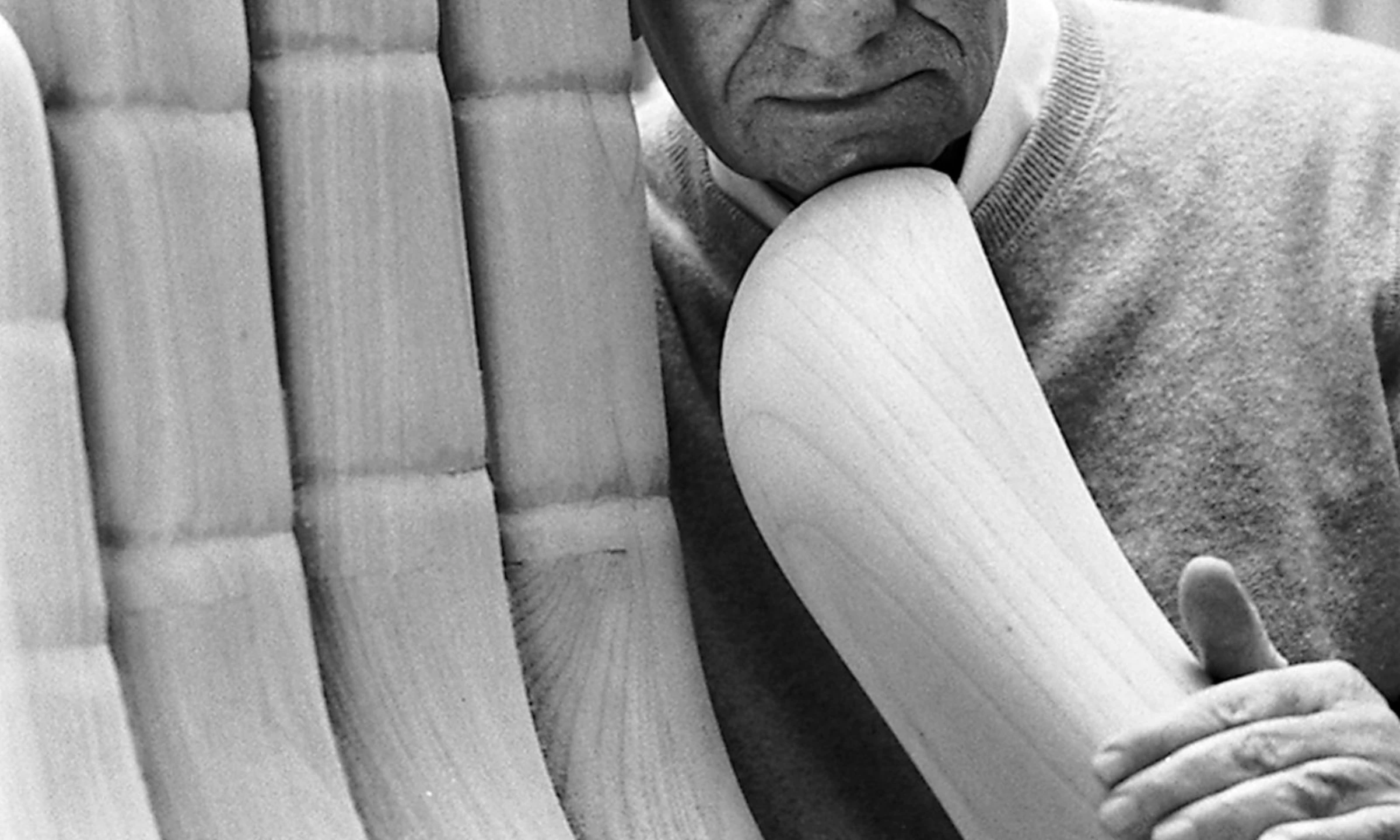
Pedro Friedeberg, Architect of Ornamental Defiance, Dies at 90
Mexican artist and designer Pedro Friedeberg has died at 90, closing a seven-decade career that resisted minimalist orthodoxy and made ornament, irony, and perspective central to modern Mexican visual culture.
Pedro Friedeberg, the Mexico-based artist and designer best known worldwide for the hand-shaped Mano Silla, has died at age 90. Obituaries will understandably lead with the chair. That entry point is accurate and incomplete. Friedeberg’s larger achievement was to build a sustained visual universe in which ornament, irony, and perspective carried genuine theoretical force rather than decorative afterthought.
Born in Florence in 1936, Friedeberg arrived in Mexico as a child when his family fled wartime Europe. That displacement history matters for understanding his later refusal of narrow formal categories. In Mexico City, his architectural studies and early relationships with figures such as Mathias Goeritz opened a field in which modernism, Surrealism, and local intellectual traditions overlapped without clean hierarchy.
Friedeberg’s work moved through those currents by refusing to settle inside them. Critics called him Surrealist, kitsch, Op-adjacent, Pop-adjacent, or eccentric by design. Each label catches a surface. None captures the method. His compositions repeatedly treated perspective as a conceptual engine, creating spaces that feel theatrical and mathematical at once, where visual pleasure and epistemic disorientation are inseparable.
Mano Silla became iconic partly because it compressed this method into a functional object. It was legible, reproducible, and instantly memorable, which helped it travel across design culture. But the same circulation that made it famous also overshadowed his paintings, prints, murals, and architectural fantasies that reveal the intellectual density of his practice.
His long career also challenged an institutional habit of equating seriousness with restraint. Friedeberg demonstrated that maximal form can be rigorous, that wit can be analytic, and that ornament can expose ideological assumptions in both modernist and market language. That proposition now feels newly relevant in a moment when museums are reassessing twentieth-century narratives beyond old center-periphery models.
The curatorial task ahead is straightforward and difficult: resist memorial simplification. A meaningful posthumous reassessment should foreground early and mid-career works, publication history, and the relationship between his visual logic and Mexican postwar cultural debates. Without that, the field risks preserving the icon while losing the argument.
Friedeberg remained active across decades, and his estate now becomes structurally important for scholarship and exhibition planning. If institutions collaborate with rigor, the next cycle could reposition him not as a charismatic outlier but as a central figure in modern Mexican visual thought.
For younger artists, Friedeberg leaves a methodological lesson that remains urgent: refusing dominant style systems can be more productive than joining them. His career demonstrates that visual excess and conceptual precision are not opposites, and that durability often comes from building a language no market cycle can fully absorb.
The next institutional decade will show whether museums can teach that lesson clearly. If retrospectives center only the iconic chair, they will miss the larger intellectual project. If they foreground drawing systems, architectural imagination, and archival continuity, Friedeberg’s position in modern art history will be meaningfully recalibrated.
Primary references and context: MUAC, Palacio de Bellas Artes, Mexican museum context, Fundación Friedeberg, and archive context from UNAM.