Unearthed Rego Painting Reframes Edvard Munch as a Formative Influence
A newly surfaced teenage work and archival letter indicate Paula Rego’s early encounter with Edvard Munch was foundational, not incidental, to her visual language.
A newly unearthed letter and an early painting are forcing a more precise account of Paula Rego’s formation. The argument is not merely that she admired Edvard Munch. It is that she recognized, very young, in Munch’s work a way to picture anxiety, social strain, and bodily vulnerability without softening any of it.
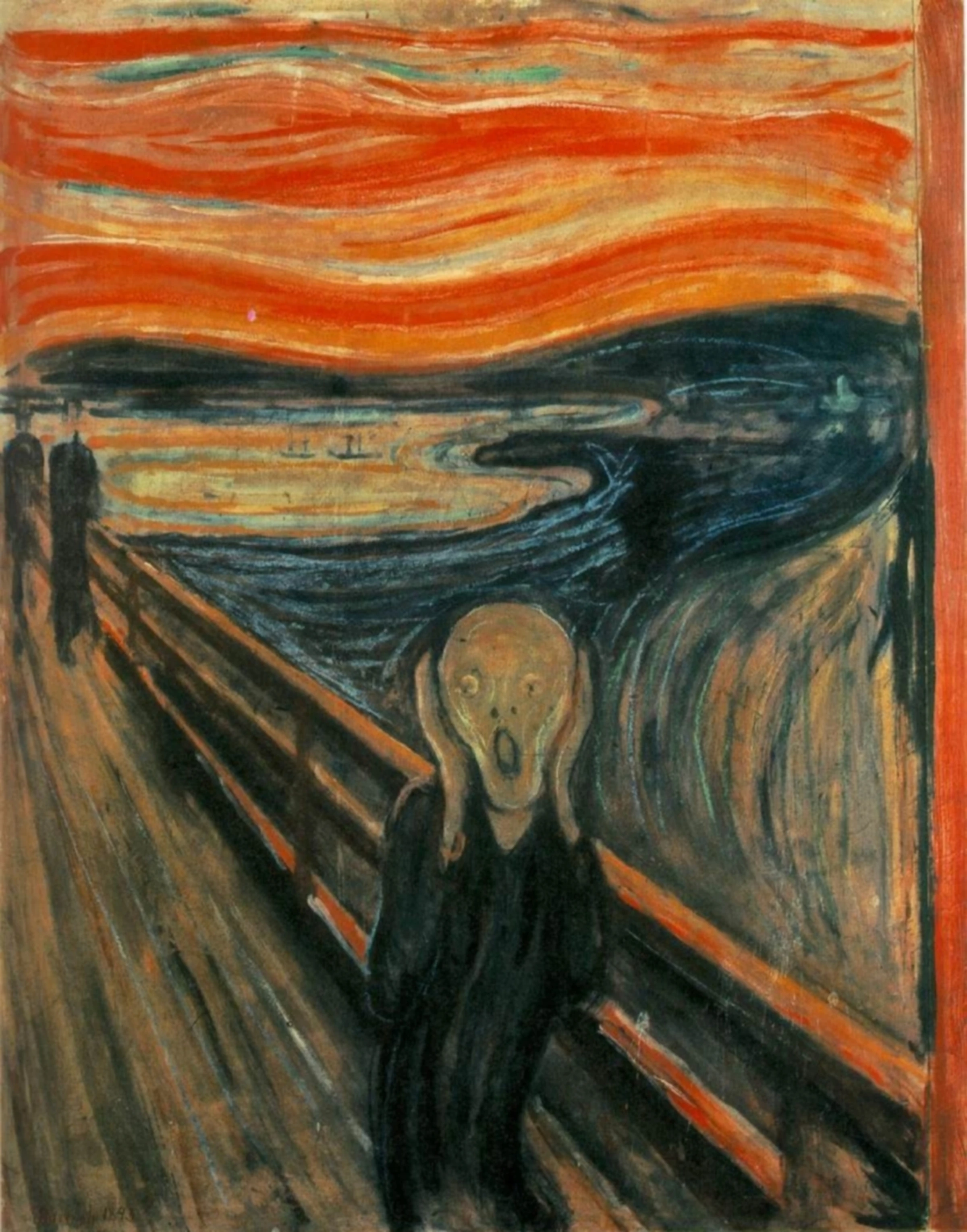
The letter, written by Rego as a teenager after seeing Munch at the Tate in 1951, reportedly singles out The Scream and Inheritance. That level of detail matters. Young artists often visit major retrospectives, but not every encounter leaves language this specific. Rego describes emotional and visual force, not just reputation.
The second piece of evidence is Drought, an early Rego work that remained out of public circulation and was later rediscovered. In the reported account, the painting stages an open mouthed, strained figure and uses a heated palette that echoes the tension architecture of Munch’s late nineteenth century and early twentieth century canvases.
This shifts how we date Rego’s tonal commitments. Her mature work has long been read through political allegory, domestic violence, Catholic iconography, and Portuguese social codes. Those frames remain necessary. But the Munch link places emotional extremity and chromatic disquiet at the start of the arc, not midway through it.
For curators, the practical implication is display logic. Rego is frequently hung inside national or biographical narratives. The new evidence supports a stronger transnational line, where she is read in dialogue with modern northern European expression and with artists who made fear and shame structurally visible in composition.
For scholars, this is an archival case study in how small discoveries can reshape canon narratives. One letter and one neglected object can do more interpretive work than broad thematic essays if the material evidence is tight and timeline based.
For students of painting, there is also a technical lesson. Influence is not always motif transfer. It can be pressure transfer: how to hold discomfort in the frame, how to keep figures present without making them heroic, and how to use color temperature to amplify psychological weather.
This is why the coming Oslo exhibition context is important. If the works are staged in close visual conversation, viewers can test similarities and differences directly: brush handling, horizon instability, facial distortion, and the role of spectatorship inside each narrative scene.
No responsible reading should collapse Rego into Munch. Her iconography, gender politics, and narrative bite are distinctly her own. But denying the early encounter would now ignore available evidence. The better position is structural: Munch provided permission, Rego built the language into something harsher and more socially pointed.
In editorial terms, this is the kind of art historical update that matters beyond specialist circles. It shows how interpretation improves when institutions keep mining archives instead of repeating settled anecdotes. A stronger chronology gives audiences better looking tools.
The final point is simple. Rego’s emotional intensity did not appear fully formed in mid career. It was trained by looking, and Munch appears to have been one of the earliest and sharpest points of contact.
Primary references: Munch Museum, Tate, and Gulbenkian.