Jewish Museum Opens Major Paul Klee Show Without Angelus Novus
The Jewish Museum opened its Klee survey in New York with a facsimile in place of Angelus Novus after regional war disruptions delayed transport from Jerusalem.
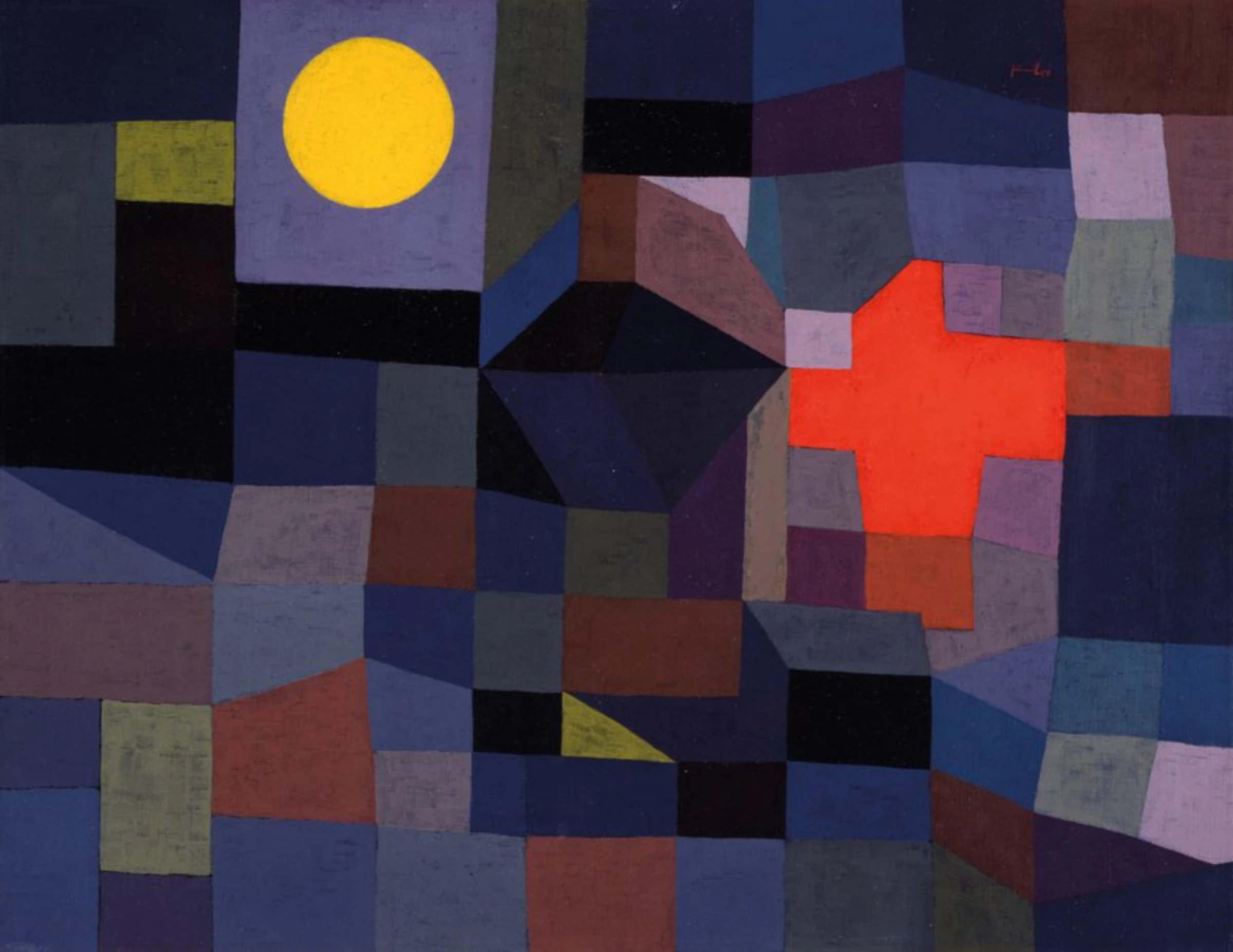
The Jewish Museum in New York opened Paul Klee: Other Possible Worlds on schedule, but without the work most visitors expected to anchor the show, Angelus Novus (1920). The painting remains in Israel after transport routes were disrupted by the regional war, forcing the museum to install an authorised facsimile in the dedicated gallery while it waits for the original to travel from the Israel Museum.
That logistical failure has quickly become curatorial content. The exhibition includes a recessed red display field and interpretive framing around the absent work, effectively turning the delay into a real-time case study in the politics of movement, fragility, and institutional dependency. Museums can build a thesis around circulation, but they still depend on planes, insurers, diplomats, and climate controls that can fail in days when geopolitical conditions shift.
Klee’s show was conceived around the late period, especially work made under escalating fascist pressure. That context is not cosmetic. Klee was dismissed by the Kunstakademie Düsseldorf, attacked in Nazi media, and included in the 1937 Degenerate Art campaign. Angelus Novus, acquired by Walter Benjamin in 1921, later became inseparable from Benjamin’s writing on catastrophe and historical wreckage. The irony is hard to miss: a painting canonical for its interpretation of history as accumulating disaster is now itself immobilised by contemporary conflict logistics.
The case also revives Benjamin’s own terms. He famously warned that mechanical reproduction strips the original of singular presence. Here, the museum has had to install a copy of the very work through which that argument entered mainstream cultural discourse. The result is not simply educational workaround. It is a live institutional experiment in what audiences actually come to see, object, concept, aura, or narrative.
From an operations perspective, this episode illustrates a broader museum vulnerability. The global exhibition economy relies on tightly sequenced loans, conservation windows, and customs corridors. When one segment breaks, curatorial messaging, ticketing expectations, and press positioning must be rewritten immediately. Large institutions with robust communications teams can absorb this shock more visibly than smaller museums, but no one is immune to the structural fragility.
The impact is already regional, not isolated. Other institutions have reported postponed shipments, delayed fairs, and suspended programmes as transport and security conditions remain unstable. For museum leaders, the question is no longer whether geopolitical disruption affects exhibition planning. It is how much contingency infrastructure is needed when conflict conditions persist for months rather than weeks.
For audiences, the absence may still produce a sharper encounter. The missing original foregrounds what loan exhibitions often suppress, the infrastructure behind display and the political conditions under which artworks can or cannot appear. In that sense, the show has acquired an unplanned second layer. It remains a Klee exhibition, but it is also a document of how museums operate when circulation is interrupted and history stops being retrospective.
If and when Angelus Novus arrives, the museum will likely rotate it under strict light limits, as originally planned. Until then, the gallery stands as evidence that major institutions now curate under two timelines at once: the scholarly timeline of art history, and the unstable timeline of logistics shaped by war, borders, and risk.