Paris Internationale Names 34 Galleries for Its First Milan Edition
Paris Internationale has confirmed 34 exhibitors for its first edition outside France, signaling Milan’s accelerating pull in the spring fair calendar.
Paris Internationale has announced the exhibitor list for its first Milan edition, with 34 galleries and nonprofits set to take part from April 18 to 21, with a VIP preview on April 17. The expansion matters because this is the first time the fair, founded in Paris in 2015 as a gallery-led nonprofit alternative to high-cost mega-fair formats, has staged a full edition outside France. Its move lands directly inside Milan Art Week, a period already crowded by institutional openings, private foundation programming, and the commercial pull of miart.
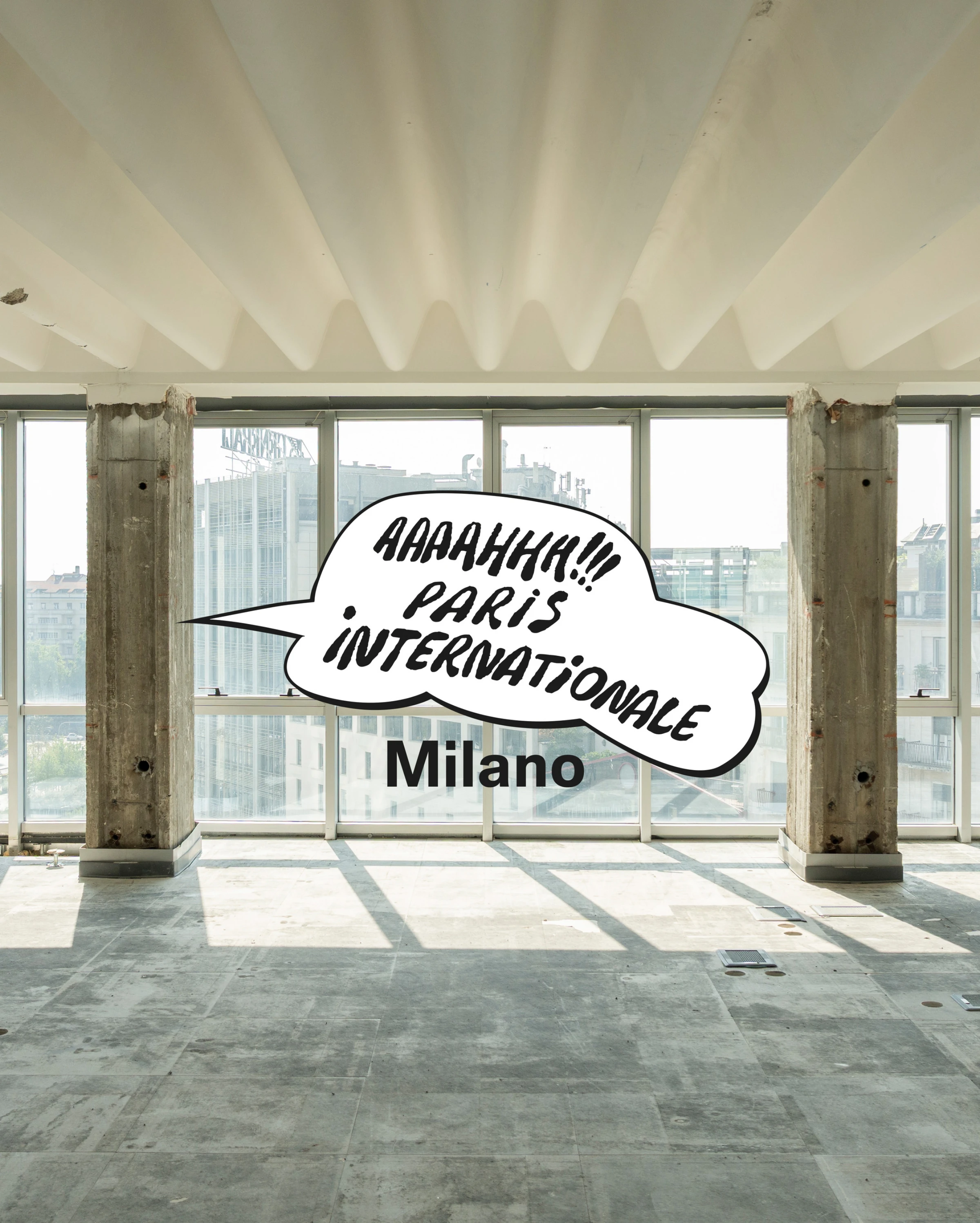
The fair will be housed at Palazzo Galbani on Via Fabio Filzi, a postwar modernist building that gives organizers the chance to stage the event in an architecturally loaded setting rather than a generic fair hall. That choice is not cosmetic. Paris Internationale’s operating identity has always depended on controlled scale, curatorial compression, and a refusal of overproduction. Organizers have reiterated that participating exhibitors will present one or two artists each, a format designed to slow visitors down and keep booth logic closer to exhibition logic. For collectors and advisors, that usually means cleaner first reads, faster shortlists, and less time spent sorting visual noise from conviction.
The roster combines repeat participants from Paris with first-time exhibitors in Milan, and it reinforces a broader shift in how galleries are reallocating spring resources. Rather than treating Milan as a secondary stop between Basel ecosystem events, more galleries are now treating the city as a primary market touchpoint where institutional, design, and private collector audiences overlap. That overlap is strategic: Milan gives galleries access to European collectors, foundations, and design-adjacent buyers in one week, with lower activation pressure than larger franchise fairs.
Paris Internationale Milano is also arriving as city officials publicly position contemporary art as a metropolitan priority. In comments tied to Milan Art Week, cultural officials framed the city as an international platform rather than a regional node. Whether that claim holds will depend less on press language and more on post-fair outcomes: institutional placements, secondary-market follow-through, and whether participating galleries convert first contacts into sustained representation or sales relationships. Still, the fair’s structure gives it an advantage. Limited participation and concentrated presentations tend to reward galleries with clear programs and punish those relying on inventory-heavy display strategies.
For curators, the new Milan edition creates a compact scouting environment before Venice Biennale season peaks. For collectors, it offers a setting where comparison between emerging and mid-career positions can happen quickly across a concentrated field. For galleries, the risk is obvious: a smaller fair leaves less room for weak framing. If a booth lacks precision, it reads immediately. The upside is equally clear: when presentations are tight, artists can register with unusual clarity.
The deeper question is whether this edition remains a one-off expansion or becomes a durable second anchor for the Paris Internationale brand. If the Milan event retains the nonprofit, artist-centered logic that made the Paris fair credible, it could become a meaningful counterweight to increasingly standardized fair circuits. If it drifts into growth-for-growth replication, it loses the very proposition that made galleries trust it in the first place. The first Milan edition, then, is not just a geographic move. It is a governance test for an alternative fair model under expansion pressure.
Primary references include the fair’s official visitor information and access details on the Paris Internationale website, city-level framing within miart and Milan Art Week materials, and institutional context from Comune di Milano.