Paris Internationale’s Milan Launch Confirms a New Power Map for European Contemporary Art
Paris Internationale’s arrival in Milan during Art Week signals a structural shift in where European galleries expect collector attention, tax efficiency, and long-term growth.
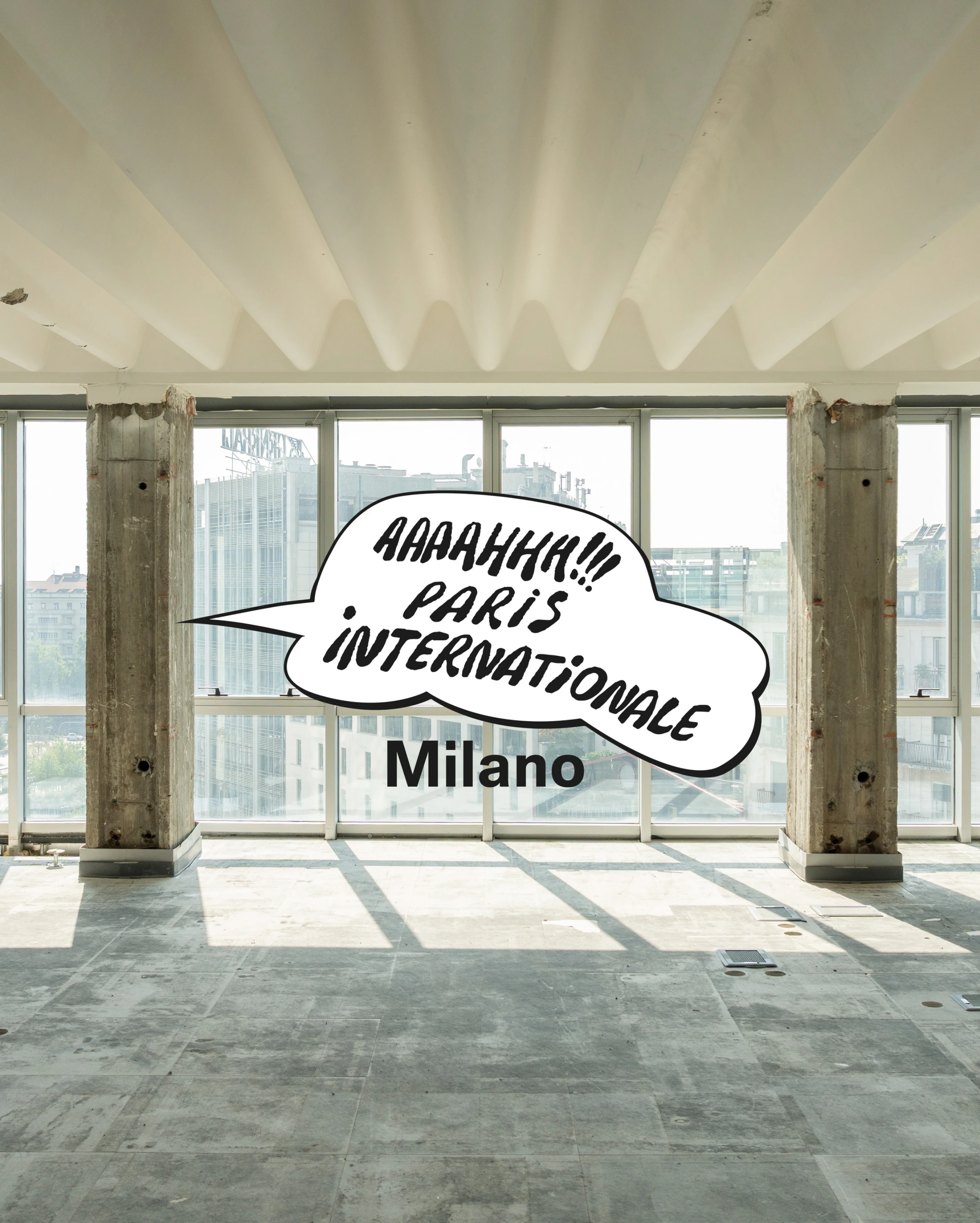
Paris Internationale has confirmed its first Milan edition with a 34-gallery lineup, timed to coincide with miart and Milan’s broader design and cultural calendar, as well as the citywide platform of Milan Art Week. The move is being read across the market as more than fair expansion. It reflects a wider reweighting of European art geography, where Milan has shifted from important domestic center to international platform with credible tax, logistics, and collector advantages. In plain terms, galleries are following concentration of capital and institutional attention, and those flows are currently favoring northern Italy.
What makes this launch notable is timing and fit. Milan now offers a dense overlap between contemporary art, design, architecture, and luxury commerce, sectors that increasingly share patrons and advisory networks. For a fair model like Paris Internationale, which has historically cultivated discovery and younger gallery profiles, Milan delivers a collector base that can move quickly on new work while still maintaining relationships with established dealers. That blend is rare. In many markets, younger galleries find audience enthusiasm but limited purchasing depth, or mature buying power with low tolerance for risk. Milan is currently presenting both.
The policy backdrop has accelerated this positioning. Italy’s reduced VAT regime on art transactions lowered friction at a moment when cross-border collectors and galleries are rethinking where to base operations. Add migration of high-net-worth residents from London and the equation becomes clearer: the city can support both transactional activity and long-horizon collection building. This is why the Milan story cannot be reduced to one fair, one season, or one tax incentive. It is a systems shift where regulation, wealth movement, and institutional culture now reinforce each other.
Gallery strategy over the last two years supports that reading. Thaddaeus Ropac opened in Milan, while major international dealers have expanded in Venice, Palermo, and Naples, treating Italy as a networked terrain rather than a single-city experiment. At the same time, local collector ecosystems, including private foundations and patron-led institutions, continue to absorb and frame contemporary production outside the volatility of auction headlines. For artists and mid-size galleries, that environment can offer better continuity than markets that are structurally tied to quarterly sale cycles.
There is also symbolic value in Paris Internationale choosing Milan instead of merely scaling inside France. The fair’s identity has depended on curatorial distinctiveness and social credibility among younger dealers. Taking that brand into Milan tests whether independent fair models can travel without diluting their character. If the launch works, it strengthens the case for highly edited fairs that prioritize network depth over exhibitor volume. If it struggles, it will underline the limits of portability for formats that rely heavily on local scene chemistry. Either outcome will be watched closely by organizers planning the next generation of regional fair expansion.
For collectors and curators, the practical implication is straightforward: Milan Art Week now requires serious attention as a decision-making site, not only a social itinerary. The city is consolidating moments when galleries debut ambitious presentations, institutions scout aggressively, and buyers commit before works cycle into broader global visibility. In an era where market confidence remains uneven, this concentration of conviction is valuable. Paris Internationale’s arrival does not create the shift by itself, but it confirms that the shift is already underway.