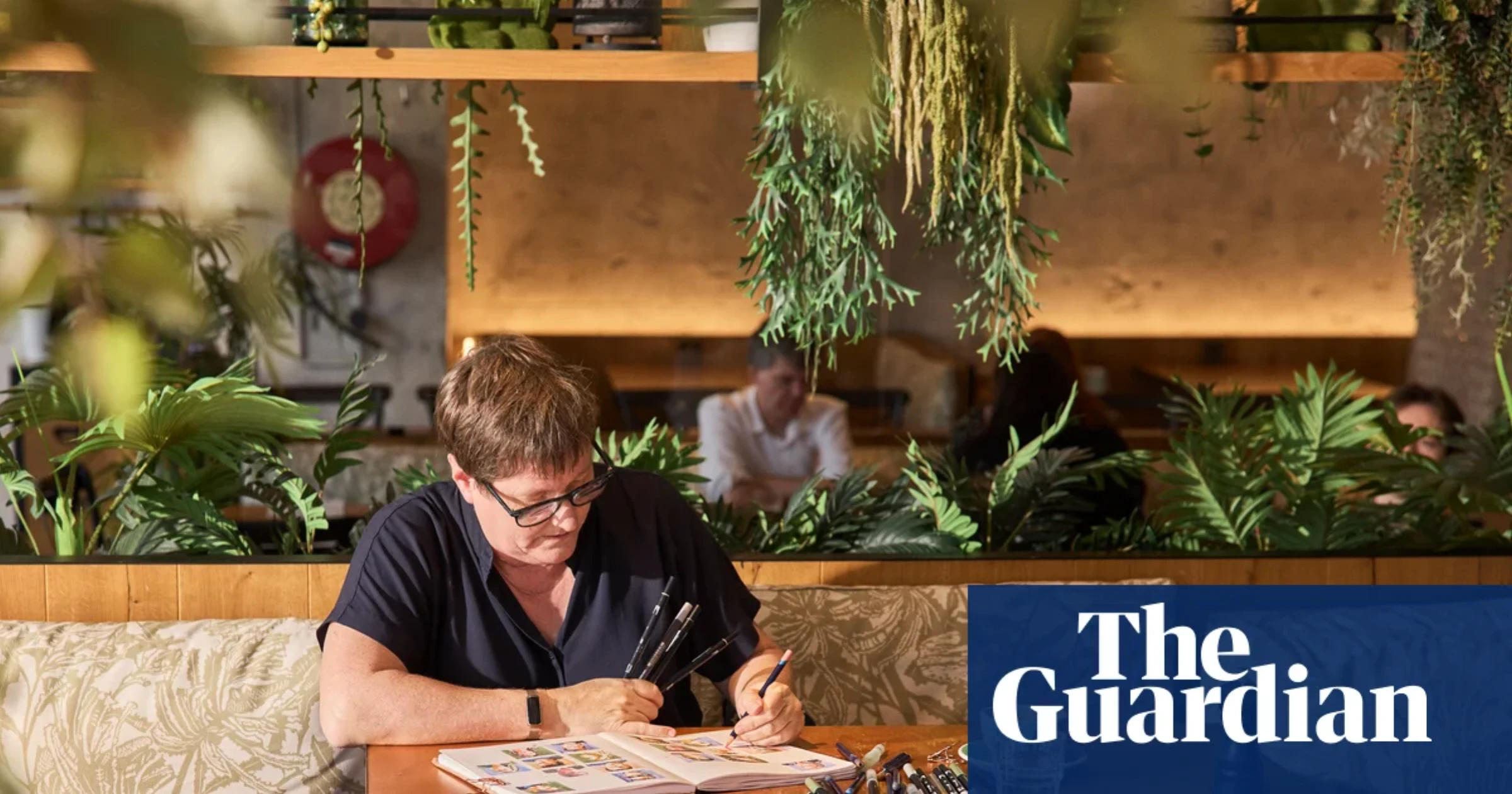
Practice Guide: How to Use #OneWeek100People to Retrain Your Eye
The global #OneWeek100People challenge is a practical system for building observational discipline. Here is a field-tested framework for artists, students, and curators who want better drawing through volume and attention.
#OneWeek100People looks like a social media challenge, but underneath the hashtag is one of the cleanest training protocols available for observational drawing. Co-founded by Liz Steel and Marc Taro Holmes, the challenge asks participants to sketch 100 people in seven days, with an explicit emphasis on quantity over quality. That sounds simplistic. It is not. It is a behavioral design that breaks perfectionism, improves visual selection, and strengthens real-time decision making.
The first principle is this: speed creates honesty. When you only have 20 to 90 seconds per figure, you cannot hide behind rendering tricks. You make clear choices about proportion, posture, balance, and line direction. That pressure exposes habits quickly. If your heads drift too large, you see it by sketch 15. If your figures float without weight, you see it by sketch 30. The challenge compresses feedback loops that normally take months to notice.
The second principle is attentional recovery. Steel describes drawing as a way of being truly present in the physical world, and that matters now more than ever. Most image consumption is passive and algorithmically paced. Sketching in public reverses the relationship: you decide what to observe, what to omit, and what deserves emphasis. The page becomes a record of deliberate attention rather than reactive scrolling.
If you want to run the challenge well, set up for low friction. Use one pocket sketchbook, one pen or pencil, and one backup tool. No material experimentation during the week. Tool-switching feels productive but usually functions as avoidance. Stable tools produce cleaner data about your actual seeing. Your objective is not aesthetic variety; your objective is observational reps.
Set daily floors, not fantasies. A practical structure is 15 figures on your busiest day, 20 on a normal day, and 25 or more on open days. That gets most people to 100 without burnout. If you miss a day, do not quit. Use a recovery day with dense micro-sketches in transit hubs, cafes, or queues. The challenge is cumulative, and consistency beats drama.
Work small on purpose. Two to six centimeters per figure is enough for useful information. Small format forces you to prioritize gesture and rhythm over detail. It also reduces the cost of failure, which keeps momentum high. Holmes has repeatedly emphasized that the challenge should feel like a game. That framing is psychologically smart: play sustains volume; pressure kills it.
Rotate environments to diversify what your eye learns. If all 100 figures come from one cafe angle, you will improve at one narrow problem. Mix locations with different pacing and body language: stations, parks, food courts, museums, waiting rooms, and sidewalks. Variation trains adaptability. It also teaches you to recognize recurring anatomical patterns under changing clothing, posture, and motion.
For educators, #OneWeek100People is easy to deploy in studio classes and workshops. Assign daily mini-sets, then run a short critique based on pattern diagnosis rather than taste. Ask three questions: Where does proportion fail most often? Where does line confidence drop? Where does movement read clearly? This keeps feedback technical and actionable. It also avoids style policing, which is the fastest way to flatten growth.
For curators and critics, the challenge is a reminder that drawing is not only output but cognition. Rapid figure sketching reveals what an artist notices first, what they ignore, and how they map social space. Those are interpretive clues with real curatorial value, especially when reviewing sketchbooks as process documents rather than preparatory leftovers.
After the week, do one disciplined review session. Mark your pages in three colors: green for strong captures, yellow for partial reads, red for repeated misses. Then write a one-page diagnosis with exactly three weaknesses and three strengths. Keep it specific: for example, 'hips consistently too narrow relative to shoulders' is useful; 'anatomy needs work' is not. Convert each weakness into a two-week drill.
A useful extension is the 20-20-20 split: 20 live sketches from moving subjects, 20 from seated subjects, and 20 from photo references focused only on correction. The live sets train speed and selection. The photo set lets you troubleshoot without environmental chaos. This balance prevents the common mistake of using reference images as a comfort zone instead of a repair tool.
Do not confuse challenge completion with mastery. Finishing 100 sketches is a beginning, not an endpoint. The real win is a shift in how you look. If the week is successful, you start noticing tilt, tension, and spacing automatically in daily life. That is the durable skill, and it transfers across drawing, painting, photography, and even exhibition planning.
If you want context on the movement and its founders, start with the original reporting and community resources at <a href='https://www.theguardian.com/artanddesign/2026/mar/15/draw-100-people-in-one-week-sketch-trend-worldwide' target='_blank' rel='noopener'>The Guardian, the wider <a href='https://urbansketchers.org' target='_blank' rel='noopener'>Urban Sketchers network, Liz Steel’s teaching archive at <a href='https://www.lizsteel.com' target='_blank' rel='noopener'>lizsteel.com, and Marc Taro Holmes’s instructional materials at <a href='https://citizensketcher.com' target='_blank' rel='noopener'>citizensketcher.com.
Bottom line: run the challenge as training, not content. Keep tools simple, targets realistic, and review ruthless. You are not trying to produce 100 good drawings. You are trying to build one better way of seeing that persists after the hashtag fades.