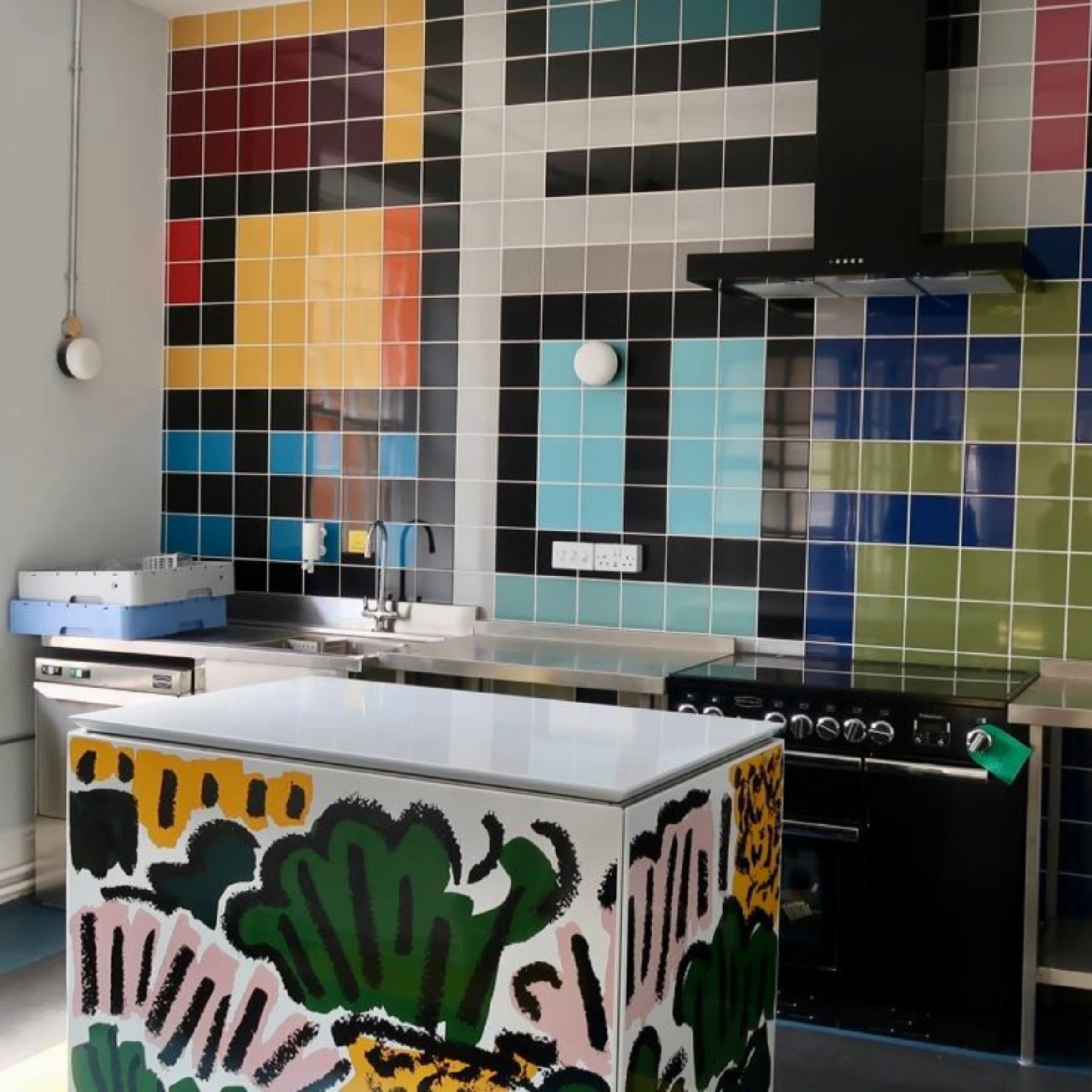
Northampton Opens £5.2m Arts Collective Hub with Studios, Archives, and Public Program
A refurbished civic building in Northampton will open as a new artist-led center combining exhibition space, studios, and local-history infrastructure in a long-horizon regeneration model.
Northampton’s new Arts Collective center opens on 1 May in a refurbished former municipal building on Guildhall Road, backed by a reported £5.2 million capital investment. On paper, this is another UK regional arts-infrastructure story. In practice, the project is testing a different proposition: whether artist-led institutions can be built as long-duration civic systems rather than short-cycle programming venues.
The new site sits beside Northampton Museum and Art Gallery and combines several functions that are often separated: exhibition galleries, workshops, learning spaces, 17 artist studios, and public gathering rooms. That combination matters because it links production, presentation, and community use in a single operational footprint. Instead of treating artists as occasional programming inputs, the model attempts to structure recurring presence through space, commissioning, and organizational pathways.
The opening exhibition, House Rules, focuses on Rose Finn-Kelcey and positions architecture, access, and ritual as core themes. Alongside exhibitions, the center is launching long-horizon social infrastructure, including a permanent open-studio archive developed with the Northamptonshire Black History Association around the Matta Fancana Movement. For regional institutions, that archive logic is crucial. It shifts value from event throughput toward memory stewardship and local historical accountability.
The governance context is equally significant. The project moved through planning under one political administration and into delivery under another, including a council now led by Reform UK. In a fragmented UK cultural-funding environment, continuity across political turnover is rare. Here, local leadership appears to have backed completion and reopening, framing it as part of wider regeneration strategy. Whether that support remains stable will be tested by operating budgets, programming pressure, and public scrutiny after launch.
For other UK towns, the Northampton case offers a practical template. Adaptive reuse of civic buildings can lower development risk compared with new construction, while mixed-use cultural programming can widen participation beyond conventional gallery audiences. But these benefits hold only if institutions can sustain staff, artist payments, and maintenance over time. Capital grants can open doors. They do not pay for durable practice on their own.
The center’s stated emphasis on artist-led progression, from studio provision to paid roles and governance participation, is one of its strongest structural commitments. If implemented credibly, it could reduce a common failure mode in regeneration projects where artists are used to activate districts and then priced out by success. Embedding pathways for long-term participation is a direct response to that cycle.
Northampton will therefore be watched as a policy case, not only a local opening. If the institution can maintain quality exhibitions, local trust, and stable artist careers while integrating with municipal strategy, it will provide evidence that regional cultural investment can be both ambitious and grounded. If it cannot, the project will join a familiar list of promising launches that lacked operational runway.
For now, the signal is serious: an old civic building has been converted into a contemporary cultural machine with clear social intent. The next test is whether that machine can run for the next decade, not just the next season.
The local urban context strengthens the test case. The site sits inside a wider regeneration arc that includes municipal planning and cultural-quarter development by West Northamptonshire Council. If the center can align public policy, artist infrastructure, and civic participation, it will offer a model that other mid-size towns can copy without importing big-city cost structures.
Institutional partnership discipline will be equally important. The project’s relationship to nearby cultural anchors, including Northampton Museum and Art Gallery, creates opportunities for audience crossover, shared programming, and educational depth. But those benefits require coordinated calendars and stable staffing, not just proximity.
For funders and trustees watching from elsewhere, the right metric is neither opening-week footfall nor social-media impressions. It is whether artists can maintain real tenancy, paid work, and curatorial influence over multiple years. If Northampton achieves that, it will move the conversation from cultural activation to cultural permanence.