NGV’s ‘MOTHER’ Reframes Motherhood as Labor, Memory, and Institutional Canon
The National Gallery of Victoria’s new exhibition uses more than 200 works to shift motherhood from iconography to lived, political, and material labor.
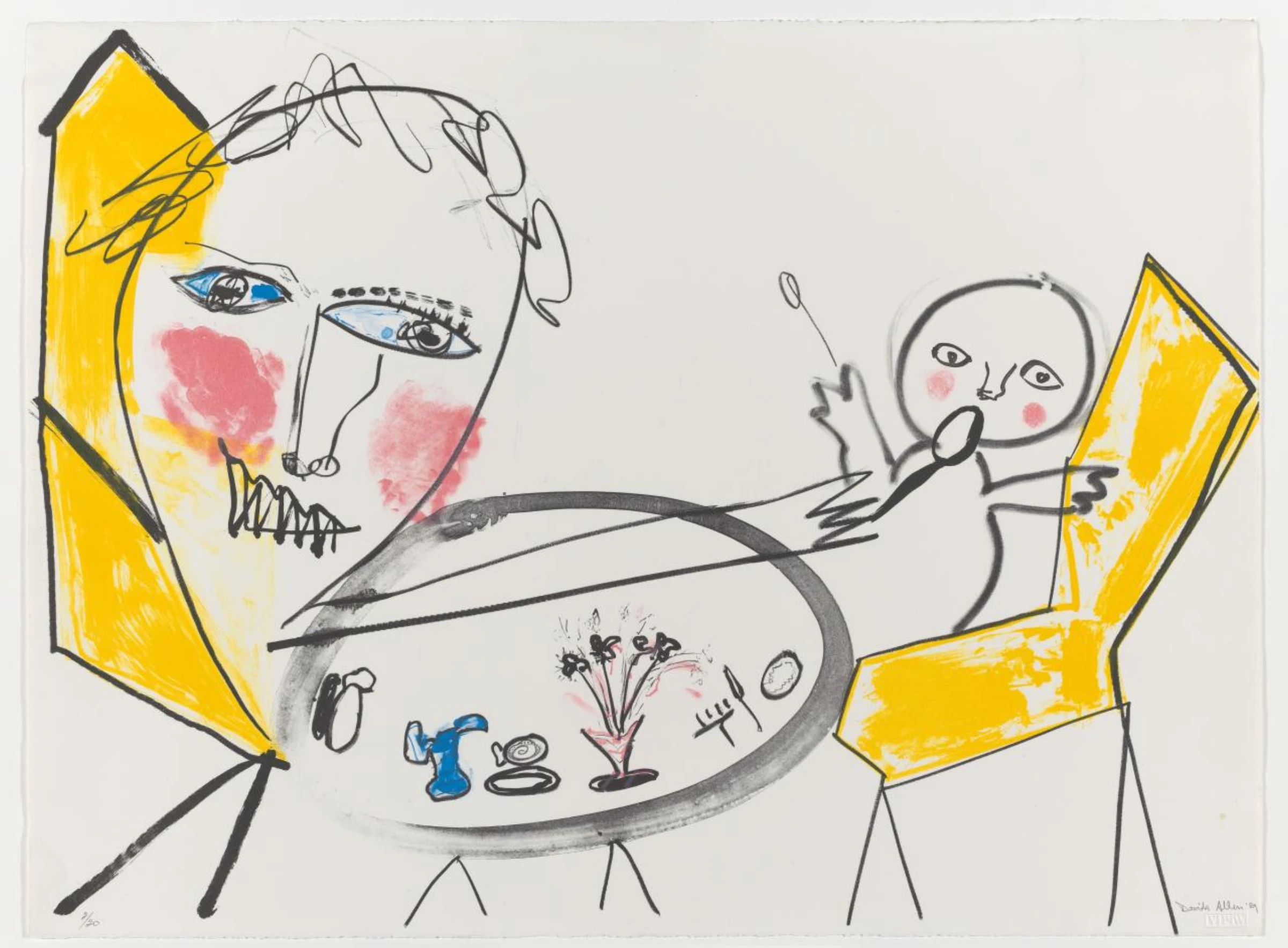
The National Gallery of Victoria has opened MOTHER: Stories from the NGV Collection, a 200-work exhibition that treats motherhood less as sentiment and more as a site of social production. On paper, this is a collection show running through July 12 at The Ian Potter Centre in Melbourne. In practice, it is an institutional argument about what kinds of labor museums have historically aestheticized, what kinds they have ignored, and how a major public collection can reset that balance without reducing complex lives to identity branding. The show lands at a moment when museums across Australia and Europe are under pressure to justify relevance in social terms, not only in attendance metrics.
The curatorial structure, creating, giving, and leaving, is broad enough to carry historical and contemporary work together without flattening differences between devotional imagery, domestic records, and politically explicit interventions. That matters because motherhood has usually been presented through a narrow visual canon, especially in Western painting, where idealized mother and child pairings often operate as moral theater. Here, NGV’s framing redirects attention to physical and administrative realities: pregnancy, care routines, absence, grief, and the hidden economies that allow care work to happen at all. For curators and collectors, the important point is methodological. The exhibition demonstrates how to shift from iconography to systems, from image to infrastructure.
Institutionally, the timing is not accidental. NGV has been expanding how it presents First Nations and contemporary voices within long historical narratives, and this exhibition follows that trajectory by putting intergenerational knowledge and embodied craft on the same analytic plane as canonical European references. The result is not a token juxtaposition. Works tied to birth, textiles, and domestic ritual are allowed to carry formal and political weight in equal measure, which is exactly where many museum displays still fail. If a public museum wants to claim relevance to contemporary civic life, this is the baseline, not an optional thematic program.
Another critical feature is scale. A show of this size in a state institution is a collection-management decision as much as a curatorial one. It requires departments to align conservation, rights clearance, interpretation, and education around a topic that has often been relegated to minor exhibitions. By placing motherhood at collection scale, NGV is effectively saying that care, vulnerability, and relational labor are not peripheral subjects. They are central to understanding how visual culture has been produced, consumed, and canonized. That claim has downstream effects on acquisitions. It encourages museums to collect not just heroic objects but also works that document repetitive, intimate, and socially distributed labor.
Collectors should pay attention to this because museum framing influences market language within one to three years. When institutions begin to classify care-oriented or process-driven work as structurally important, galleries and advisors quickly reprice what was previously treated as niche practice. Artists long discussed as “domestic” or “intimate” are reframed as analysts of governance, kinship, and welfare systems. We have seen this pattern repeatedly in photography, textile-based work, and socially embedded performance archives. NGV is adding another data point to that shift.
The exhibition also has practical implications for exhibition design and interpretation. The best sections avoid moralizing and instead allow contradiction, joy, resentment, devotion, fatigue, and comic aggression to coexist. That mixed register is crucial because it resists the museum habit of converting experience into clean didactic outcomes. For professionals programming related work, this show is a reminder that thematic exhibitions need formal discipline and interpretive precision. Without both, politically charged topics dissolve into mood boards. NGV avoids that trap by anchoring the thesis in specific works and long-duration context.
For Melbourne audiences, the immediate value is clear: free access to a major curatorial statement that joins historical objects to current social arguments without collapsing either. For the wider sector, the significance is strategic. NGV is modeling how a public museum can recalibrate a familiar theme through collection depth, First Nations context, and contemporary curatorial language. If other institutions follow, we should expect programming that treats care work as a primary art-historical engine rather than background content. That is not a rhetorical tweak. It changes what gets collected, what gets funded, and what future audiences learn to see as central to cultural history.