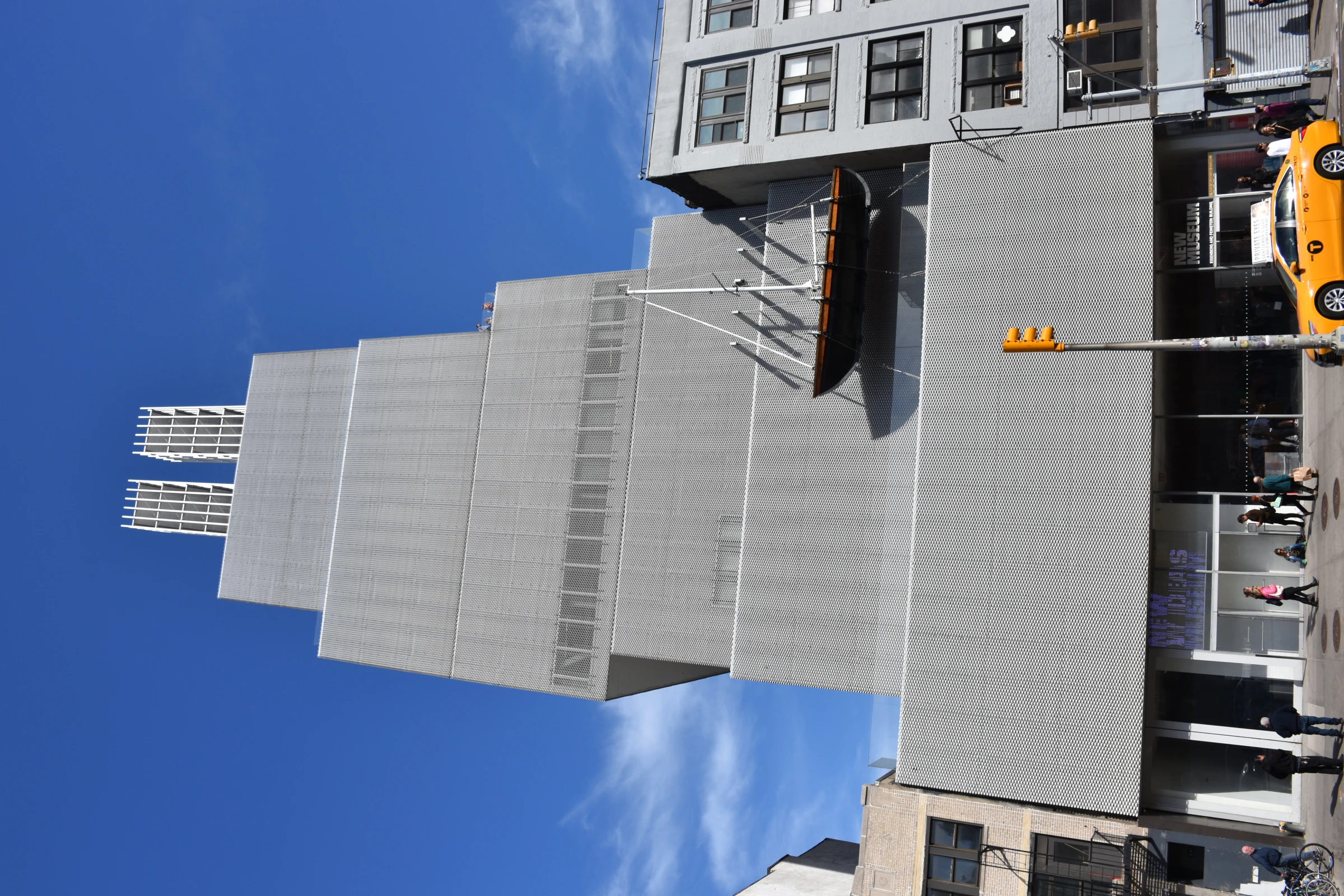
New Museum Details Checklist and Curatorial Structure for New Humans
Ahead of opening, the New Museum has outlined a wide-ranging checklist and thematic architecture for New Humans, a large survey focused on technology, embodiment, and historical futurisms across generations.
The New Museum has released expanded details on the structure of New Humans, including a broader checklist and thematic sequencing that clarifies how the exhibition will move across historical and contemporary positions. The curatorial proposition appears intentionally cross-generational, bringing early twentieth century speculative frameworks into dialogue with artists working through platform culture, machine perception, synthetic image economies, and networked identity.
What distinguishes the current announcement is the effort to avoid a simplistic presentism. Rather than treating AI and computational tools as a sudden break with art history, the exhibition architecture frames them within longer cycles of technological imagination, social anxiety, and institutional adaptation. That move should help audiences read current practices with more nuance, especially as discourse around machine creativity often collapses into either hype or rejection.
A technology themed exhibition becomes credible only when it is also an exhibition about institutions, labor, and historical memory.
The checklist reportedly spans a large number of artists and media formats, from installation and moving image to archival material and research based practice. If executed well, this breadth can produce a productive tension between object based encounters and system level critiques. The risk, as always in large thematic surveys, is fragmentation. Strong editorial transitions and precise room level arguments will be essential for maintaining coherence.
Programming strategy may prove just as important as the galleries themselves. Talks, screenings, and publishing initiatives can either deepen the project or turn it into event marketing. The museum appears aware of this and is signaling a layered public program that includes policy, labor, and ethics perspectives alongside artist led conversations. That structure could make the exhibition more useful for students, curators, and cultural workers navigating technology adoption in their own institutions.
Institutionally, the timing is significant. Museums are under pressure to modernize digital strategy while preserving critical standards and public trust. A show like New Humans effectively becomes both exhibition and policy signal, indicating how an institution intends to engage automation, data practices, and authorship debates over the next cycle. Stakeholders will read it accordingly.
From a market standpoint, New Humans may influence primary trajectories for artists whose practices bridge critical rigor and technical experimentation. However, the deeper effect is likely to be institutional commissioning and collection strategy. Museums and foundations continue to seek works that can anchor long horizon conversations about technology without becoming obsolete as tools change.
The curatorial language also suggests a desire to balance accessibility with complexity. This matters because technology themed shows often overestimate baseline audience fluency. If interpretation materials can communicate difficult ideas without flattening them, the exhibition could widen participation while maintaining intellectual integrity.
For New York’s spring calendar, the project positions the New Museum in direct conversation with other large format international surveys while retaining its identity as a site for experimental discourse. The institution’s challenge now is operational precision: installation quality, interpretive consistency, and disciplined programming follow-through.
If those elements hold, New Humans could become one of the season’s more consequential institutional statements, not because it predicts the future, but because it explains how art can interrogate the systems already shaping the present.
For peer institutions, the exhibition will likely function as a reference point for future commissioning models, especially where technical production and critical interpretation need to be developed in parallel rather than in sequence.