New Museum Expansion and Next-Gen Collecting Debate Land in This Week’s Art Conversation
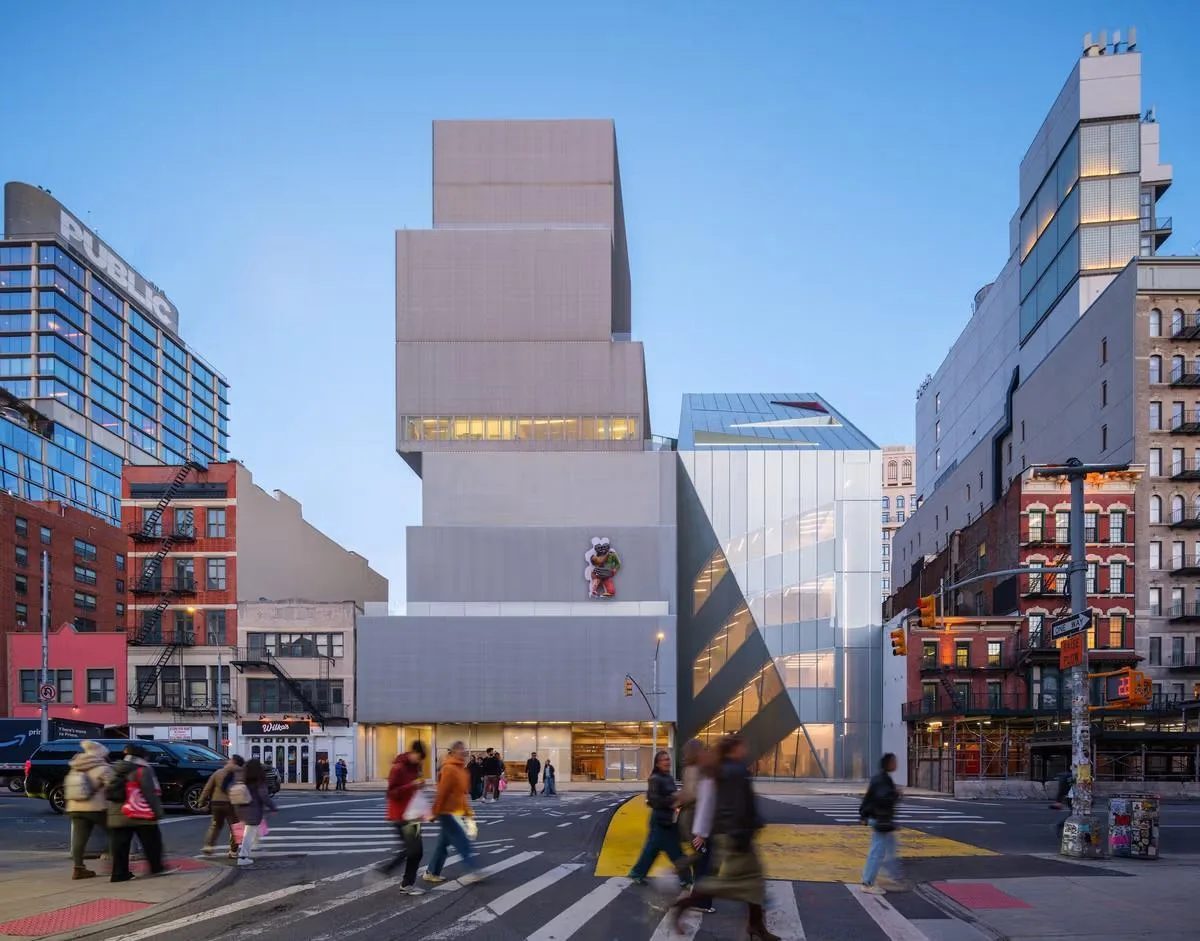
The Art Newspaper’s latest podcast links the New Museum’s OMA-designed expansion to a wider discussion about emerging collector behavior and institutional storytelling around access, scale, and audience.
This week’s episode of The Art Newspaper podcast may look like a standard round-up, but it captures a genuine fault line in the current art ecosystem: institutions are expanding their physical footprints at the same time market attention shifts toward younger collecting cohorts with different expectations about access, identity, and value signaling.
The episode, available via <a href='https://www.theartnewspaper.com/2026/03/20/new-museum-extension-opens-nextgen-collectors-a-wardian-case-in-oxford-podcast' target='_blank' rel='noopener'>The Art Newspaper, starts with the New Museum’s extension designed by Shohei Shigematsu and Rem Koolhaas of OMA. Expansion stories are often written as architecture news, but the key issue is program logic: new square footage only matters if curatorial and audience strategy actually changes inside it.
By pairing that discussion with Georgina Adam’s work on next-generation collectors, the episode implicitly asks whether institutions are preparing for a different type of patron and public. Emerging collectors are less likely to accept old status scripts at face value. They want social meaning, transparent context, and often clearer alignment between institutional rhetoric and institutional behavior.
That shift has consequences for exhibition design, acquisitions language, and educational framing. If museums add space but preserve inherited gatekeeping habits, expansion can become expensive inertia. If they use expansions to rethink commissioning, community programming, and interpretive access, architecture can function as a real lever for cultural redistribution.
The final segment on a Wardian case at the Ashmolean might seem peripheral, but it is editorially smart. It places a historical object of circulation and preservation into the same frame as contemporary institutional growth. That linkage reminds listeners that museums have always been infrastructures of movement: of objects, stories, and authority.
For artworld operators, this kind of multi-topic format is useful because it maps dependencies. Museum growth, collector behavior, and object interpretation are not separate beats. They are interlocking systems. A building project can alter donor strategy. Donor strategy can alter curatorial risk tolerance. Curatorial risk tolerance can alter public trust.
The New Museum segment in particular should be read against wider US conditions, where institutions face high construction costs, staffing pressure, and polarized expectations about what public culture should do. In that environment, expansion is both opportunity and exposure event. It offers visibility, but also raises the standard by which every future decision will be judged.
If there is one takeaway from this episode, it is that institutions can no longer treat architecture as neutral container. Buildings now operate as public statements about mission, governance, and audience priorities. Once the doors open, those statements become testable.
For working curators, one practical move is to treat every expansion conversation as a programming matrix exercise: which communities will enter, which artists will be commissioned, which interpretive tools will change, and what budget lines guarantee that change survives beyond opening season. Without that matrix, architecture becomes a symbolic reset without an operational reset.
A final reason this conversation matters now is timing. Expansion projects are opening into an art economy that is still digesting post-boom corrections, which means institutions cannot rely on headline momentum alone. They need clearer value propositions for artists, audiences, and funders from the first season onward.
Related references: <a href='https://www.newmuseum.org/' target='_blank' rel='noopener'>New Museum, <a href='https://www.oma.com/' target='_blank' rel='noopener'>OMA, and <a href='https://www.ashmolean.org/' target='_blank' rel='noopener'>Ashmolean Museum.