New Museum Reopens With Expansion and a 700-Object Thesis on the Human-Machine Present
After a two-year closure, New Museum has reopened with a major architectural expansion and the exhibition New Humans: Memories of the Future, presenting scale, programming, and institutional continuity as one combined argument.
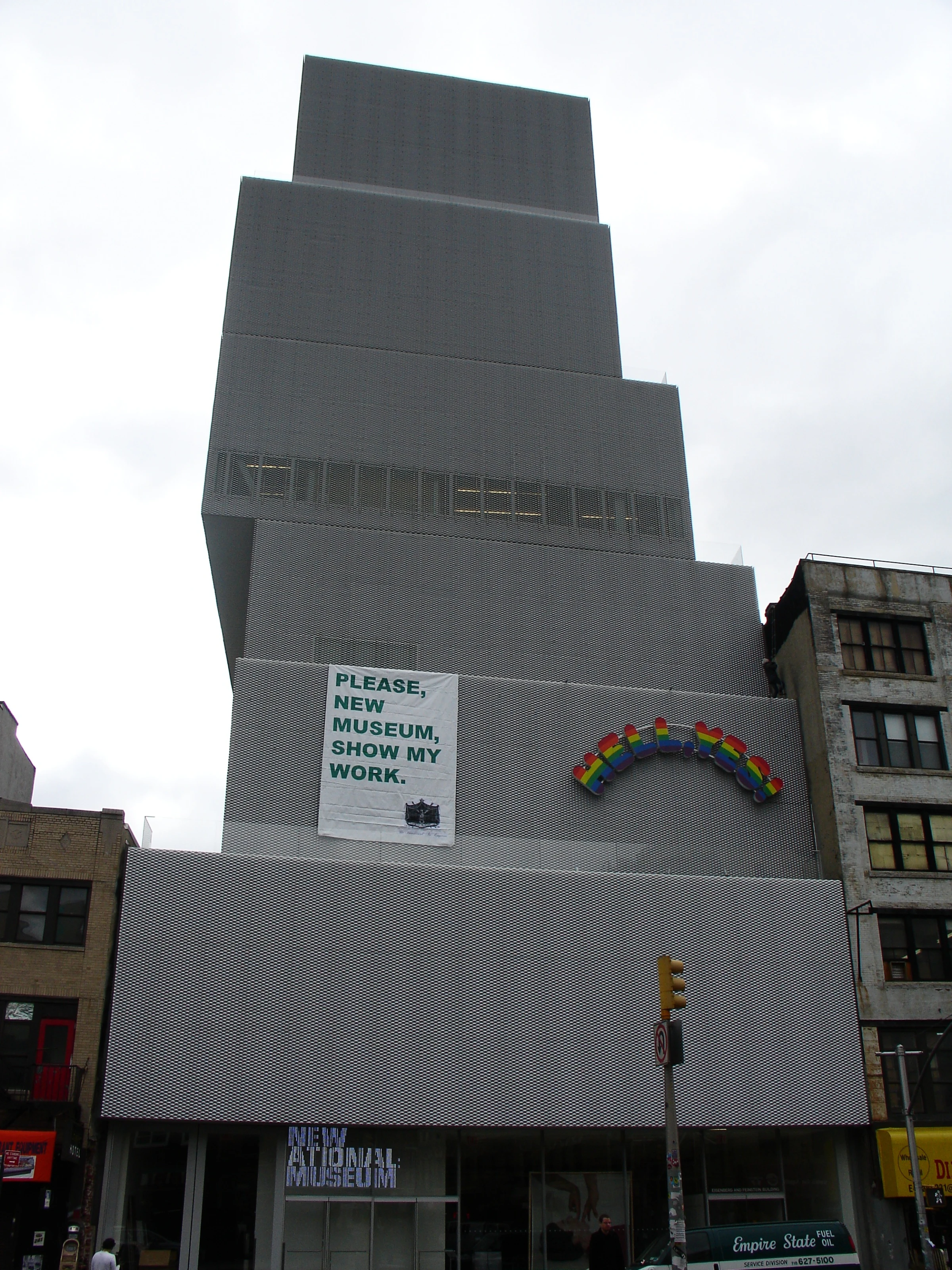
New Museum has reopened on the Bowery after a two-year closure, unveiling an 82 million dollar expansion and launching New Humans: Memories of the Future, a large-scale exhibition built around more than 700 objects. The architecture, designed by OMA and Shohei Shigematsu as an addition to the original SANAA building, doubles usable footprint and creates direct floor-to-floor connectivity that allows exhibitions to turn over without full shutdown. That operational detail is critical because it converts design language into programming capacity.
The reopening moment also marks an institutional transition. Lisa Phillips, who led the museum for 27 years, exits after steering the organization through multiple growth phases, from downtown identity building to international profile expansion. Her departure gives the project additional weight: this is both a new building and a handoff point. In that context, opening with an exhibition on human-technological entanglement reads as strategic rather than thematic coincidence.
Curator Massimiliano Gioni's framing of New Humans as a capacious historical loop allows the show to range across speculative imagery, analog artifacts, and contemporary commissions without pretending those categories are easily reconciled. Works by artists including Camille Henrot, Wangechi Mutu, Ryan Gander, Alice Wang, and Anicka Yi place the museum in an argument about how institutions can stage complexity without flattening it into tech optimism. The result appears less like a prophecy and more like a pressure test for contemporary museum interpretation.
For readers tracking institutional significance, four links matter. The museum's own exhibition architecture can be followed through [New Museum](https://www.newmuseum.org/), the design framework sits in dialogue with [OMA](https://www.oma.com/), and audience expectations are shaped by peers such as [Tate Modern](https://www.tate.org.uk/visit/tate-modern) and [MoMA](https://www.moma.org/). Those references help clarify that New Museum is positioning itself inside a global conversation on how contemporary institutions mediate scale, experimentation, and public accountability.
The expansion also includes a new outdoor plaza, an atrium spine, and a full-service restaurant with a second public entrance. These are not peripheral lifestyle features. They extend dwell time, create non-ticketed contact points, and broaden who enters the building in the first place. In practical terms, that can reshape audience composition and make the institution less dependent on event spikes and opening-week traffic.
What stands out in the reporting is the tension between vulnerability and spectacle. Works like Anicka Yi's aerobes are physically delicate despite monumental scale, while textual interventions around AI image systems stress that institutions still rely on human editorial judgment even when machine outputs are present. That tension mirrors the museum's broader condition: it is simultaneously asserting confidence through expansion and acknowledging uncertainty about the cultural horizon it is trying to map.
New Museum's reopening should therefore be read as a governance and programming event, not simply a cultural reopening headline. The expanded building gives curators and educators room to run longer, denser, riskier projects. Whether this becomes a durable model will depend on how consistently the museum can translate architectural capital into sustained public value over the next cycles of exhibitions.
A practical way to read the reopening is to compare official program updates at https://www.newmuseum.org/ with parallel institutional baselines at https://www.tate.org.uk/visit/tate-modern and https://www.moma.org/ . That comparison reveals whether expansion actually produces sustained curatorial throughput rather than a short reopening spike.
Institutional comparators: <a href="https://www.newmuseum.org/exhibitions">New Museum exhibitions, <a href="https://www.tate.org.uk/visit/tate-modern">Tate Modern, and <a href="https://www.moma.org/calendar/exhibitions">MoMA exhibitions calendar.