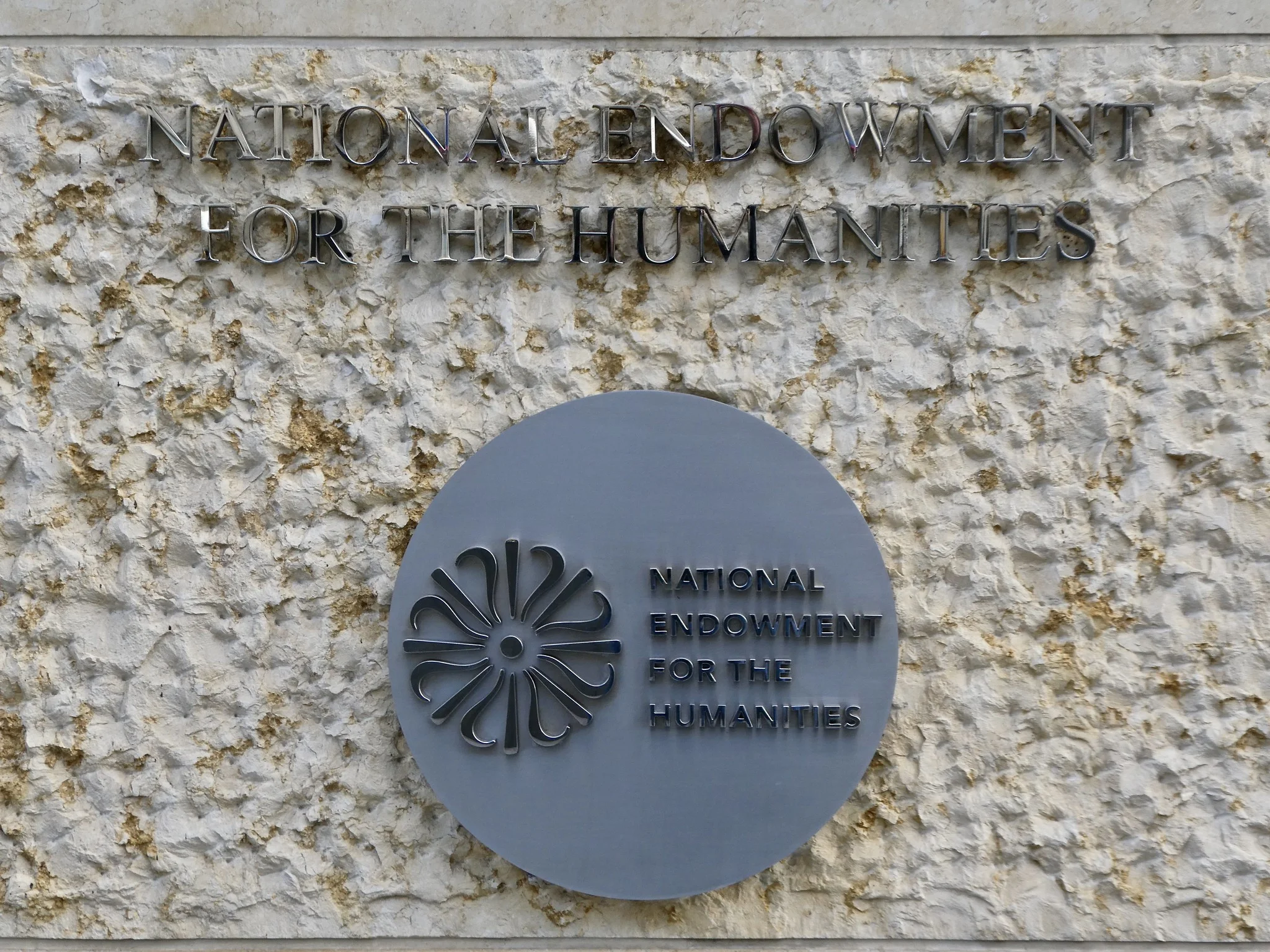
NEH Grant Lawsuits Allege DOGE Used ChatGPT to Cancel Awards
New federal lawsuits claim DOGE staff used AI summaries and a yes-or-no DEI prompt to terminate previously approved National Endowment for the Humanities grants.
Two lawsuits filed Friday allege that employees of the Department of Government Efficiency, DOGE, used ChatGPT to evaluate and cancel previously approved grants from the National Endowment for the Humanities. The complaints describe a process that replaced project-level review with short internet-derived summaries and a constrained model prompt asking whether material related to DEI frameworks.
The plaintiffs include the American Council of Learned Societies, the Authors Guild, the American Historical Association, and the Modern Language Association. Together they argue that previously approved grants were terminated through viewpoint-sensitive screening rather than discipline-specific peer judgment.
According to the filings, DOGE employees asked the model to respond in under 120 characters, beginning with yes or no. Projects reportedly screened this way included a documentary on slave labor during the Holocaust and another on the Colfax Massacre. One cited rationale identified a project’s Black legal subject as the basis for cancellation, while another flagged support for recovering a marginalized woman writer’s legacy.
The scale of the cuts is substantial. Plaintiffs say more than $100 million in NEH support was withdrawn, with some projects shutting down immediately. At that volume, the effect is not symbolic. Multi-year documentary production schedules, community archive staffing, and university humanities partnerships can collapse within one budget cycle when grant commitments are rescinded.
The legal question is therefore procedural and constitutional at once. Agencies can automate clerical sorting, but these cases ask whether model-based scoring was used to make substantive content decisions tied to identity categories and protected expression. If courts agree, federal cultural funding may face tighter disclosure and review requirements whenever AI systems are introduced into grant administration.
At issue is not only whether grants were cut, but whether automation was used to make viewpoint-sensitive decisions at federal scale.
For grantees, this episode changes risk planning. Organizations that once treated awarded federal grants as stable operating pillars may need stronger contingency reserves, clearer milestone documentation, and co-funding paths that can absorb abrupt policy reversals. The immediate operational lesson is that approval status alone no longer guarantees payout continuity.
It also raises immediate compliance questions for institutions that build consortia applications. If lead organizations are now exposed to rapid cancellation risk, partnership agreements may need revised force-majeure language, phased payment triggers, and pre-negotiated continuation plans. The grant world has operated for years on trust in procedural regularity, and this dispute challenges that baseline directly.
Finally, the litigation will test whether AI systems can be introduced into public funding workflows without transparent audit trails. Courts may now look for preserved prompts, decision logs, and human override records before accepting agency claims that model outputs were merely advisory. In practice, that could push federal agencies toward stricter model-governance frameworks similar to procurement and records-management standards.
For the broader arts and humanities ecosystem, the case is a governance marker. Institutions such as the National Endowment for the Humanities do not simply distribute money, they shape which histories get researched, published, taught, and preserved. How this litigation resolves will influence not just one budget line, but the infrastructure of public knowledge production in the United States.