National Gallery Hits £2m Savings Target Through Voluntary Exits
London’s National Gallery says it has secured £2 million in annual savings through voluntary departures and a recruitment pause, while still pressing ahead with Project Domani.
The National Gallery in London says it has reached a £2 million annual savings target through a voluntary exit scheme and a hiring slowdown, an early financial stabilization move that keeps immediate compulsory redundancies off the table but leaves larger structural pressure unresolved. The institution is managing a previously projected deficit of £8.2 million across adjacent financial years, and the current savings package addresses only part of that gap.
According to figures confirmed by the gallery, roughly £1.5 million per year comes from staff departures under the voluntary program announced in February, with another £500,000 expected through a recruitment pause. The museum has not publicly broken out exact headcount reductions, but the message to the sector is clear: labor remains the first and fastest lever when public-facing institutions need to defend liquidity while maintaining flagship programming commitments.
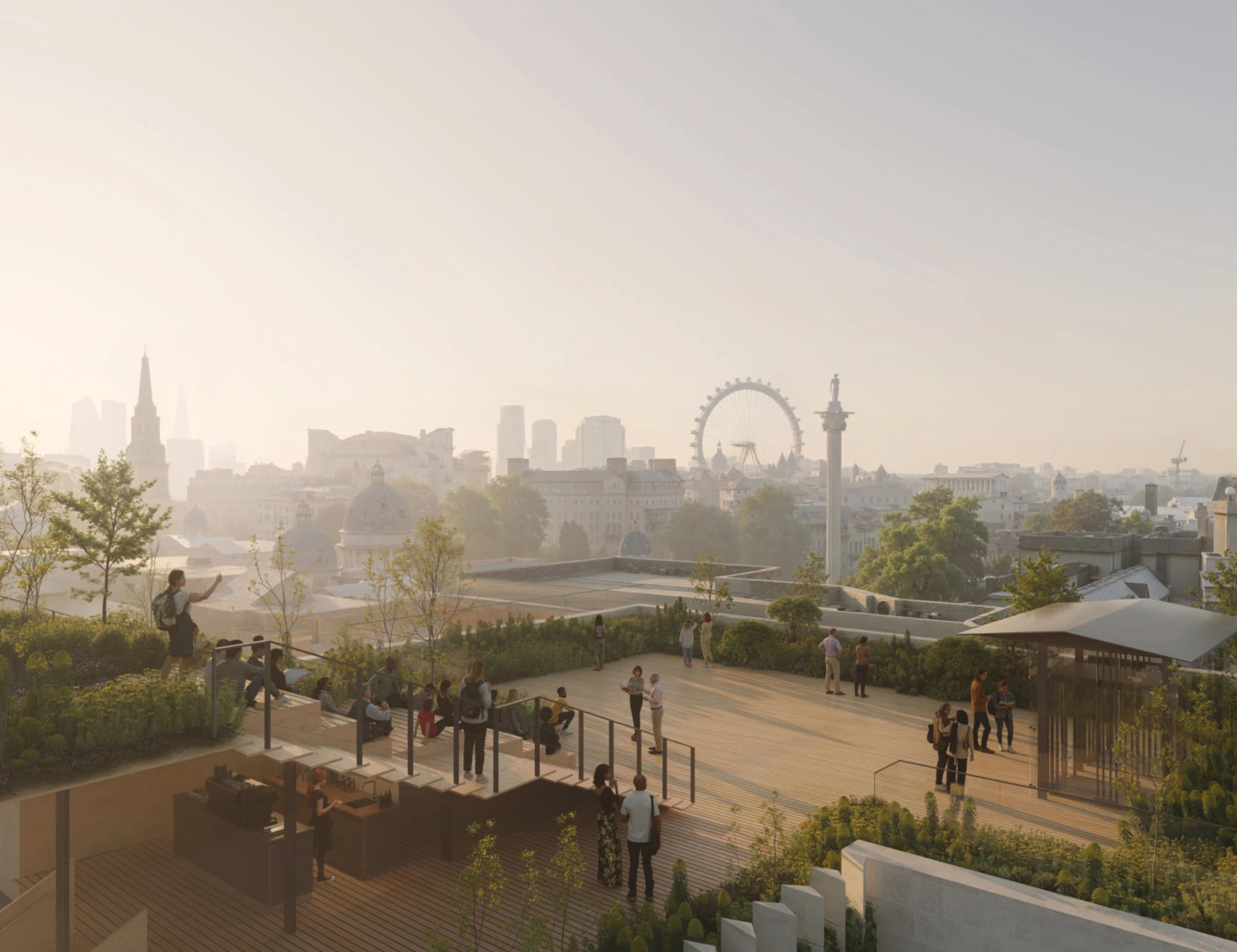
The strategic tension is visible in parallel announcements. As austerity measures take effect, the gallery continues to advance Project Domani, its major long-horizon redevelopment and expansion framework. In the same week, the institution confirmed that Kengo Kuma and Associates with BDP and MICA won the competition to design the new wing. The optics are complex: workforce contraction in the near term, capital ambition in the long term.
That split is not unusual in museum finance. Endowment strategy, donor-restricted capital, and government-supported infrastructure campaigns often sit in separate accounting channels from operating expenditure, salaries, and program delivery. But separation on paper does not erase reputational spillover. If visitors encounter reduced service levels, fewer free offerings, or thinner exhibition calendars, the public narrative will not distinguish between capital and operating funds. It will register one institution under strain.
For curators, lenders, and exhibition partners, the practical question is program reliability over the next 12 to 24 months. Staffing reductions can ripple into registrar capacity, conservation scheduling, publication timelines, and reciprocal loan administration, areas that are invisible to the public until deadlines slip. If those frictions accumulate, the cost can move from payroll lines to programming credibility, which is harder and slower to rebuild.
The gallery has indicated that no compulsory redundancies are currently planned, which reduces immediate labor conflict risk. Even so, a recruitment pause has its own strategic cost. Unfilled roles in audience development, digital systems, visitor operations, and curatorial support can produce compounding delays precisely when institutions need to improve conversion, retention, and philanthropic momentum. The next test is whether the museum can avoid service degradation while holding spending discipline.
For collectors and trustees tracking institutional counterparties, this is a useful case study in risk sequencing. The gallery has chosen a classic order of operations: contain personnel cost growth, protect major strategic projects, and keep future-facing expansion narratives active for donor confidence. That can work, but only if leadership pairs budget discipline with measurable delivery against the public mission. Otherwise, project ambition starts to read like deferral rather than strategy.
The National Gallery’s update marks progress, not resolution. The £2 million target has been met, and that creates short-term breathing room. Yet broader deficit pressure and operating trade-offs remain, and they will shape what the public experiences long before ribbon-cutting moments for Project Domani arrive. In a market where institutional trust is increasingly linked to execution detail, the gallery’s next year will be judged less by plans announced than by services maintained.