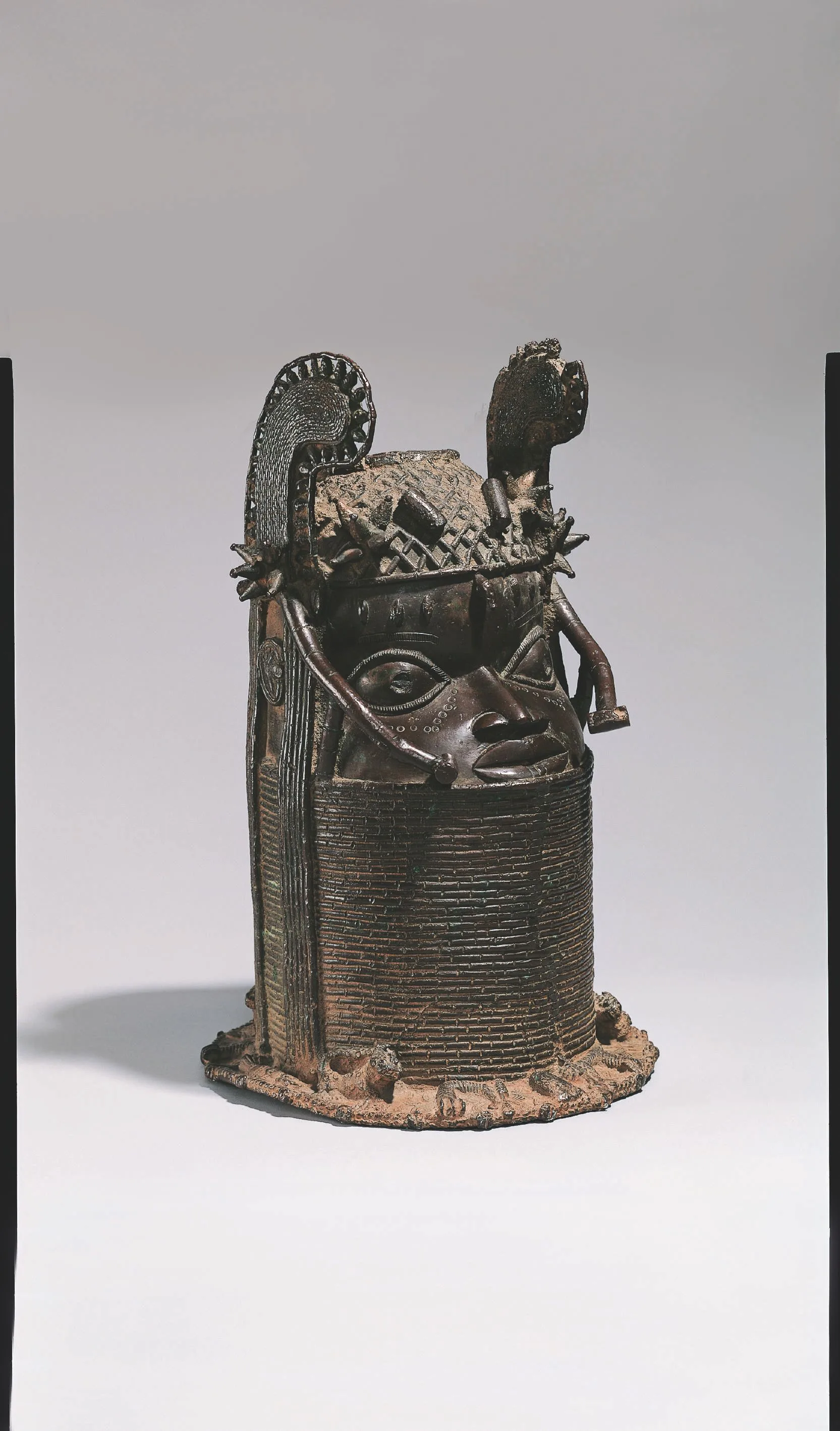
Zurich’s Museum Rietberg Transfers Ownership of 11 Benin Objects to Nigeria
The Swiss institution will transfer ownership of 11 Benin objects to Nigeria, with two slated for physical return and nine expected to remain in Zurich on loan under a new restitution framework.
Museum Rietberg in Zurich will transfer ownership of 11 Benin objects to Nigeria, marking one of the most concrete restitution steps yet within the Swiss museum sector. The decision follows multiyear provenance work and negotiations carried through the Benin Initiative Switzerland, a consortium effort designed to map links between Swiss holdings and the 1897 British raid on Benin City.
As reported by <a href='https://www.theartnewspaper.com/2026/03/20/zurichs-museum-rietberg-transfers-11-benin-bronzes-to-nigerian-government' target='_blank' rel='noopener'>The Art Newspaper, two objects identified as ritually significant are expected to return physically to Nigeria, while nine others will remain in Zurich despite the ownership transfer. That split model matters. It reframes restitution as a legal and ethical reallocation of rights, not only a shipping question.
The objects include a commemorative bronze head and an ivory tusk associated with royal shrine contexts in Benin. Their trajectories through European private collections, auction channels, and dealers expose the long commercial afterlife of colonial extraction. By transferring ownership to Nigeria’s National Commission for Museums and Monuments, the museum is acknowledging that provenance clarity carries obligations, not just catalog notes.
Critics of retention-on-loan structures often argue that they allow institutions to keep prestige objects while claiming moral credit. That concern is valid when arrangements are opaque or coercive. But transparent agreements can also serve a different function: they preserve public access in Europe while clearly recognizing Nigerian title and authority over display conditions.
What is notable here is institutional framing. Rietberg has publicly emphasized that Nigerian partners supported continued storytelling in Switzerland, suggesting that the negotiation was not simply adversarial. If that account holds, this case may become a practical reference for other museums facing similar collections with mixed provenance certainty and uneven conservation capacity.
The broader Swiss context is significant. The Benin Initiative Switzerland reportedly identified dozens of objects in Swiss museums with probable links to 1897 looting. This means the Rietberg decision is unlikely to remain isolated. Once title transfer logic is accepted in one case, pressure rises on peers to justify why equivalent claims should be treated differently.
For museums across Europe and North America, the operational lesson is that restitution requires legal, curatorial, and diplomatic coordination from day one. Provenance teams alone cannot carry this work. Institutions need governance structures that can handle title transfer, loan design, insurance, interpretation updates, and political communication simultaneously.
For audiences, this is a useful reminder that restitution is not a binary of return versus refusal. The more accurate question is who owns the work, who decides where it appears, and under what narrative terms. On that measure, the Zurich case represents a meaningful shift in power, even as some objects remain physically in Switzerland.
Related references: <a href='https://www.rietberg.ch/en' target='_blank' rel='noopener'>Museum Rietberg, <a href='https://ncmm.gov.ng/' target='_blank' rel='noopener'>National Commission for Museums and Monuments (Nigeria), and <a href='https://www.humboldtforum.org/en/' target='_blank' rel='noopener'>Humboldt Forum restitution context.