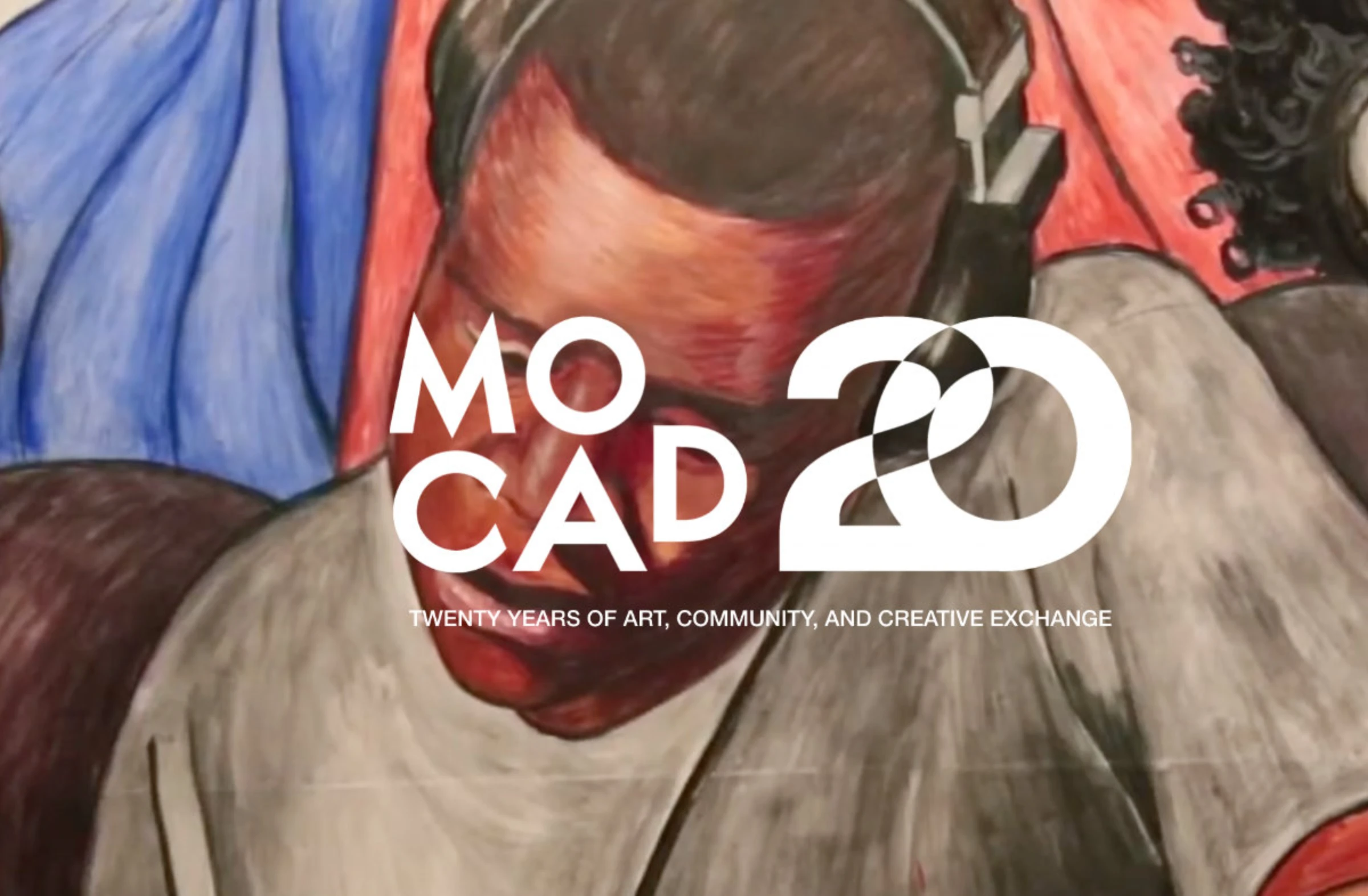
MOCAD Reopens With a Smaller Footprint and Bigger Questions
Detroit's MOCAD reopens with co-leadership and a leaner building plan, testing whether museum agility can beat institutional bloat
MOCAD is reopening by refusing the old museum script
The Museum of Contemporary Art Detroit is reopening after an eight-month renovation, but the renovation itself is only half the story. The harder shift is institutional. As ARTnews reported, MOCAD is entering its twentieth year with a co-directorship model, a physically tightened building plan and a stated willingness to question whether the conventional museum form is even the right container for the work it wants to champion. That is a stronger claim than the usual reopening language about refreshed galleries and visitor experience. It suggests MOCAD understands its real subject is not architecture. It is organizational metabolism.
That makes Detroit an especially interesting place to watch. MOCAD has always occupied a different symbolic lane from heavily endowed coastal institutions. Its industrial shell, grassroots origins and willingness to live with rough edges helped it stand for a local contemporary-art ecology rather than for a polished donor machine. Reopening, then, is not just about looking newer. It is about deciding how much institutional structure helps art happen and how much of it hardens into self-preserving bulk. Plenty of museums talk about agility. Far fewer make spatial and leadership changes that test the idea in public.
The renovation matters because it changes use, not just appearance
The renovation reportedly consolidates MOCAD's footprint and rethinks circulation in ways meant to support programming rather than monumentalize the building. That sounds modest, but it cuts against a dominant museum reflex. For years, institutions have treated expansion as proof of seriousness: more square footage, more back-of-house machinery, more event capacity, more branded visibility. The problem is that expansion often creates operational drag. Heating, staffing, maintenance, fundraising and audience servicing all become heavier, even when the curatorial proposition does not deepen proportionally. A smaller or more disciplined footprint can be a strategic advantage if the institution has the nerve to use it that way.
Detroit has particular reasons to understand that equation. The city has long served as a laboratory for what survives after growth narratives fail. In that environment, a contemporary art museum that treats adaptation as sophistication rather than defeat may be closer to the future than richer peers still performing endless accumulation. A reopening that reduces dead space, clarifies room function and aligns exhibition infrastructure with actual artistic needs can do more for a museum's credibility than another atrium ever could.
The visual polish still matters, of course. Reopenings are public rituals, and visitors need to feel that a building is cared for. But maintenance and mission are not identical. The interesting question is whether the new layout at MOCAD helps artists and audiences spend less time navigating institutional friction and more time engaging work. If it does, the museum will have achieved something more meaningful than a cosmetic refresh.
Co-leadership is either brave or evasive, and the difference is operational
MOCAD's co-directorship structure deserves close attention because shared leadership is fashionable in theory and messy in practice. Museums adopt it for good reasons: it can distribute labor more humanely, recognize different forms of expertise and reduce the executive singularity that has led so many institutions into vanity, burnout or scandal. But co-leadership only works when authority is genuinely legible. Staff need to know who decides what, trustees need clarity about accountability, and artists need a process that does not dissolve into endless consultation theater.
If MOCAD can make that structure work, it will offer a useful model for medium-scale institutions that can no longer pretend the heroic director is the only viable format. The traditional museum leader is asked to be fundraiser, public intellectual, manager, political translator, labor diplomat and cultural brand. That stack is absurd. Splitting power can be sane. Yet museums often split titles without redesigning decision pathways, producing confusion rather than collaboration. The real test for MOCAD will be whether co-leadership translates into sharper programming and steadier governance rather than softer hierarchy disguised as progress.
Jova Lynne's remark that artists will outlast institutions is therefore clarifying. It is not anti-museum rhetoric. It is a reminder that institutions should be judged instrumentally. They exist to make cultural work possible, legible and durable. Once they start acting as though their own continuity is the primary masterpiece under protection, they lose the plot. That line should make every trustee a little uncomfortable, which is precisely why it matters.
Detroit's museum ecology rewards institutions that stay porous
MOCAD does not operate in isolation. Detroit's cultural field includes artist-run spaces, neighborhood initiatives, the Detroit Institute of Arts, independent music and design scenes, and a long history of civic reinvention under pressure. A contemporary museum in that setting cannot survive by pretending it is an autonomous prestige island. It has to remain porous to the city that makes it meaningful. That means being locally literate about class, race, disinvestment, speculative redevelopment and the persistent temptation to use culture as branding gloss.
Reopenings are when those tensions get temporarily hidden under celebration. New walls and crisp announcements make every institution look more coherent than it really is. The harder work comes afterward. Will MOCAD program artists whose work exceeds donor comfort? Will it keep space for experimentation that does not immediately convert into ticketed social buzz? Will the new building logic support risk, or will it quietly prioritize rentable flexibility and event optics? Those questions matter more than whether the lighting is nicer, though the lighting may indeed be nicer.
Detroit also makes it difficult to sell pure boosterism. The city has been overinterpreted for decades by outsiders seeking redemption narratives. Institutions that survive there tend to earn respect by being useful, specific and unromantic. MOCAD's strongest path is not to market itself as a triumphant comeback object. It is to show that a museum can get leaner, stranger and more responsive without abandoning ambition.
The broader museum sector should read this as a governance story
At a moment when museum labor disputes, financial strain and donor skepticism keep surfacing across the field, MOCAD's reopening lands as a governance story disguised as a facilities story. Many institutions now face a structural problem: they were built for eras of expansionary confidence and must operate in a climate of thinner margins, sharper politics and exhausted staff. Some will keep trying to raise more money to preserve inherited scale. Others will redesign themselves to fit reality better. MOCAD appears to be choosing the second path.
That does not make it automatically virtuous. Retrenchment can be dressed up as innovation just as easily as expansion can be dressed up as vision. Readers should stay alert to that possibility. Still, there is a difference between shrinking reluctantly while insisting nothing has changed and adapting openly while making a case for different priorities. MOCAD is at least attempting the latter. In that sense it belongs in the same conversation as our guide to reading political pressure on museums, because both are ultimately about what institutions protect first when conditions tighten.
What comes next is measurable. Watch the exhibition calendar, the staffing climate, the city partnerships and the kinds of artists who are given room to shape the museum's public identity. If the reopening produces only cleaner space and warmer press, it will fade quickly. If it produces a more convincing relationship between structure and mission, Detroit may end up showing larger museums a route they have been too vain to try.
The sharpest takeaway is simple. Reopenings usually ask visitors to admire what money can refurbish. MOCAD is asking a tougher question: what should a contemporary museum stop being so that art can keep happening inside it? That is a live question across the sector. Detroit just happens to be one of the few places honest enough to ask it out loud.
That question becomes more urgent when you look beyond Detroit. Across the United States, medium-scale museums are being squeezed by the rising cost of climate control, philanthropy fatigue, labor expectations and the political demand that every cultural institution prove immediate social value. In that environment, a museum that simply keeps adding programs and square footage can look ambitious while actually becoming brittle. The more interesting model is selective intensity: fewer dead zones, clearer decisions, more artist-centered use of space and leadership structures built for durability rather than executive mythology. If MOCAD can make that model feel convincing in public, its reopening will matter far outside Detroit because it will show that institutional credibility can be rebuilt through subtraction as well as expansion.
There is a final audience test too. Visitors will know quickly whether the museum feels newly alive or merely newly arranged. Do exhibitions breathe in the renovated rooms? Do public programs feel integrated rather than bolted on? Does the institution speak with the city instead of at it? Those are qualitative judgments, but they are not soft. They are how museums either earn repeat attention or fade back into polite relevance. Reopening night headlines are easy. A durable new rhythm is harder. That is the real bar MOCAD has now set for itself.
If the museum succeeds, the result will not simply be a better building. It will be a better argument for why a contemporary art institution still deserves public attention in a period when many organizations look overbuilt, underconfident and trapped inside their own operating costs. That is why the reopening feels worth taking seriously. It points toward a museum model measured less by monumentality than by usefulness, courage and the quality of decisions made inside constrained conditions. Detroit has produced that kind of cultural intelligence before. MOCAD now has a chance to prove it can institutionalize it without sanding off the friction that made the place matter.