MOCA Los Angeles Acquires Kara Walker’s Unmanned Drone for Collection
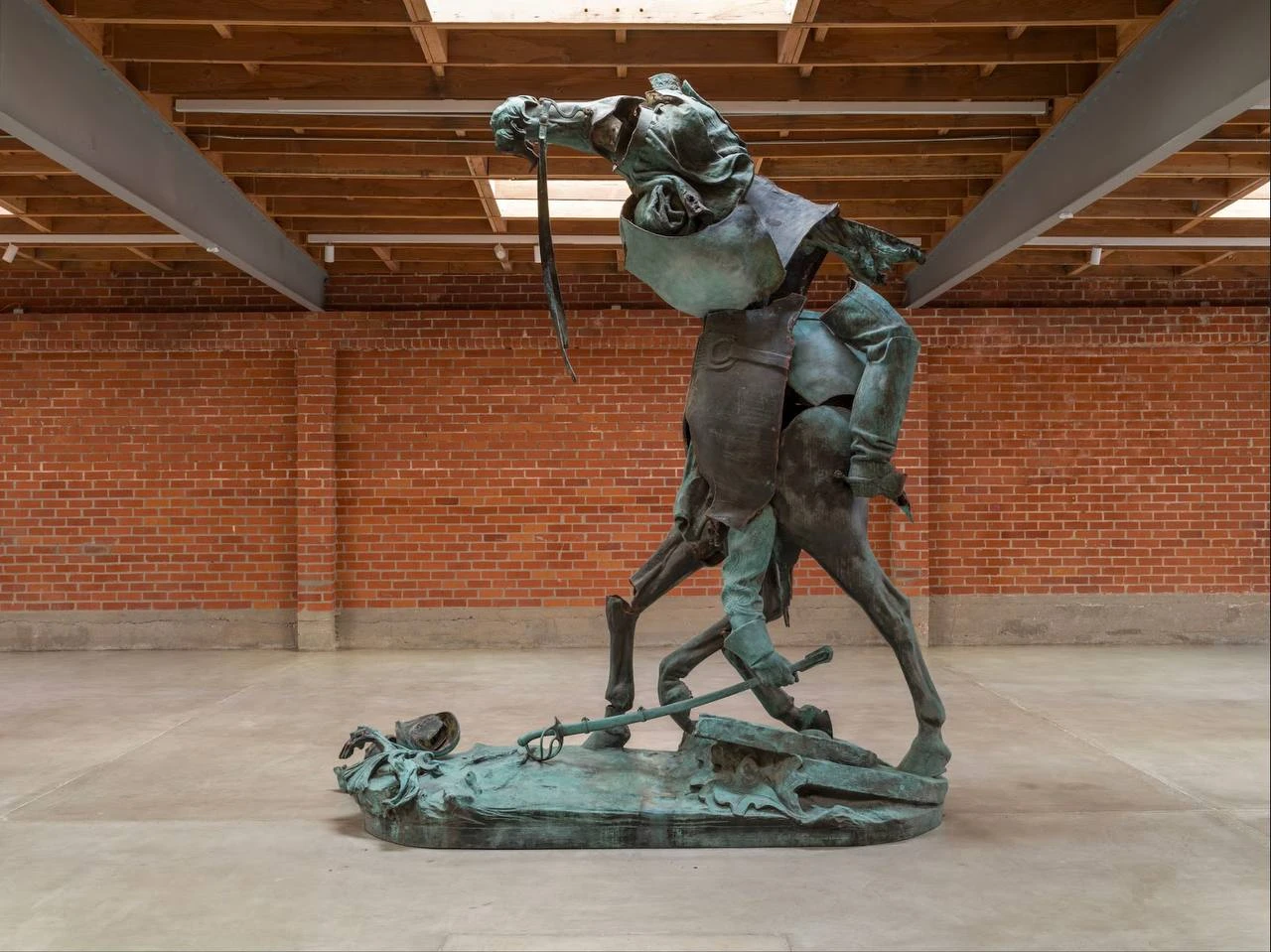
MOCA Los Angeles has acquired Kara Walker’s Unmanned Drone, signaling continued institutional demand for works that combine monumentality, political force, and material complexity.
MOCA Los Angeles has acquired Kara Walker’s Unmanned Drone, adding a major recent sculpture to a collection already defined by strong commitments to contemporary critical practice. The decision carries obvious symbolic weight, but it also reflects practical institutional priorities around works that can sustain interdisciplinary interpretation, public conversation, and long-term curatorial programming.
Walker’s practice has consistently challenged viewers to confront race, violence, power, and historical narration without offering easy moral distance. Bringing Unmanned Drone into a permanent collection context places those questions inside the museum’s ongoing responsibility framework, where exhibition design, educational mediation, and publication strategy determine whether the work remains active or becomes domesticated by familiarity.
When institutions acquire difficult work at scale, they are also acquiring responsibility for interpretation, not just ownership.
From a collection strategy perspective, the acquisition is also about scale and material presence. Monumental works can function as institutional anchors when they are supported by sufficient infrastructure, conservation planning, and interpretive investment. Without that support, scale becomes logistical burden. MOCA’s move suggests confidence in its ability to absorb not only the object but the operational demands attached to it.
The timing aligns with broader museum pressure to demonstrate that acquisition policy is not neutral. Boards, patrons, and publics increasingly scrutinize how institutions allocate resources and what narratives those choices reinforce. Acquiring work by an artist with Walker’s historical and political intensity can signal seriousness, but the signal is only credible when accompanied by sustained programming commitments.
There are market implications as well. Institutional acquisitions of major contemporary sculptures can influence how galleries, collectors, and advisors model long-term placement value versus short-term resale narratives. While headline pricing remains one metric, museum stewardship quality increasingly shapes how ambitious works are evaluated over time.
For Los Angeles, the move reinforces MOCA’s role as a venue where difficult contemporary work is not treated as temporary provocation but as part of the city’s durable cultural record. That matters in a landscape where attention cycles are fast and institutions are often tempted to prioritize frictionless audience growth over critical density.
The acquisition could also generate productive curatorial pairings with holdings in film, drawing, and installation that examine state power, surveillance, and embodied vulnerability. Such pairings would help position Unmanned Drone as a node in a wider institutional argument rather than a single emblematic gesture.
What follows now is the decisive phase: interpretation in practice. If MOCA invests in rigorous didactics, public dialogue, and scholarly framing, the acquisition will carry real institutional consequence. If presentation remains thin, the work risks being reduced to reputation alone.
At its best, this acquisition can model how museums convert bold collecting into durable civic value by pairing ambition on the acquisition side with equal ambition on the interpretive side.
That distinction between possession and stewardship is central to current debates in museum governance. Acquisition announcements increasingly operate as public commitments to future work: conservation budgets, staff expertise, educational design, and transparent interpretation choices over years, not weeks.
Seen in that light, MOCA’s decision is less a one-day headline and more a medium-term institutional test. The museum has accepted a demanding artwork into its care. The next cycle will show how fully it intends to meet that demand.