Misan Harriman’s Protest Archive Returns to London as a Permanent Installation
Hope 93 has made Misan Harriman’s protest photography project a long-term installation, turning a temporary exhibition into an ongoing public record of solidarity politics.
London gallery programming rarely commits to permanence for a politically charged photography project, which is why Hope 93’s decision to reinstall Misan Harriman’s The Purpose of Light as a long-term fixture matters. The exhibition, built from seven years of protest images across multiple cities, now sits less as a temporary response to a news cycle and more as an institutional claim: that contemporary social movements deserve ongoing visual infrastructure.
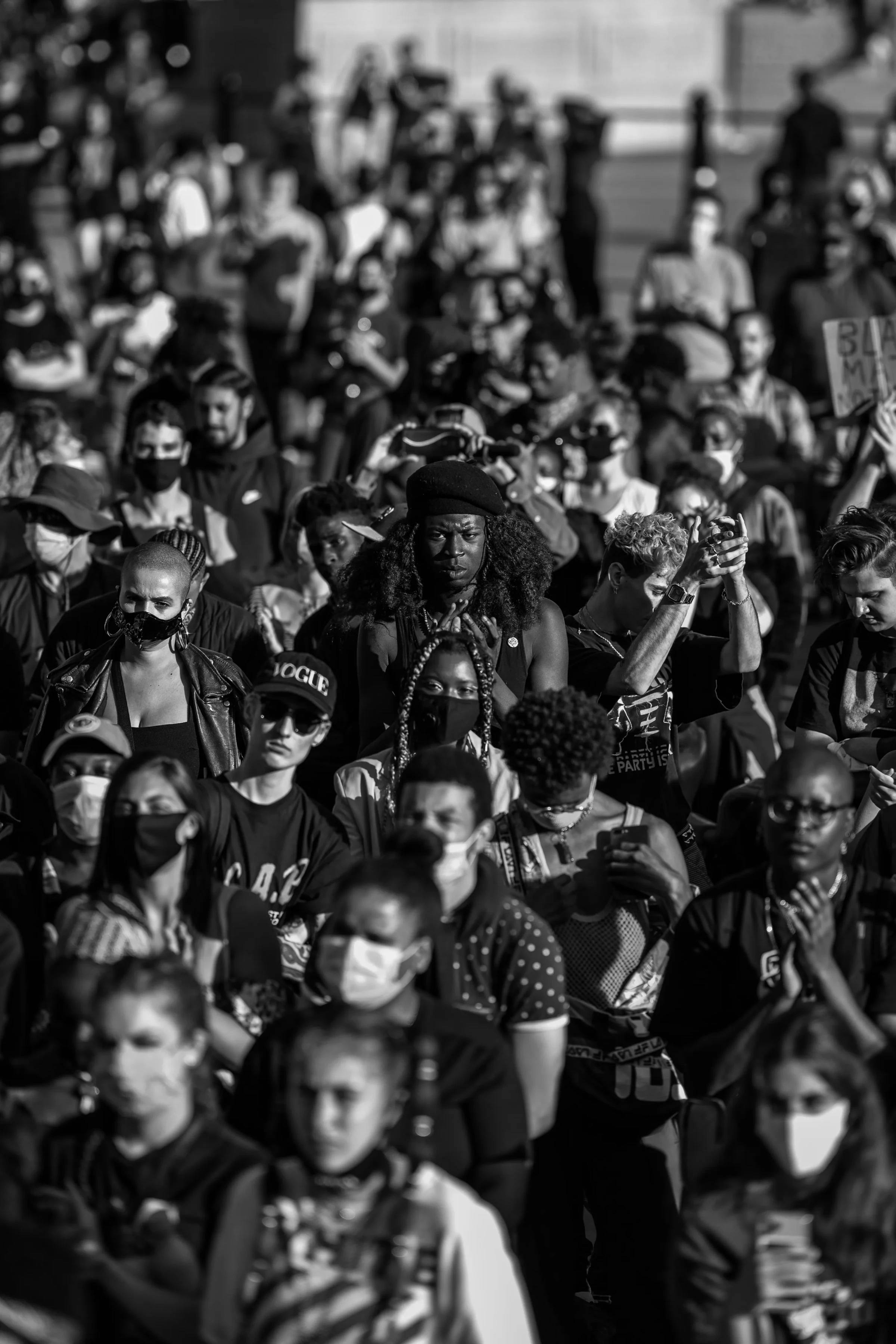
Harriman’s work at Hope 93 is rooted in demonstrations linked to racial justice, trans rights, anti-war protest, and broader solidarity movements. The images are not neutral crowd studies. They are composed with fashion-level control of light, framing, and tonal contrast, then re-situated in gallery space where scale and sequencing produce a collective narrative rather than isolated iconic shots.
The specific exhibition page at The Purpose of Light makes clear the ambition: this is not a single-moment gesture. It is an archive strategy. That distinction is essential for curators and collection managers tracking how movement photography migrates from journalism-adjacent circulation into durable institutional holdings.
Harriman’s profile in the broader cultural sector gives the project additional weight. Beyond magazine and celebrity work, he currently chairs the Southbank Centre, which positions him simultaneously inside establishment arts governance and activist visual production. That dual role complicates easy binaries around insider and outsider practice, especially in a London market where representation politics often remain rhetorical at the organizational level.
What distinguishes this installation from many protest-themed shows is its refusal of a single-cause brand. Harriman’s argument, as reported, is that these images register a shared social impulse to gather, witness, and contest power in public space. For audiences, this broad framing can produce two outcomes at once: identification with familiar struggles and discomfort at being asked to read alliances across causes they may not naturally combine.
The curatorial density also matters. Instead of a sparse, reverential hang, Hope 93 has used high-volume installation logic with many works across multiple rooms. That choice shifts viewer experience from contemplation of one masterpiece image toward immersion in cumulative pressure. It mirrors how protest itself is encountered, not as one perfect frame but as repeated appearances, repeated demands, repeated bodies in the street.
From a market perspective, permanence at a private gallery backed by collector participation points to a hybrid model that could become more common. Rather than moving immediately into museum acquisition pathways, politically urgent photographic bodies can now be stabilized through gallery-led structures that combine commercial support, long-term display commitments, and ongoing public access. For artists working with documentary material, that model offers an alternative to the familiar sequence of magazine publication, short exhibition run, and archival dispersal.
The installation also raises editorial and curatorial questions about the aesthetics of dissent. Harriman’s pictures are visually polished, sometimes cinematic. Critics will ask whether formal beauty risks softening the violence and grief behind the scenes depicted. Supporters will answer that visual precision is exactly what enables these works to endure beyond immediate outrage. Both readings are plausible, and the productive tension between them is part of why this project has staying power.
Institutionally, Hope 93’s move is a signal about scale and confidence. Smaller galleries often avoid permanent commitments because they tie up space and constrain programming flexibility. Choosing to do so anyway indicates that the venue sees this material as foundational to its identity, not ancillary. If that stance holds, it may pressure peer organizations to move beyond episodic diversity programming toward more structural commitments in what they show and for how long.
For collectors and curators, the practical takeaway is clear. Projects built around social movements should be assessed not only by immediate critical reception but by archival logic, display durability, and capacity to sustain interpretation over time. Harriman’s installation is being tested on exactly those terms now in London, and the result could shape how protest-era photography enters long-horizon cultural memory in the years ahead.