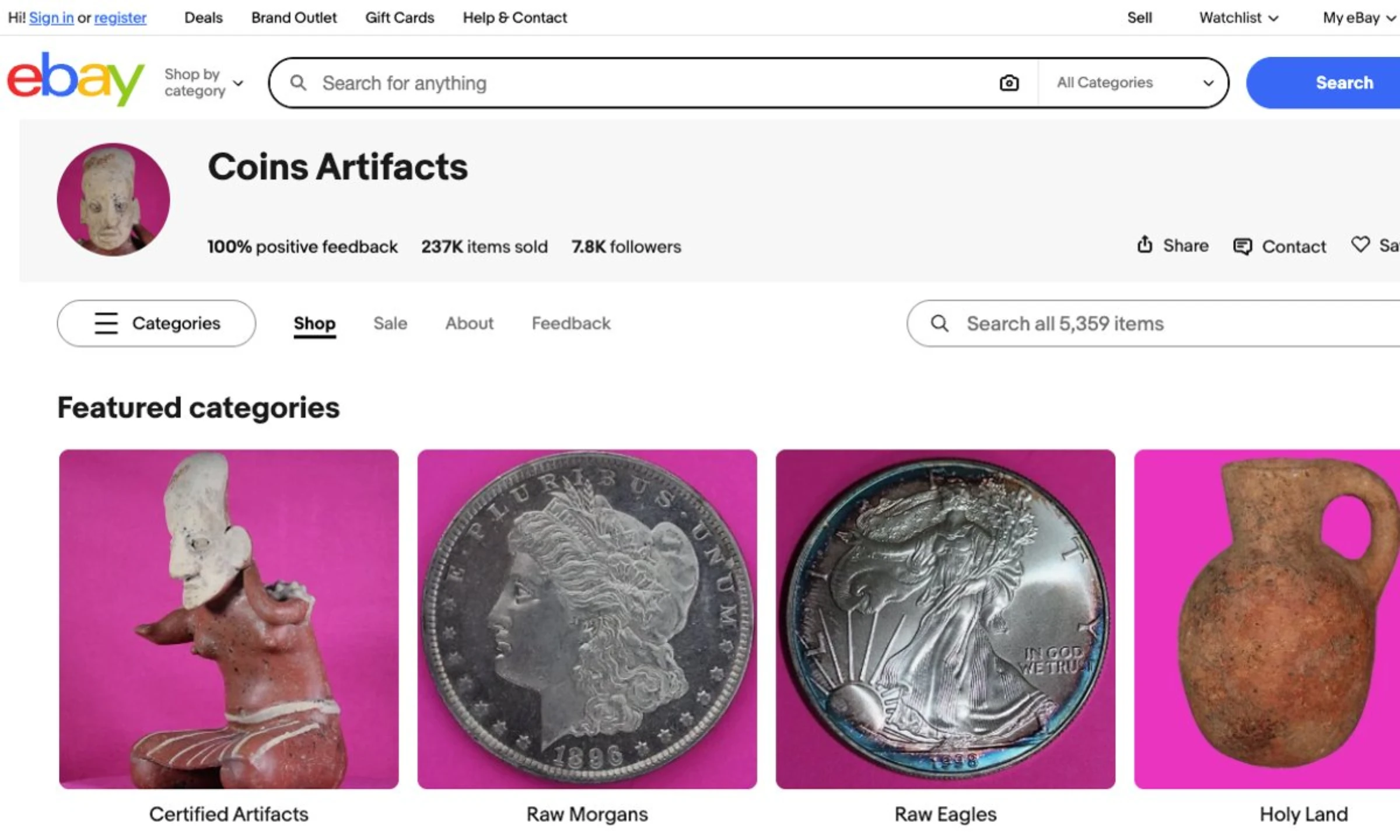
Mexico Presses eBay Over Listings of Pre-Hispanic Artefacts
Mexico's culture authorities say 195 objects listed by a US seller are protected heritage and are pursuing diplomatic and legal channels to halt sales and secure repatriation.
Mexico's culture ministry has escalated a dispute with eBay after experts identified 195 listings that officials say correspond to pre Hispanic archaeological material protected under Mexican law. The government has formally asked the platform to suspend sales and facilitate return, framing the objects as part of national patrimony rather than ordinary collectibles in private circulation.
The case sits at the intersection of heritage law and platform governance. Mexico argues the objects left the country through illicit extraction and that export restrictions have deep historical basis. The seller has publicly disputed that position, claiming legal acquisition and pre treaty provenance, a defense that appears frequently in cross border restitution cases involving older private collections.
Institutionally, the action is being led by the Secretaria de Cultura and the Instituto Nacional de Antropologia e Historia, with parallel notifications to diplomatic and enforcement channels. That multi agency structure matters because platform disputes rarely resolve through one letter alone. They move through legal pressure, evidence development, and international coordination.
eBay has stated that it prohibits listings that cannot be legally sold and that it works with authorities when concerns are raised. Yet most marketplace systems still rely heavily on seller declarations and post hoc enforcement. In heritage cases, that model places a heavy burden on states to identify objects at scale, produce expert classification, and sustain legal follow through.
The information asymmetry is clear. Authorities have not publicly disclosed the full list of challenged objects, while large storefront inventories can contain thousands of items across categories. Without transparent identifiers, external observers cannot independently verify which listings are under active dispute, whether they were removed, or whether they reappear under modified descriptions.
For museums and responsible collectors, this episode is another reminder that provenance diligence now begins upstream. Institutions referencing standards from the ICOM Code of Ethics and the UNESCO anti trafficking framework are increasingly expected to evaluate digital trail quality, not just paper ownership histories.
Mexico has pursued similar interventions in recent years, including objections to sales in Europe and requests tied to social media marketplaces. The strategy signals consistency: challenge visibility first, then pursue repatriation through legal and diplomatic instruments that can be slower but more durable when they succeed.
The seller's public argument centers on legality under US market rules for legacy imports. That defense may carry weight in narrow statutory contexts, but it does not settle the cultural legitimacy question, especially when source countries present expert evidence that objects form part of protected archaeological record.
This is why the next stage matters more than public statements. If authorities can map specific objects, establish provenience links, and maintain cross border cooperation, the dispute could shape how large platforms handle heritage claims at scale. If the process stalls, it may reinforce the current pattern where contested material remains available until a direct enforcement trigger appears.
Either way, the field is moving toward tighter scrutiny. Governments, museums, and collectors are converging on a harder baseline: if an object's history cannot be convincingly documented, the burden is no longer on critics to prove doubt. It is on sellers to prove legitimacy.