Memphis Art Museum Sets Date for Riverfront Opening
Memphis Art Museum will open its Herzog & de Meuron-designed riverfront home on December 6, tying civic ambition to free access for local residents
Memphis Finally Put a Date on Its Most Ambitious Museum Bet
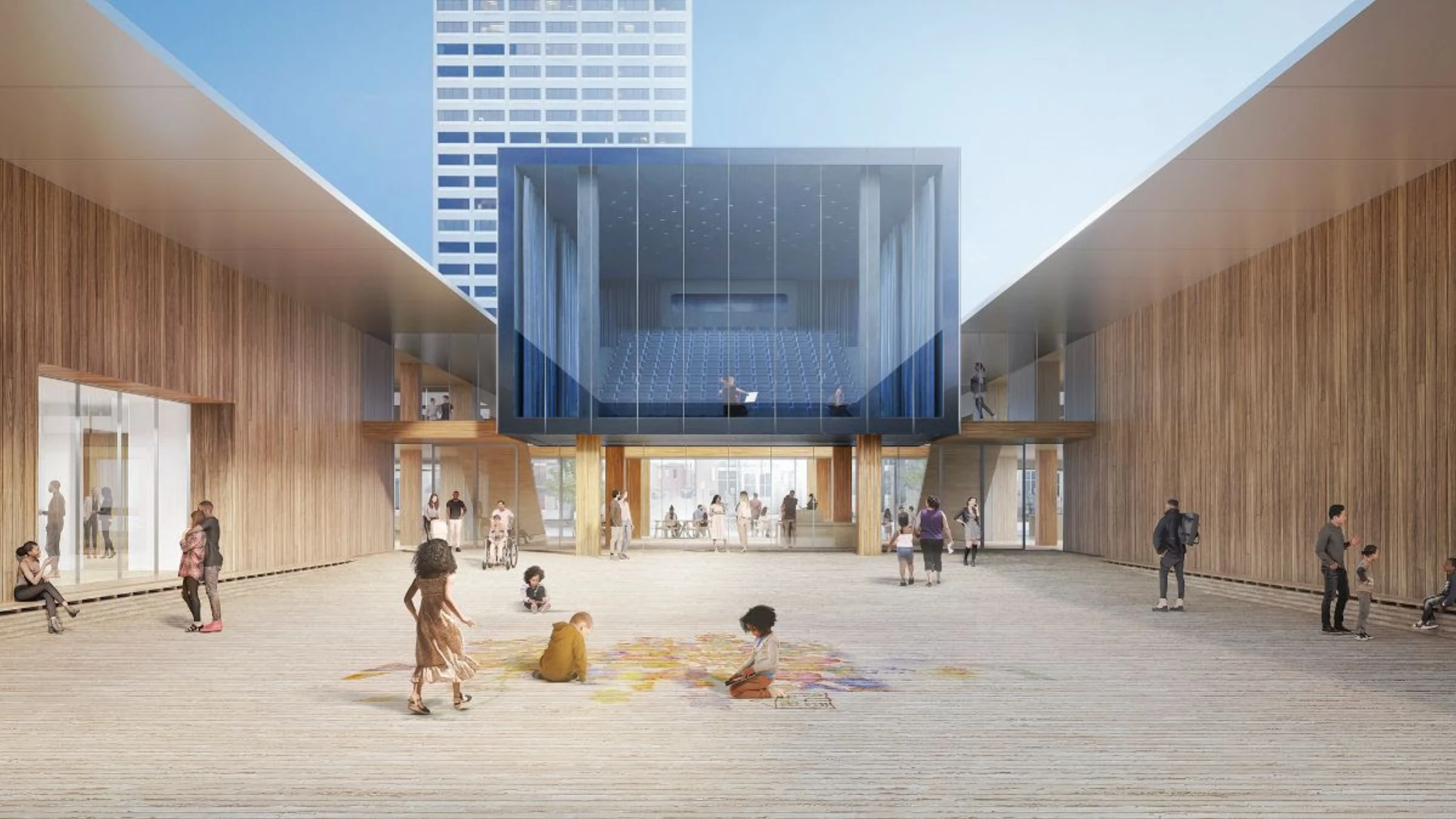
Memphis Art Museum, the institution formerly known as the Memphis Brooks Museum of Art, says it will open its new riverfront home on 6 December, moving the city's flagship art museum into a 123,500-square-foot building designed by Herzog & de Meuron and local partner archimania. The immediate facts came via ARTnews, but the larger significance is visible on the museum's official site and in the older Brooks Downtown project page, both of which frame the move around public-facing spaces such as the Front Porch, River Window, River Steps, theater, and courtyard. The museum is not selling this as a simple expansion. It is selling a new social contract in which architecture, free public space, and access policy are supposed to make the institution feel less like a destination for occasional cultural pilgrimage and more like part of the city's daily life.
That is an ambitious claim, and it needs to be. Museums do not uproot themselves and move to signature buildings merely to gain more wall space. They do it to rewrite their civic meaning. Memphis is tying that rewrite to one especially potent promise: local residents will receive free admission in perpetuity. At a moment when museums everywhere are searching for ways to sound public while managing donor expectations, that pledge gives the project real edge. It also creates a measurable standard. If the new campus becomes a landmark that tourists admire while Memphians still feel socially or economically held at a distance, the rhetoric of openness will collapse fast.
Architecture Is Carrying the Museum's Public Argument
The new building's design language makes the institution's priorities unusually legible. On its homepage, the museum highlights features that blur interior programming and urban promenade: a Front Porch facing the street, a River Window framing the Mississippi, amphitheater-like stairs, and a theater meant to function not only for scheduled events but also as a space for casual use. Those phrases matter because they reveal how the project wants to be read. This is not the old encyclopedic formula in which the museum's authority begins at the ticket desk. Memphis is trying to script arrival itself as a democratic experience.
That script is not neutral. The move from Overton Park to a bluff overlooking the Mississippi places the museum inside a different symbolic geography, one tied to redevelopment, tourism, and the visual drama of the riverfront. Herzog & de Meuron's global reputation adds obvious prestige, but prestige alone is never the point of an architecture commission at this scale. What cities buy from star architects is narrative force. They want a building that can stand in for momentum, confidence, and a renewed claim on the future. The risk is familiar too: institutions begin to believe that spatial generosity automatically produces social trust. It does not. A beautiful threshold can still lead into a guarded institution.
Programming and Access Will Decide Whether the Move Is More Than Branding
The opening matters because Memphis is entering a crowded field of museum redevelopments that promise public benefit in exchange for capital concentration. What separates serious projects from glossy ones is not the rendering but the operating logic. Will the expanded galleries support collection displays that actually reflect the city's histories? Will the theater and courtyard become sites of recurring public use rather than occasional launch-event optics? Will free local admission be easy to claim, well publicized, and politically durable when budgets tighten? These are the questions that determine whether the new campus functions as civic infrastructure or as a polished monument to institutional aspiration.
The museum has at least given itself a better chance than many peers by embedding free public space into the project narrative. That is smarter than treating access as a side benefit appended to a prestige build. But promises of openness carry their own pressure. Once a museum tells the city that the building is for everyone, every under-programmed corner, every confusing entry point, and every whiff of exclusivity becomes more visible. The bar rises. That is healthy. Architecture this confident deserves scrutiny this specific.
The Brooks Downtown page is revealing here because it sells the project through specific promises: more places to gather, framing the Mississippi, expanded galleries, and a front porch meant to invite movement between city and institution. That is language borrowed as much from urban design as from museum branding. It suggests the project understands that audiences increasingly judge museums by whether they work as civic environments, not just as containers for art. Yet that same language can become a trap. The more a museum promises permeability and everyday use, the less forgiveness it gets for programming habits that still privilege fundraising culture or elite comfort over broad participation.
There is also a collections question hovering behind the renderings. Bigger museums often promise bigger public value, but additional square footage only matters if it changes what can be shown, taught, conserved, and debated. Memphis has the chance to rethink how its holdings are narrated in relation to the city, the river, the South, and the museum's own long history. If the inaugural hang treats the new building as a neutral white-cube upgrade, the institution will have missed the deeper point of relocation. A civic move this costly has to produce a curatorial argument, not just a superior floor plan.
One reason this matters beyond Tennessee is that the museum is attempting to convert a long-running capital project into a public promise that can be tested quickly. Free admission for local residents sounds simple, but it commits the institution to ongoing administrative and political work. It has to remain easy to access, protected from future financial retrenchment, and integrated into programming rather than treated as a symbolic concession. Plenty of museums discover that access language is easier to announce than to operationalize. Memphis is now on the hook to prove otherwise.
Memphis is also moving in a wider sector context where expansion announcements are increasingly asked to prove relevance in social as well as aesthetic terms. artworld.today has been tracking that shift, including in our report on the Obama Center's opening public-art strategy, where architecture and commissioning were also used to promise civic belonging rather than mere spectacle. The difference is that Memphis is betting its entire institutional identity on the building move itself. There is less room here for symbolic half measures.
The Museum's Reinvention Comes With Real Stakes for the City
Memphis has long had a complicated relationship with cultural investment, public memory, and who gets to benefit from downtown transformation. That is why the museum's riverfront relocation should not be read only through art-world categories like design quality or gallery capacity. It is also a city story about land, audience, and symbolic ownership. A museum overlooking the Mississippi can easily become an image of civic pride. It can just as easily become another site where pride is curated for visitors while inequities remain structurally intact.
The institution seems aware of the challenge. Even its descriptive language stresses return visits, informal use, and open-ended gathering rather than one-time blockbuster consumption. That is encouraging because museums that genuinely want broader publics must be comfortable with forms of use that do not always look like traditional art appreciation. People meeting friends, working in the theater, attending a lecture, wandering through public areas without entering a ticketed gallery: these are not secondary behaviors. They are evidence of whether the museum has inserted itself into civic routine.
That is why the opening exhibitions will matter more than museums often admit when discussing architecture. A new building teaches audiences how to understand an institution through its first months of use. If the programming feels local, porous, and intellectually alive, visitors will read the design as a framework for public exchange. If the schedule feels donor-driven, overmanaged, or socially cautious, the building's rhetoric of invitation will start to look cosmetic. Open access, in other words, has to be curatorial as well as financial. The city needs reasons to return that go beyond admiring the bluff and the glass.
December 6 Is Only the Beginning of the Real Test
Openings of this kind generate predictable applause. Critics discuss the building. Donors celebrate the milestone. Local leaders claim a cultural renaissance. All of that is noise unless the museum can sustain the access and social-use claims that justified the move. The most revealing metric over the next year will not be architectural press coverage but repeat visitation by local audiences and the institutional willingness to let the building be messy with public life. Grand museums often speak the language of invitation while managing behavior tightly enough to drain that invitation of force.
Memphis Art Museum has given itself a rare opportunity. The project's design, location, and free-admission pledge create a sharper civic proposition than most new museum buildings manage. If the institution follows through, it could become a serious case study in how a regional museum redefines public access without sacrificing ambition. If it does not, the building will still photograph beautifully over the river while revealing a more familiar truth: that architecture can announce democratic intent far more easily than institutions can live it. December 6 will mark the start of that argument, not its resolution.